

356
J. M. Luetz and R. G. Leo
Revealed
Knowledge
Authoritative
Knowledge
Reason or
Rationalism
Intuition
Knowledge
Gathered as sensory data to
represent ‘reality’ and is
“open to both replication and
public examination” (p. 23)
Presupposes a
“transcendent
supernatural reality
[and] cannot be
proved or disproved
empirically” (p. 23)
Empirical Knowledge
Offers efficiencies and
“saves time and enhances
social and scientific
progress” (p. 23)
Organises “the sensations and
experiences which we gain
through our senses [as]
the raw materials of
knowledge”
(p. 24)
May be experienced
as a “sudden flash
of insight” (p. 24)
and may overcome
limitations of
human experience
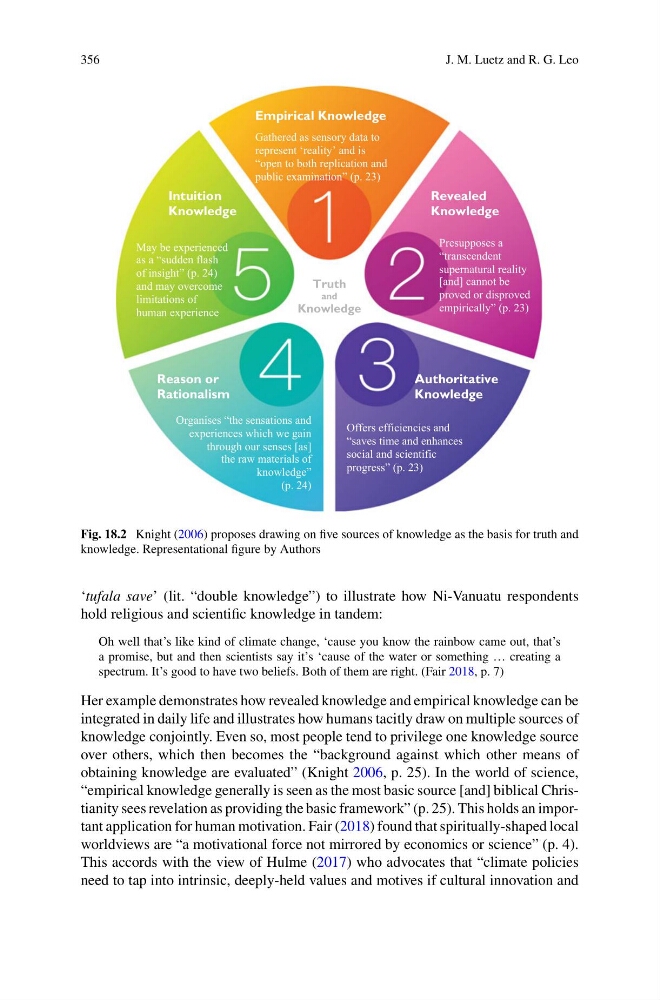
Fig. 18.2 Knight (2006) proposes drawing on five sources of knowledge as the basis for truth and
knowledge. Representational figure by Authors
‘tufala save’ (lit. “double knowledge”) to illustrate how Ni-Vanuatu respondents
hold religious and scientific knowledge in tandem:
Oh well that’s like kind of climate change, ‘cause you know the rainbow came out, that’s
a promise, but and then scientists say it’s ‘cause of the water or something … creating a
spectrum. It’s good to have two beliefs. Both of them are right. (Fair 2018, p. 7)
Her example demonstrates how revealed knowledge and empirical knowledge can be
integrated in daily life and illustrates how humans tacitly draw on multiple sources of
knowledge conjointly. Even so, most people tend to privilege one knowledge source
over others, which then becomes the “background against which other means of
obtaining knowledge are evaluated” (Knight 2006, p. 25). In the world of science,
“empirical knowledge generally is seen as the most basic source [and] biblical Christianity sees revelation as providing the basic framework” (p. 25). This holds an important application for human motivation. Fair (2018) found that spiritually-shaped local
worldviews are “a motivational force not mirrored by economics or science” (p. 4).
This accords with the view of Hulme (2017) who advocates that “climate policies
need to tap into intrinsic, deeply-held values and motives if cultural innovation and
J. M. Luetz and R. G. Leo
Revealed
Knowledge
Authoritative
Knowledge
Reason or
Rationalism
Intuition
Knowledge
Gathered as sensory data to
represent ‘reality’ and is
“open to both replication and
public examination” (p. 23)
Presupposes a
“transcendent
supernatural reality
[and] cannot be
proved or disproved
empirically” (p. 23)
Empirical Knowledge
Offers efficiencies and
“saves time and enhances
social and scientific
progress” (p. 23)
Organises “the sensations and
experiences which we gain
through our senses [as]
the raw materials of
knowledge”
(p. 24)
May be experienced
as a “sudden flash
of insight” (p. 24)
and may overcome
limitations of
human experience
Fig. 18.2 Knight (2006) proposes drawing on five sources of knowledge as the basis for truth and
knowledge. Representational figure by Authors
‘tufala save’ (lit. “double knowledge”) to illustrate how Ni-Vanuatu respondents
hold religious and scientific knowledge in tandem:
Oh well that’s like kind of climate change, ‘cause you know the rainbow came out, that’s
a promise, but and then scientists say it’s ‘cause of the water or something … creating a
spectrum. It’s good to have two beliefs. Both of them are right. (Fair 2018, p. 7)
Her example demonstrates how revealed knowledge and empirical knowledge can be
integrated in daily life and illustrates how humans tacitly draw on multiple sources of
knowledge conjointly. Even so, most people tend to privilege one knowledge source
over others, which then becomes the “background against which other means of
obtaining knowledge are evaluated” (Knight 2006, p. 25). In the world of science,
“empirical knowledge generally is seen as the most basic source [and] biblical Christianity sees revelation as providing the basic framework” (p. 25). This holds an important application for human motivation. Fair (2018) found that spiritually-shaped local
worldviews are “a motivational force not mirrored by economics or science” (p. 4).
This accords with the view of Hulme (2017) who advocates that “climate policies
need to tap into intrinsic, deeply-held values and motives if cultural innovation and