

14 For Kin, God and Other Beings: Mixtures of Conservation …
273
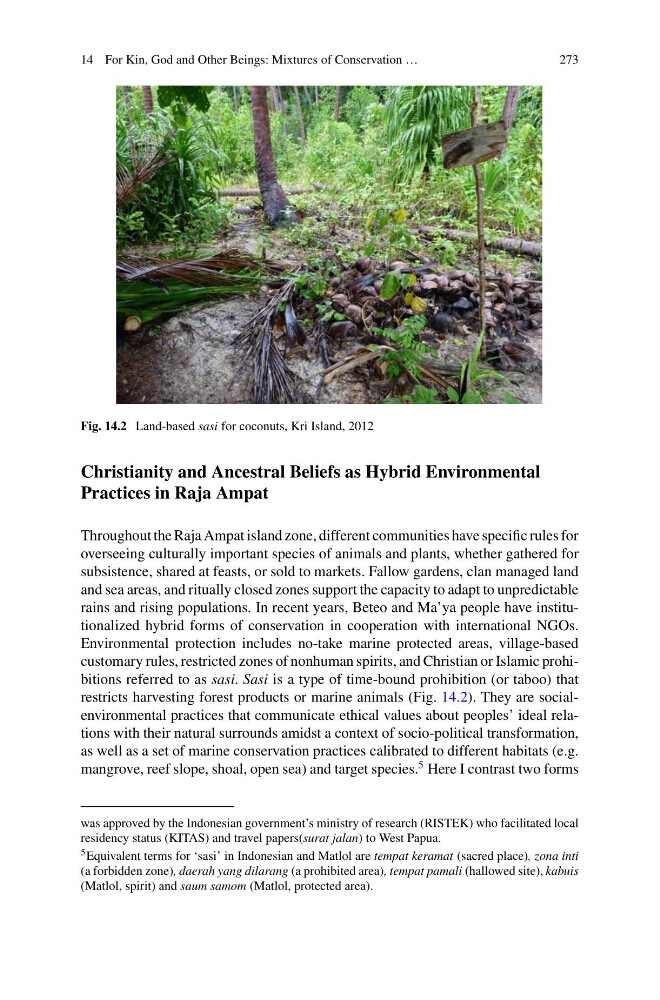
Fig. 14.2 Land-based sasi for coconuts, Kri Island, 2012
Christianity and Ancestral Beliefs as Hybrid Environmental
Practices in Raja Ampat
Throughout the Raja Ampat island zone, different communities have specific rules for
overseeing culturally important species of animals and plants, whether gathered for
subsistence, shared at feasts, or sold to markets. Fallow gardens, clan managed land
and sea areas, and ritually closed zones support the capacity to adapt to unpredictable
rains and rising populations. In recent years, Beteo and Ma’ya people have institutionalized hybrid forms of conservation in cooperation with international NGOs.
Environmental protection includes no-take marine protected areas, village-based
customary rules, restricted zones of nonhuman spirits, and Christian or Islamic prohibitions referred to as sasi. Sasi is a type of time-bound prohibition (or taboo) that
restricts harvesting forest products or marine animals (Fig. 14.2). They are socialenvironmental practices that communicate ethical values about peoples’ ideal relations with their natural surrounds amidst a context of socio-political transformation,
as well as a set of marine conservation practices calibrated to different habitats (e.g.
mangrove, reef slope, shoal, open sea) and target species.
5 Here I contrast two forms
was approved by the Indonesian government’s ministry of research (RISTEK) who facilitated local
residency status (KITAS) and travel papers(surat jalan) to West Papua.
5 Equivalent terms for ‘sasi’ in Indonesian and Matlol are tempat keramat (sacred place), zona inti
(a forbidden zone), daerah yang dilarang (a prohibited area), tempat pamali (hallowed site), kabuis
(Matlol, spirit) and saum samom (Matlol, protected area).
273
Fig. 14.2 Land-based sasi for coconuts, Kri Island, 2012
Christianity and Ancestral Beliefs as Hybrid Environmental
Practices in Raja Ampat
Throughout the Raja Ampat island zone, different communities have specific rules for
overseeing culturally important species of animals and plants, whether gathered for
subsistence, shared at feasts, or sold to markets. Fallow gardens, clan managed land
and sea areas, and ritually closed zones support the capacity to adapt to unpredictable
rains and rising populations. In recent years, Beteo and Ma’ya people have institutionalized hybrid forms of conservation in cooperation with international NGOs.
Environmental protection includes no-take marine protected areas, village-based
customary rules, restricted zones of nonhuman spirits, and Christian or Islamic prohibitions referred to as sasi. Sasi is a type of time-bound prohibition (or taboo) that
restricts harvesting forest products or marine animals (Fig. 14.2). They are socialenvironmental practices that communicate ethical values about peoples’ ideal relations with their natural surrounds amidst a context of socio-political transformation,
as well as a set of marine conservation practices calibrated to different habitats (e.g.
mangrove, reef slope, shoal, open sea) and target species.
5 Here I contrast two forms
was approved by the Indonesian government’s ministry of research (RISTEK) who facilitated local
residency status (KITAS) and travel papers(surat jalan) to West Papua.
5 Equivalent terms for ‘sasi’ in Indonesian and Matlol are tempat keramat (sacred place), zona inti
(a forbidden zone), daerah yang dilarang (a prohibited area), tempat pamali (hallowed site), kabuis
(Matlol, spirit) and saum samom (Matlol, protected area).