

121
trace elemental cycles are not independent but are linked in numerous ways. For
example, organic molecules include N, P and Fe-containing compounds which may
have differential sensitivity to decomposition (Hansell and Carlson 2014). N 2 -fixing
cyanobacteria can make vitamins which affects CO 2 fixation by eukaryotic phytoplankton (Bonnet et al. 2010). Some diazotrophs metabolize organic P in the form
of methylphosphonate that results in production of methane, an important greenhouse gas (Beversdorf et al. 2010; Karl et al. 2008). There are multiple linkages
among the biogeochemical cycles of nutrients and trace elements.
7.2 Nutrient Limitation Geography
The differing source inputs, fluxes and transformations of the three key elements, N,
P and Fe, set the stage for variability in elemental supply ratios relative to cellular
needs (C: N:P:Fe) (Moore et al. 2013) (see also Chaps. 6 and 8), thus providing a
spectrum of nutrient limitation scenarios for different microorganisms at different
places and times, including the diazotrophs (Fig. 7.4). For instance, N availability
limits productivity in large areas of the oceans (Moore et al. 2013). It is challenging
to determine which nutrients limit N 2 fixation in the oceans because of physiological differences among diazotrophic species. For example, phosphonates can be used
by Trichodesmium, whereas Crocosphaera has high affinity phosphate transporters
(Beversdorf et al. 2010; Dyhrman and Haley 2006). The large space scales and
temporal dynamics including seasonality provide varying nutrient regimes.
Identifying nutrient limitations in natural communities can be inferred by the relative availability of key nutrients (e.g. relative to the Redfield ratio) (Chaps. 5 and 8).
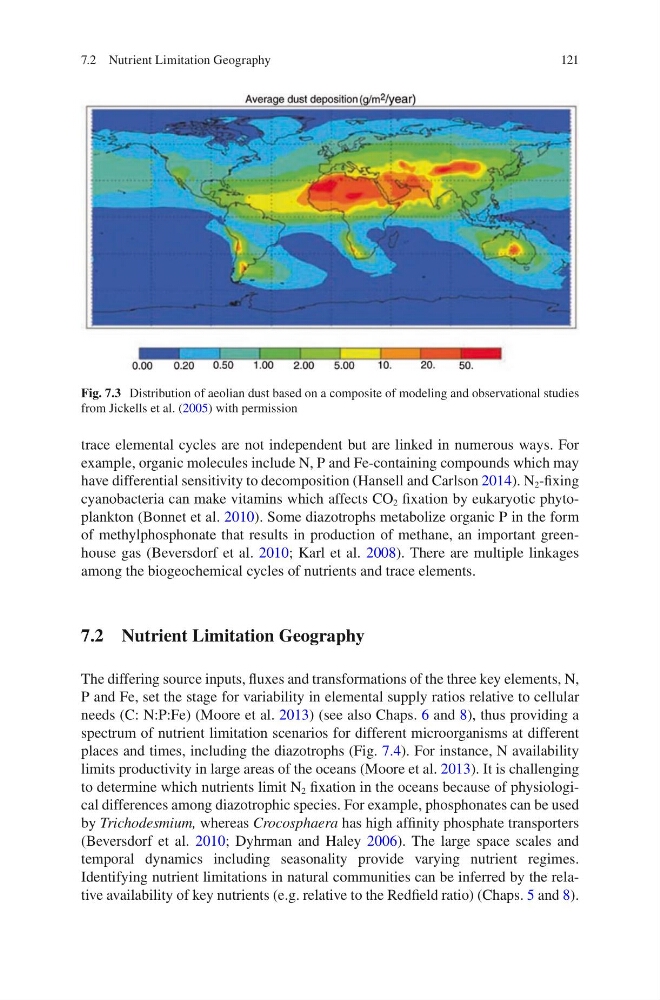
Fig. 7.3 Distribution of aeolian dust based on a composite of modeling and observational studies
from Jickells et al. (2005) with permission
7.2 Nutrient Limitation Geography
trace elemental cycles are not independent but are linked in numerous ways. For
example, organic molecules include N, P and Fe-containing compounds which may
have differential sensitivity to decomposition (Hansell and Carlson 2014). N 2 -fixing
cyanobacteria can make vitamins which affects CO 2 fixation by eukaryotic phytoplankton (Bonnet et al. 2010). Some diazotrophs metabolize organic P in the form
of methylphosphonate that results in production of methane, an important greenhouse gas (Beversdorf et al. 2010; Karl et al. 2008). There are multiple linkages
among the biogeochemical cycles of nutrients and trace elements.
7.2 Nutrient Limitation Geography
The differing source inputs, fluxes and transformations of the three key elements, N,
P and Fe, set the stage for variability in elemental supply ratios relative to cellular
needs (C: N:P:Fe) (Moore et al. 2013) (see also Chaps. 6 and 8), thus providing a
spectrum of nutrient limitation scenarios for different microorganisms at different
places and times, including the diazotrophs (Fig. 7.4). For instance, N availability
limits productivity in large areas of the oceans (Moore et al. 2013). It is challenging
to determine which nutrients limit N 2 fixation in the oceans because of physiological differences among diazotrophic species. For example, phosphonates can be used
by Trichodesmium, whereas Crocosphaera has high affinity phosphate transporters
(Beversdorf et al. 2010; Dyhrman and Haley 2006). The large space scales and
temporal dynamics including seasonality provide varying nutrient regimes.
Identifying nutrient limitations in natural communities can be inferred by the relative availability of key nutrients (e.g. relative to the Redfield ratio) (Chaps. 5 and 8).
Fig. 7.3 Distribution of aeolian dust based on a composite of modeling and observational studies
from Jickells et al. (2005) with permission
7.2 Nutrient Limitation Geography