

120
2005; Mahowald et al. 2009; Tagliabue et al. 2017) (Fig. 7.3). The Fe cycle is complex including cycling and regeneration in food webs, and particle formation and
associated removal by sinking to the deep ocean (Tagliabue et al. 2017). Key to Fe
availability is the concentration of soluble Fe, organic Fe-binding ligands and organic
siderophores that bind Fe and that are produced by many microorganisms (Tagliabue
et al. 2017). The global patterns of atmospheric deposition of Fe through aerosol dust
may be a key determinant of the magnitude and nature of surface ocean diazotrophy
(Sohm et al. 2011a) particularly in the low latitude tropics (Tagliabue et al. 2017).
The concentrations and distributions of Fe and P alone do not control the distributions of microorganisms and activities such as N 2 fixation. Carbon, nutrients and
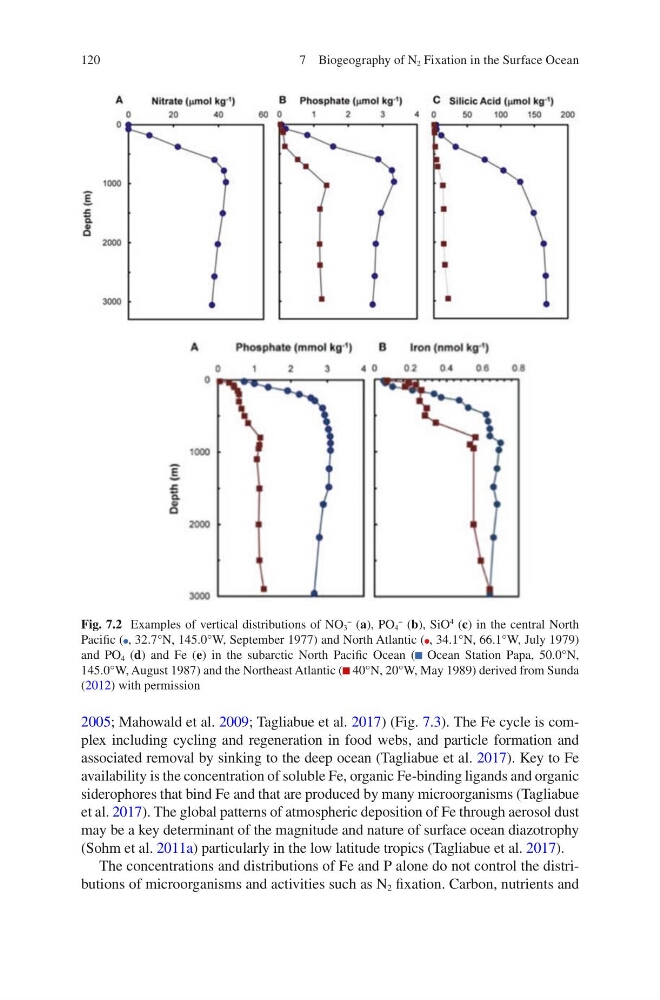
Fig. 7.2 Examples of vertical distributions of NO 3
− (a), PO 4
− (b), SiO
4 (c) in the central North
Pacific ( , 32.7°N, 145.0°W, September 1977) and North Atlantic ( , 34.1°N, 66.1°W, July 1979)
and PO 4 (d) and Fe (e) in the subarctic North Pacific Ocean ( Ocean Station Papa, 50.0°N,
145.0°W, August 1987) and the Northeast Atlantic ( 40°N, 20°W, May 1989) derived from Sunda
(2012) with permission
7 Biogeography of N 2 Fixation in the Surface Ocean
2005; Mahowald et al. 2009; Tagliabue et al. 2017) (Fig. 7.3). The Fe cycle is complex including cycling and regeneration in food webs, and particle formation and
associated removal by sinking to the deep ocean (Tagliabue et al. 2017). Key to Fe
availability is the concentration of soluble Fe, organic Fe-binding ligands and organic
siderophores that bind Fe and that are produced by many microorganisms (Tagliabue
et al. 2017). The global patterns of atmospheric deposition of Fe through aerosol dust
may be a key determinant of the magnitude and nature of surface ocean diazotrophy
(Sohm et al. 2011a) particularly in the low latitude tropics (Tagliabue et al. 2017).
The concentrations and distributions of Fe and P alone do not control the distributions of microorganisms and activities such as N 2 fixation. Carbon, nutrients and
Fig. 7.2 Examples of vertical distributions of NO 3
− (a), PO 4
− (b), SiO
4 (c) in the central North
Pacific ( , 32.7°N, 145.0°W, September 1977) and North Atlantic ( , 34.1°N, 66.1°W, July 1979)
and PO 4 (d) and Fe (e) in the subarctic North Pacific Ocean ( Ocean Station Papa, 50.0°N,
145.0°W, August 1987) and the Northeast Atlantic ( 40°N, 20°W, May 1989) derived from Sunda
(2012) with permission
7 Biogeography of N 2 Fixation in the Surface Ocean