

second method here described combines a higher incubation temperature with a shorter chromatographic separation (but still adequate to separate C 8 –C 13 compounds, which include most of the
apocarotenoids). In the cases in which apocarotenoids are the only
volatiles of interest, this provides a higher sensitivity and productivity method for their analysis. A typical chromatogram obtained of
the tomato fruit volatile fraction by means of this method is shown
in Fig. 2. Table 2 shows the set of volatile apocarotenoids typically
identified in tomato fruit with this method. The chemical structure
of the compounds identified with both methods is represented in
Fig. 3.
2 Materials
2.1 Volatile
Apocarotenoid Method
1. A 50/30 μm DVB/CAR/PDMS coating SPME fiber (see
Note 1).
2. Manual orange juice extractor.
2.2 Specific
Apocarotenoid Method
3. Liquid nitrogen.
4. 20 mL screw cap containers.
5. 15 mL clip cap glass vials.
6. Finely powdered solid CaCl 2
. 2H 2 O (see Note 2).
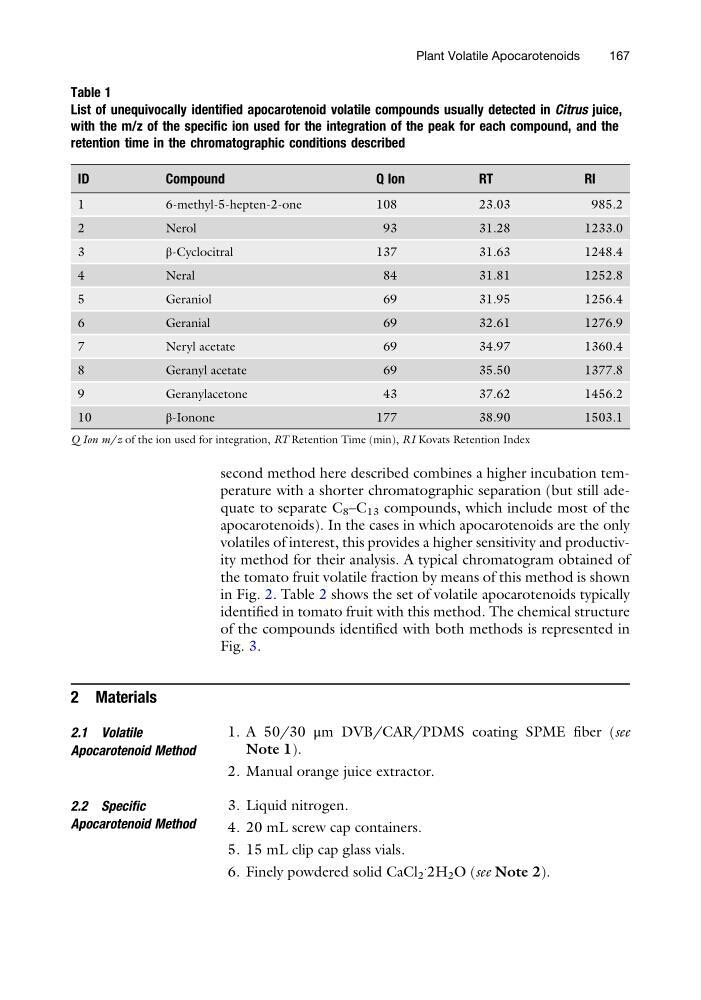
Table 1
List of unequivocally identified apocarotenoid volatile compounds usually detected in Citrus juice,
with the m/z of the specific ion used for the integration of the peak for each compound, and the
retention time in the chromatographic conditions described
ID
Compound
Q Ion
RT
RI
1
6-methyl-5-hepten-2-one
108
23.03
985.2
2
Nerol
93
31.28
1233.0
3
β-Cyclocitral
137
31.63
1248.4
4
Neral
84
31.81
1252.8
5
Geraniol
69
31.95
1256.4
6
Geranial
69
32.61
1276.9
7
Neryl acetate
69
34.97
1360.4
8
Geranyl acetate
69
35.50
1377.8
9
Geranylacetone
43
37.62
1456.2
10
β-Ionone
177
38.90
1503.1
Q Ion m/z of the ion used for integration, RT Retention Time (min), RI Kovats Retention Index
Plant Volatile Apocarotenoids
167
apocarotenoids). In the cases in which apocarotenoids are the only
volatiles of interest, this provides a higher sensitivity and productivity method for their analysis. A typical chromatogram obtained of
the tomato fruit volatile fraction by means of this method is shown
in Fig. 2. Table 2 shows the set of volatile apocarotenoids typically
identified in tomato fruit with this method. The chemical structure
of the compounds identified with both methods is represented in
Fig. 3.
2 Materials
2.1 Volatile
Apocarotenoid Method
1. A 50/30 μm DVB/CAR/PDMS coating SPME fiber (see
Note 1).
2. Manual orange juice extractor.
2.2 Specific
Apocarotenoid Method
3. Liquid nitrogen.
4. 20 mL screw cap containers.
5. 15 mL clip cap glass vials.
6. Finely powdered solid CaCl 2
. 2H 2 O (see Note 2).
Table 1
List of unequivocally identified apocarotenoid volatile compounds usually detected in Citrus juice,
with the m/z of the specific ion used for the integration of the peak for each compound, and the
retention time in the chromatographic conditions described
ID
Compound
Q Ion
RT
RI
1
6-methyl-5-hepten-2-one
108
23.03
985.2
2
Nerol
93
31.28
1233.0
3
β-Cyclocitral
137
31.63
1248.4
4
Neral
84
31.81
1252.8
5
Geraniol
69
31.95
1256.4
6
Geranial
69
32.61
1276.9
7
Neryl acetate
69
34.97
1360.4
8
Geranyl acetate
69
35.50
1377.8
9
Geranylacetone
43
37.62
1456.2
10
β-Ionone
177
38.90
1503.1
Q Ion m/z of the ion used for integration, RT Retention Time (min), RI Kovats Retention Index
Plant Volatile Apocarotenoids
167