

56
T. B. Asafa et al.
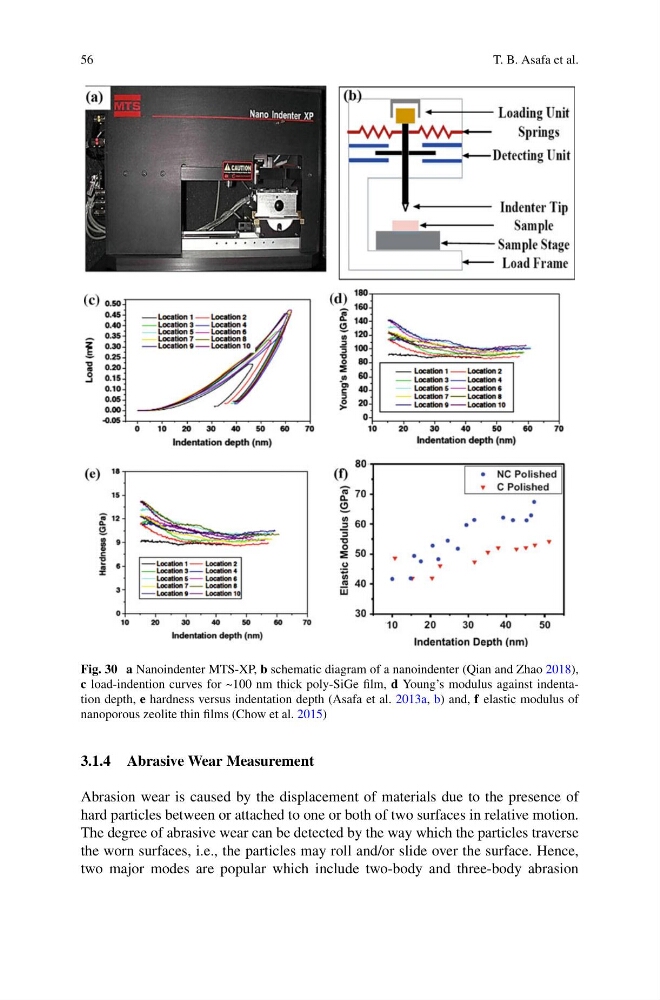
Fig. 30 a Nanoindenter MTS-XP, b schematic diagram of a nanoindenter (Qian and Zhao 2018),
c load-indention curves for ~100 nm thick poly-SiGe film, d Young’s modulus against indentation depth, e hardness versus indentation depth (Asafa et al. 2013a, b) and, f elastic modulus of
nanoporous zeolite thin films (Chow et al. 2015)
3.1.4 Abrasive Wear Measurement
Abrasion wear is caused by the displacement of materials due to the presence of
hard particles between or attached to one or both of two surfaces in relative motion.
The degree of abrasive wear can be detected by the way which the particles traverse
the worn surfaces, i.e., the particles may roll and/or slide over the surface. Hence,
two major modes are popular which include two-body and three-body abrasion
T. B. Asafa et al.
Fig. 30 a Nanoindenter MTS-XP, b schematic diagram of a nanoindenter (Qian and Zhao 2018),
c load-indention curves for ~100 nm thick poly-SiGe film, d Young’s modulus against indentation depth, e hardness versus indentation depth (Asafa et al. 2013a, b) and, f elastic modulus of
nanoporous zeolite thin films (Chow et al. 2015)
3.1.4 Abrasive Wear Measurement
Abrasion wear is caused by the displacement of materials due to the presence of
hard particles between or attached to one or both of two surfaces in relative motion.
The degree of abrasive wear can be detected by the way which the particles traverse
the worn surfaces, i.e., the particles may roll and/or slide over the surface. Hence,
two major modes are popular which include two-body and three-body abrasion