

362
N. B. Raj et al.
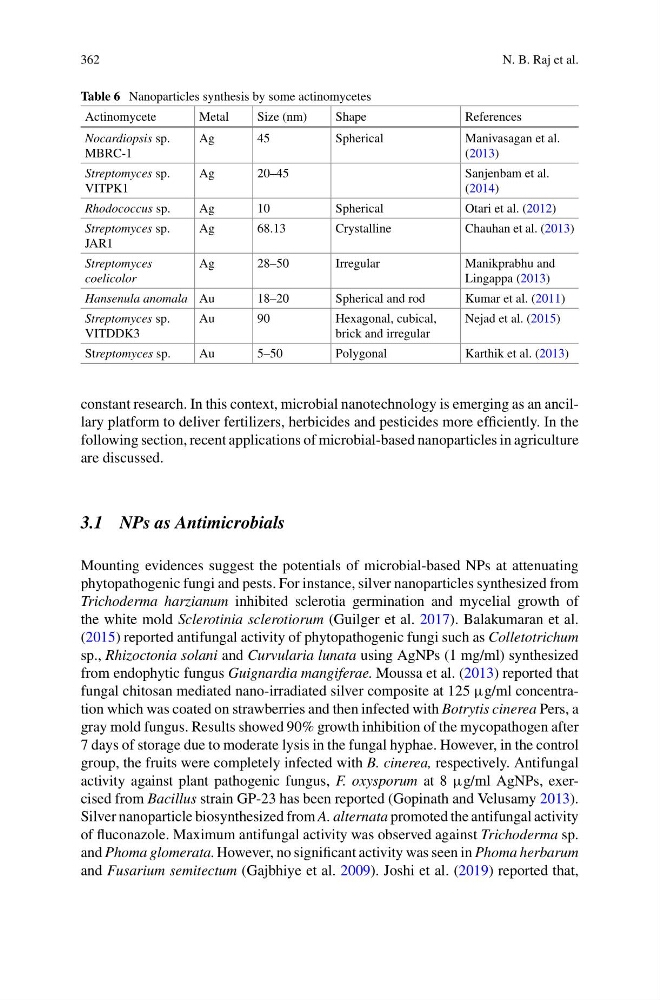
Table 6 Nanoparticles synthesis by some actinomycetes
Actinomycete
Metal
Size (nm)
Shape
References
Nocardiopsis sp.
MBRC-1
Ag
45
Spherical
Manivasagan et al.
(2013)
Streptomyces sp.
VITPK1
Ag
20–45
Sanjenbam et al.
(2014)
Rhodococcus sp.
Ag
10
Spherical
Otari et al. (2012)
Streptomyces sp.
JAR1
Ag
68.13
Crystalline
Chauhan et al. (2013)
Streptomyces
coelicolor
Ag
28–50
Irregular
Manikprabhu and
Lingappa (2013)
Hansenula anomala Au
18–20
Spherical and rod
Kumar et al. (2011)
Streptomyces sp.
VITDDK3
Au
90
Hexagonal, cubical,
brick and irregular
Nejad et al. (2015)
Streptomyces sp.
Au
5–50
Polygonal
Karthik et al. (2013)
constant research. In this context, microbial nanotechnology is emerging as an ancillary platform to deliver fertilizers, herbicides and pesticides more efficiently. In the
following section, recent applications of microbial-based nanoparticles in agriculture
are discussed.
3.1 NPs as Antimicrobials
Mounting evidences suggest the potentials of microbial-based NPs at attenuating
phytopathogenic fungi and pests. For instance, silver nanoparticles synthesized from
Trichoderma harzianum inhibited sclerotia germination and mycelial growth of
the white mold Sclerotinia sclerotiorum (Guilger et al. 2017). Balakumaran et al.
(2015) reported antifungal activity of phytopathogenic fungi such as Colletotrichum
sp., Rhizoctonia solani and Curvularia lunata using AgNPs (1 mg/ml) synthesized
from endophytic fungus Guignardia mangiferae. Moussa et al. (2013) reported that
fungal chitosan mediated nano-irradiated silver composite at 125 μg/ml concentration which was coated on strawberries and then infected with Botrytis cinerea Pers, a
gray mold fungus. Results showed 90% growth inhibition of the mycopathogen after
7 days of storage due to moderate lysis in the fungal hyphae. However, in the control
group, the fruits were completely infected with B. cinerea, respectively. Antifungal
activity against plant pathogenic fungus, F. oxysporum at 8 μg/ml AgNPs, exercised from Bacillus strain GP-23 has been reported (Gopinath and Velusamy 2013).
Silver nanoparticle biosynthesized from A. alternata promoted the antifungal activity
of fluconazole. Maximum antifungal activity was observed against Trichoderma sp.
and Phoma glomerata. However, no significant activity was seen in Phoma herbarum
and Fusarium semitectum (Gajbhiye et al. 2009). Joshi et al. (2019) reported that,
N. B. Raj et al.
Table 6 Nanoparticles synthesis by some actinomycetes
Actinomycete
Metal
Size (nm)
Shape
References
Nocardiopsis sp.
MBRC-1
Ag
45
Spherical
Manivasagan et al.
(2013)
Streptomyces sp.
VITPK1
Ag
20–45
Sanjenbam et al.
(2014)
Rhodococcus sp.
Ag
10
Spherical
Otari et al. (2012)
Streptomyces sp.
JAR1
Ag
68.13
Crystalline
Chauhan et al. (2013)
Streptomyces
coelicolor
Ag
28–50
Irregular
Manikprabhu and
Lingappa (2013)
Hansenula anomala Au
18–20
Spherical and rod
Kumar et al. (2011)
Streptomyces sp.
VITDDK3
Au
90
Hexagonal, cubical,
brick and irregular
Nejad et al. (2015)
Streptomyces sp.
Au
5–50
Polygonal
Karthik et al. (2013)
constant research. In this context, microbial nanotechnology is emerging as an ancillary platform to deliver fertilizers, herbicides and pesticides more efficiently. In the
following section, recent applications of microbial-based nanoparticles in agriculture
are discussed.
3.1 NPs as Antimicrobials
Mounting evidences suggest the potentials of microbial-based NPs at attenuating
phytopathogenic fungi and pests. For instance, silver nanoparticles synthesized from
Trichoderma harzianum inhibited sclerotia germination and mycelial growth of
the white mold Sclerotinia sclerotiorum (Guilger et al. 2017). Balakumaran et al.
(2015) reported antifungal activity of phytopathogenic fungi such as Colletotrichum
sp., Rhizoctonia solani and Curvularia lunata using AgNPs (1 mg/ml) synthesized
from endophytic fungus Guignardia mangiferae. Moussa et al. (2013) reported that
fungal chitosan mediated nano-irradiated silver composite at 125 μg/ml concentration which was coated on strawberries and then infected with Botrytis cinerea Pers, a
gray mold fungus. Results showed 90% growth inhibition of the mycopathogen after
7 days of storage due to moderate lysis in the fungal hyphae. However, in the control
group, the fruits were completely infected with B. cinerea, respectively. Antifungal
activity against plant pathogenic fungus, F. oxysporum at 8 μg/ml AgNPs, exercised from Bacillus strain GP-23 has been reported (Gopinath and Velusamy 2013).
Silver nanoparticle biosynthesized from A. alternata promoted the antifungal activity
of fluconazole. Maximum antifungal activity was observed against Trichoderma sp.
and Phoma glomerata. However, no significant activity was seen in Phoma herbarum
and Fusarium semitectum (Gajbhiye et al. 2009). Joshi et al. (2019) reported that,