

292
S. B. Jaffri and K. S. Ahmad
4 Microbes Mediated Green NPs
Considering nature’s tools as raw materials for NPs synthesis via sophisticated and
resourceful approaches, chemists and biotechnologists have been considering microbial species for sustainable nanoscale material synthesis. This green approach is
inclusive of both the conventional green methods adopted for NPs synthesis and
also other size control materials (Kang et al. 2008) using microbial nano-factories
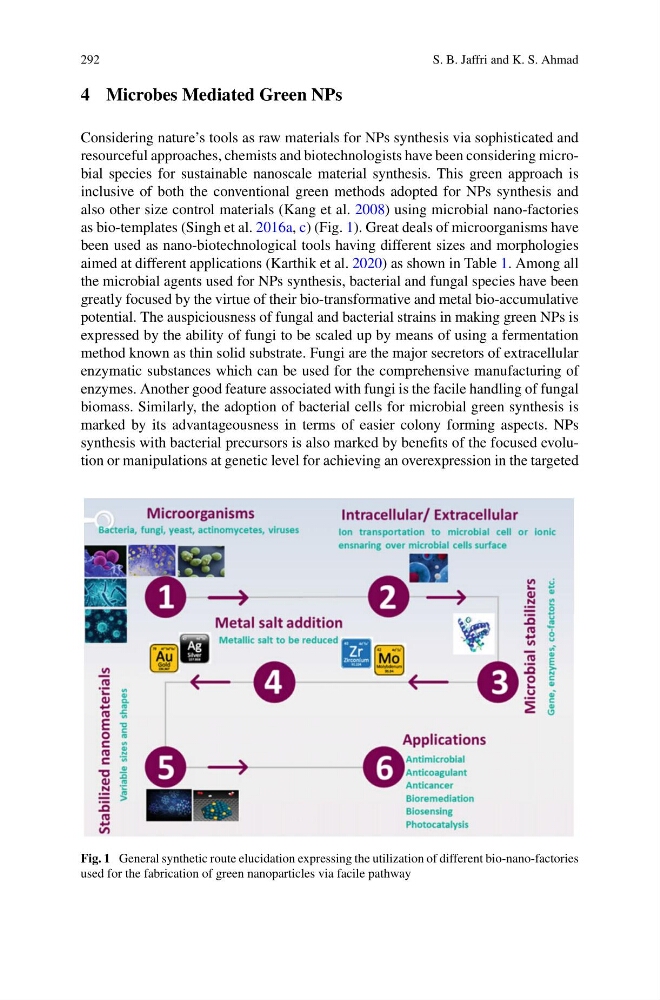
as bio-templates (Singh et al. 2016a, c) (Fig. 1). Great deals of microorganisms have
been used as nano-biotechnological tools having different sizes and morphologies
aimed at different applications (Karthik et al. 2020) as shown in Table 1. Among all
the microbial agents used for NPs synthesis, bacterial and fungal species have been
greatly focused by the virtue of their bio-transformative and metal bio-accumulative
potential. The auspiciousness of fungal and bacterial strains in making green NPs is
expressed by the ability of fungi to be scaled up by means of using a fermentation
method known as thin solid substrate. Fungi are the major secretors of extracellular
enzymatic substances which can be used for the comprehensive manufacturing of
enzymes. Another good feature associated with fungi is the facile handling of fungal
biomass. Similarly, the adoption of bacterial cells for microbial green synthesis is
marked by its advantageousness in terms of easier colony forming aspects. NPs
synthesis with bacterial precursors is also marked by benefits of the focused evolution or manipulations at genetic level for achieving an overexpression in the targeted
Fig. 1 General synthetic route elucidation expressing the utilization of different bio-nano-factories
used for the fabrication of green nanoparticles via facile pathway
S. B. Jaffri and K. S. Ahmad
4 Microbes Mediated Green NPs
Considering nature’s tools as raw materials for NPs synthesis via sophisticated and
resourceful approaches, chemists and biotechnologists have been considering microbial species for sustainable nanoscale material synthesis. This green approach is
inclusive of both the conventional green methods adopted for NPs synthesis and
also other size control materials (Kang et al. 2008) using microbial nano-factories
as bio-templates (Singh et al. 2016a, c) (Fig. 1). Great deals of microorganisms have
been used as nano-biotechnological tools having different sizes and morphologies
aimed at different applications (Karthik et al. 2020) as shown in Table 1. Among all
the microbial agents used for NPs synthesis, bacterial and fungal species have been
greatly focused by the virtue of their bio-transformative and metal bio-accumulative
potential. The auspiciousness of fungal and bacterial strains in making green NPs is
expressed by the ability of fungi to be scaled up by means of using a fermentation
method known as thin solid substrate. Fungi are the major secretors of extracellular
enzymatic substances which can be used for the comprehensive manufacturing of
enzymes. Another good feature associated with fungi is the facile handling of fungal
biomass. Similarly, the adoption of bacterial cells for microbial green synthesis is
marked by its advantageousness in terms of easier colony forming aspects. NPs
synthesis with bacterial precursors is also marked by benefits of the focused evolution or manipulations at genetic level for achieving an overexpression in the targeted
Fig. 1 General synthetic route elucidation expressing the utilization of different bio-nano-factories
used for the fabrication of green nanoparticles via facile pathway