

270
E. A. Adebayo et al.
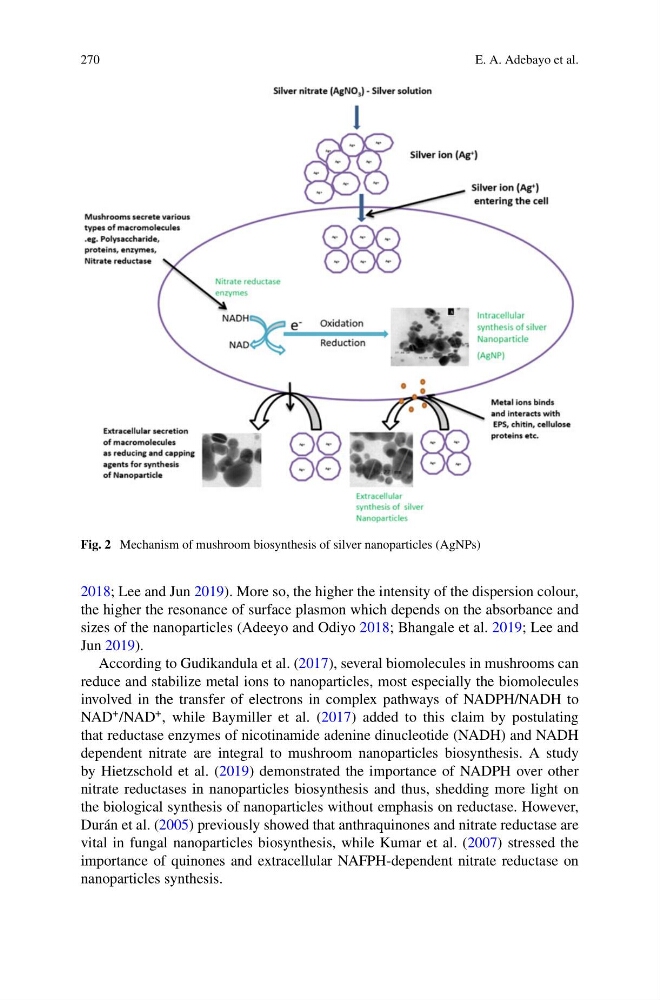
Fig. 2 Mechanism of mushroom biosynthesis of silver nanoparticles (AgNPs)
2018; Lee and Jun 2019). More so, the higher the intensity of the dispersion colour,
the higher the resonance of surface plasmon which depends on the absorbance and
sizes of the nanoparticles (Adeeyo and Odiyo 2018; Bhangale et al. 2019; Lee and
Jun 2019).
According to Gudikandula et al. (2017), several biomolecules in mushrooms can
reduce and stabilize metal ions to nanoparticles, most especially the biomolecules
involved in the transfer of electrons in complex pathways of NADPH/NADH to
NAD
+ /NAD
+ , while Baymiller et al. (2017) added to this claim by postulating
that reductase enzymes of nicotinamide adenine dinucleotide (NADH) and NADH
dependent nitrate are integral to mushroom nanoparticles biosynthesis. A study
by Hietzschold et al. (2019) demonstrated the importance of NADPH over other
nitrate reductases in nanoparticles biosynthesis and thus, shedding more light on
the biological synthesis of nanoparticles without emphasis on reductase. However,
Durán et al. (2005) previously showed that anthraquinones and nitrate reductase are
vital in fungal nanoparticles biosynthesis, while Kumar et al. (2007) stressed the
importance of quinones and extracellular NAFPH-dependent nitrate reductase on
nanoparticles synthesis.
E. A. Adebayo et al.
Fig. 2 Mechanism of mushroom biosynthesis of silver nanoparticles (AgNPs)
2018; Lee and Jun 2019). More so, the higher the intensity of the dispersion colour,
the higher the resonance of surface plasmon which depends on the absorbance and
sizes of the nanoparticles (Adeeyo and Odiyo 2018; Bhangale et al. 2019; Lee and
Jun 2019).
According to Gudikandula et al. (2017), several biomolecules in mushrooms can
reduce and stabilize metal ions to nanoparticles, most especially the biomolecules
involved in the transfer of electrons in complex pathways of NADPH/NADH to
NAD
+ /NAD
+ , while Baymiller et al. (2017) added to this claim by postulating
that reductase enzymes of nicotinamide adenine dinucleotide (NADH) and NADH
dependent nitrate are integral to mushroom nanoparticles biosynthesis. A study
by Hietzschold et al. (2019) demonstrated the importance of NADPH over other
nitrate reductases in nanoparticles biosynthesis and thus, shedding more light on
the biological synthesis of nanoparticles without emphasis on reductase. However,
Durán et al. (2005) previously showed that anthraquinones and nitrate reductase are
vital in fungal nanoparticles biosynthesis, while Kumar et al. (2007) stressed the
importance of quinones and extracellular NAFPH-dependent nitrate reductase on
nanoparticles synthesis.