

Membrane Contactors
Membrane contactors are porous membrane devices mostly in the ultrafiltration
range which provide interfacial contact between two phases to facilitate mass
transfer. The driving force is concentration difference or chemical affinity. Membrane contactors provide very high contact area depending on the membrane configuration. Normally, hollow fiber/capillary membranes are used which offer about
one to two orders of higher contact area per unit volume compared to conventional
systems. As the two phases are separated by the membrane, problems related to
intermixing of phases such as flooding and emulsification do not arise. Moreover,
the choice of contacting fluids is not restricted by physical properties of the fluid
such as density. The processes are less energy-intensive and mostly rate-governed
and do not depend on the physical properties of the contacting phases. The limitations include additional mass transfer resistance and transmembrane pressure. Being
compact and adaptable to different capacity operations, these contactors have potential use in replacing or supporting the conventional unit operations such as membrane bioreactors, liquid–liquid extraction, and gaseous separation (Drioli et al.
2011).
8.4 Application of Membrane Processes in Water
Treatment
Membrane process made its foray into water treatment as reverse osmosis technology for desalination of brackish seawater. With the phenomenal success, the applications of reverse osmosis were extended to effluent streams for water recovery and
recycle. Further innovations in membranes led to the development of membrane
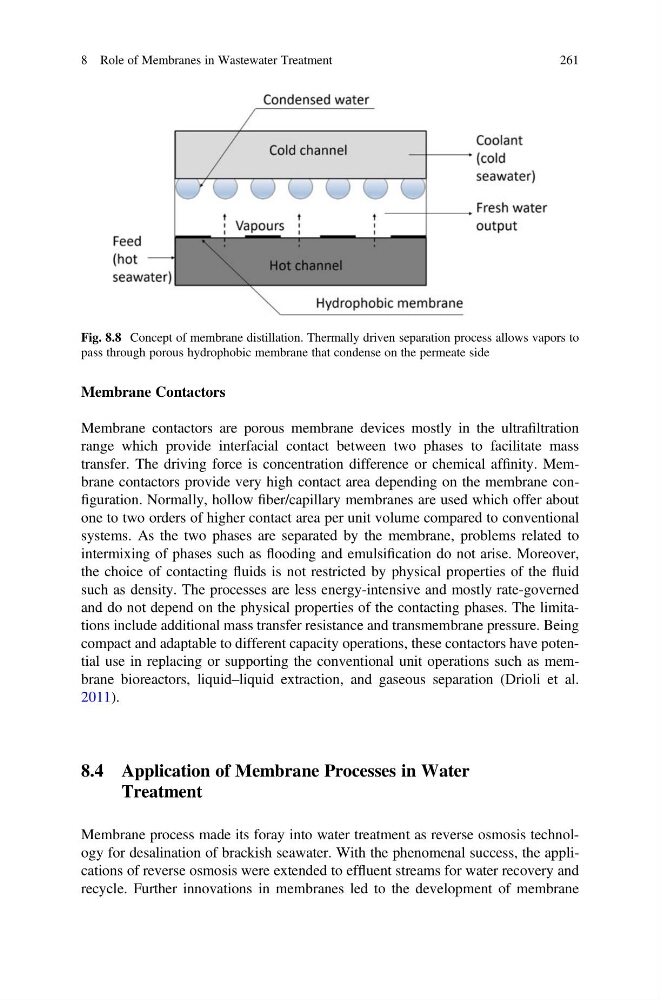
Fig. 8.8 Concept of membrane distillation. Thermally driven separation process allows vapors to
pass through porous hydrophobic membrane that condense on the permeate side
8 Role of Membranes in Wastewater Treatment
261
Membrane contactors are porous membrane devices mostly in the ultrafiltration
range which provide interfacial contact between two phases to facilitate mass
transfer. The driving force is concentration difference or chemical affinity. Membrane contactors provide very high contact area depending on the membrane configuration. Normally, hollow fiber/capillary membranes are used which offer about
one to two orders of higher contact area per unit volume compared to conventional
systems. As the two phases are separated by the membrane, problems related to
intermixing of phases such as flooding and emulsification do not arise. Moreover,
the choice of contacting fluids is not restricted by physical properties of the fluid
such as density. The processes are less energy-intensive and mostly rate-governed
and do not depend on the physical properties of the contacting phases. The limitations include additional mass transfer resistance and transmembrane pressure. Being
compact and adaptable to different capacity operations, these contactors have potential use in replacing or supporting the conventional unit operations such as membrane bioreactors, liquid–liquid extraction, and gaseous separation (Drioli et al.
2011).
8.4 Application of Membrane Processes in Water
Treatment
Membrane process made its foray into water treatment as reverse osmosis technology for desalination of brackish seawater. With the phenomenal success, the applications of reverse osmosis were extended to effluent streams for water recovery and
recycle. Further innovations in membranes led to the development of membrane
Fig. 8.8 Concept of membrane distillation. Thermally driven separation process allows vapors to
pass through porous hydrophobic membrane that condense on the permeate side
8 Role of Membranes in Wastewater Treatment
261