

interfaced between the acid solution along with its metal salts (say hydrochloric acid)
and water, chloride ions would diffuse through the anionic membrane. Hydrogen
ions as well as metal ions would also tend to pass through the membrane to maintain
Donnan criteria of electroneutrality (Luo et al. 2011). Since the mobility of hydrogen ions is higher compared to metal ions, hydrogen ions move faster, thus enabling
the separation of acid from its solution. Based on the same philosophy, bases can
also be separated from its salt solutions.
Thermally Driven Processes
Membrane distillation is a thermally driven membrane process which uses hydrophobic membranes (Fig. 8.8). When a hot stream of water is circulated through the
membrane, the water vapor passes through the membrane pores and gets condensed
on the permeate side by any of the techniques such as direct contact with a cold water
stream, application of vacuum, air gap condensation, or sweep gas process (Wang
and Chung 2015). This is a low-flux process with an ability to use waste heat. Liquid
water which does not wet the membrane cannot permeate through the hydrophobic
membrane up to a particular pressure commonly known as liquid entry pressure,
whereas water vapor, which does not exhibit hydrophilicity, passes through the
membrane. The critical points of concern are the maintenance of feed pressure less
than the liquid entry pressure with reference to the membrane, the low flux, and the
ease of recovering water. As the vapor produced is indirectly related to temperature,
the possibility of increasing the flux is low unless some external source of thermal
energy is provided.
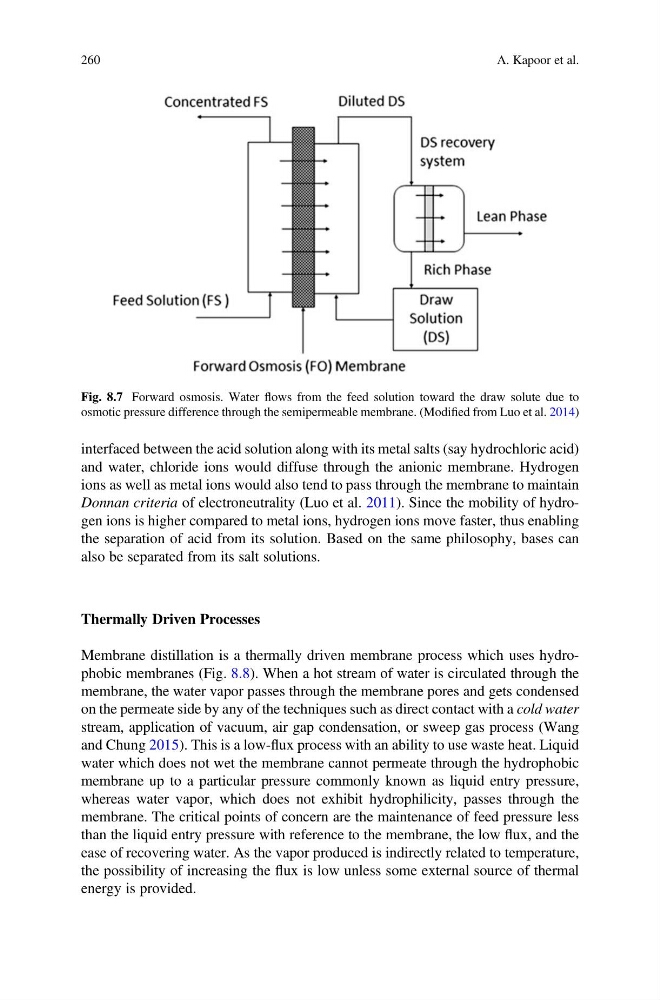
Fig. 8.7 Forward osmosis. Water flows from the feed solution toward the draw solute due to
osmotic pressure difference through the semipermeable membrane. (Modified from Luo et al. 2014)
260
A. Kapoor et al.
and water, chloride ions would diffuse through the anionic membrane. Hydrogen
ions as well as metal ions would also tend to pass through the membrane to maintain
Donnan criteria of electroneutrality (Luo et al. 2011). Since the mobility of hydrogen ions is higher compared to metal ions, hydrogen ions move faster, thus enabling
the separation of acid from its solution. Based on the same philosophy, bases can
also be separated from its salt solutions.
Thermally Driven Processes
Membrane distillation is a thermally driven membrane process which uses hydrophobic membranes (Fig. 8.8). When a hot stream of water is circulated through the
membrane, the water vapor passes through the membrane pores and gets condensed
on the permeate side by any of the techniques such as direct contact with a cold water
stream, application of vacuum, air gap condensation, or sweep gas process (Wang
and Chung 2015). This is a low-flux process with an ability to use waste heat. Liquid
water which does not wet the membrane cannot permeate through the hydrophobic
membrane up to a particular pressure commonly known as liquid entry pressure,
whereas water vapor, which does not exhibit hydrophilicity, passes through the
membrane. The critical points of concern are the maintenance of feed pressure less
than the liquid entry pressure with reference to the membrane, the low flux, and the
ease of recovering water. As the vapor produced is indirectly related to temperature,
the possibility of increasing the flux is low unless some external source of thermal
energy is provided.
Fig. 8.7 Forward osmosis. Water flows from the feed solution toward the draw solute due to
osmotic pressure difference through the semipermeable membrane. (Modified from Luo et al. 2014)
260
A. Kapoor et al.