

Domestic Wastewater
Domestic wastewater is water derived from daily human activities in the residences,
institutions, office buildings, commercial buildings, as well as healthcare and personal care facilities. Wastewater quantities from individual residences commonly
depend on the water consumption rate per capita and population density. On the
other hand, wastewater quantities from commercial sources are typically based on
the land-use area or the number of guests (Metcalf and Eddy 1981). The domestic
wastewater can be characterized by constituents of wastewater into four classes,
which are grey water, yellow water, brown water, and black water.
Grey water is wastewater with small amounts of nutrients, pathogens, and
suspended solids contamination, excluding toilet wastewater. It was called “grey
water” because the color of wastewater will be gradually changed to grey during
storage. The grey water is discharged from daily activities such as showering, hand
washing, clothes washing, and dishwashing (Wang et al. 2010). General composition of grey water depends on lifestyles, personal hygiene of human, as well as
climatic conditions. Showering wastewater is usually composed of soaps, dental
cares, shampoos, cosmetics, hair color, and other personal care products. Clothes
washing wastewater contains a group of nutrients (sodium, phosphorus, and
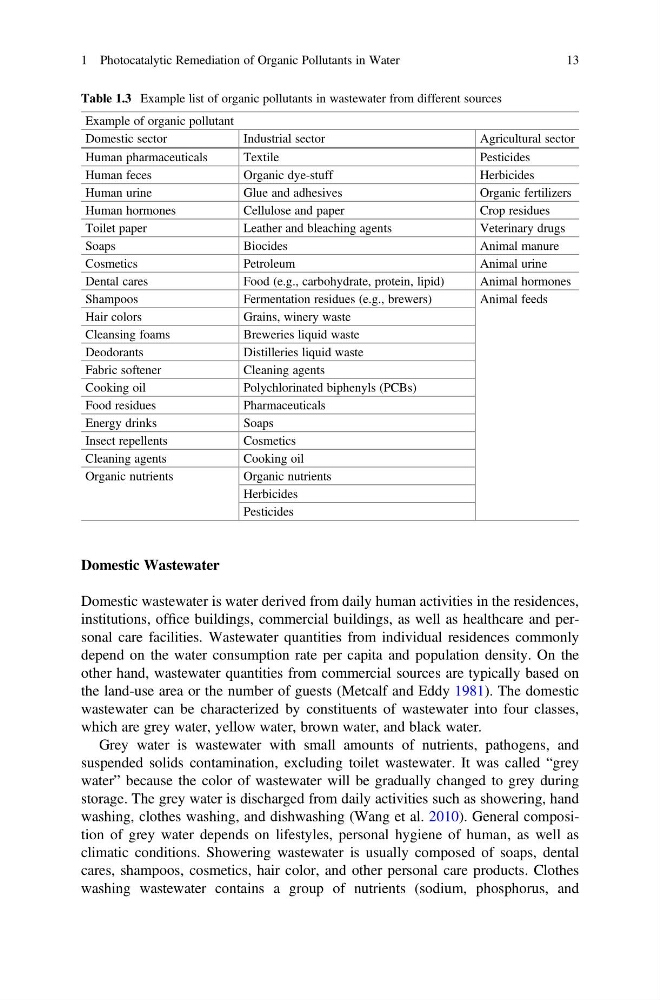
Table 1.3 Example list of organic pollutants in wastewater from different sources
Example of organic pollutant
Domestic sector
Industrial sector
Agricultural sector
Human pharmaceuticals
Textile
Pesticides
Human feces
Organic dye-stuff
Herbicides
Human urine
Glue and adhesives
Organic fertilizers
Human hormones
Cellulose and paper
Crop residues
Toilet paper
Leather and bleaching agents
Veterinary drugs
Soaps
Biocides
Animal manure
Cosmetics
Petroleum
Animal urine
Dental cares
Food (e.g., carbohydrate, protein, lipid)
Animal hormones
Shampoos
Fermentation residues (e.g., brewers)
Animal feeds
Hair colors
Grains, winery waste
Cleansing foams
Breweries liquid waste
Deodorants
Distilleries liquid waste
Fabric softener
Cleaning agents
Cooking oil
Polychlorinated biphenyls (PCBs)
Food residues
Pharmaceuticals
Energy drinks
Soaps
Insect repellents
Cosmetics
Cleaning agents
Cooking oil
Organic nutrients
Organic nutrients
Herbicides
Pesticides
1 Photocatalytic Remediation of Organic Pollutants in Water
13
Domestic wastewater is water derived from daily human activities in the residences,
institutions, office buildings, commercial buildings, as well as healthcare and personal care facilities. Wastewater quantities from individual residences commonly
depend on the water consumption rate per capita and population density. On the
other hand, wastewater quantities from commercial sources are typically based on
the land-use area or the number of guests (Metcalf and Eddy 1981). The domestic
wastewater can be characterized by constituents of wastewater into four classes,
which are grey water, yellow water, brown water, and black water.
Grey water is wastewater with small amounts of nutrients, pathogens, and
suspended solids contamination, excluding toilet wastewater. It was called “grey
water” because the color of wastewater will be gradually changed to grey during
storage. The grey water is discharged from daily activities such as showering, hand
washing, clothes washing, and dishwashing (Wang et al. 2010). General composition of grey water depends on lifestyles, personal hygiene of human, as well as
climatic conditions. Showering wastewater is usually composed of soaps, dental
cares, shampoos, cosmetics, hair color, and other personal care products. Clothes
washing wastewater contains a group of nutrients (sodium, phosphorus, and
Table 1.3 Example list of organic pollutants in wastewater from different sources
Example of organic pollutant
Domestic sector
Industrial sector
Agricultural sector
Human pharmaceuticals
Textile
Pesticides
Human feces
Organic dye-stuff
Herbicides
Human urine
Glue and adhesives
Organic fertilizers
Human hormones
Cellulose and paper
Crop residues
Toilet paper
Leather and bleaching agents
Veterinary drugs
Soaps
Biocides
Animal manure
Cosmetics
Petroleum
Animal urine
Dental cares
Food (e.g., carbohydrate, protein, lipid)
Animal hormones
Shampoos
Fermentation residues (e.g., brewers)
Animal feeds
Hair colors
Grains, winery waste
Cleansing foams
Breweries liquid waste
Deodorants
Distilleries liquid waste
Fabric softener
Cleaning agents
Cooking oil
Polychlorinated biphenyls (PCBs)
Food residues
Pharmaceuticals
Energy drinks
Soaps
Insect repellents
Cosmetics
Cleaning agents
Cooking oil
Organic nutrients
Organic nutrients
Herbicides
Pesticides
1 Photocatalytic Remediation of Organic Pollutants in Water
13