

2h
þ
þ 2H 2 O ! 2H
þ
þ H 2 O 2
ð1:22Þ
H 2 O 2 þ h υ ! HO
•
þ HO
•
ð1:23Þ
Reductive Reaction
The monovalent reduction of dissolved oxygen molecules which are adsorbed on the
surface of photocatalyst can generate the short-lived free radicals in the form of
superoxide anion radicals (O 2
•À ). Subsequently, the uncharged hydroperoxyl radicals (HO 2
•
) can be produced through protonation of O 2
•À . Hydrogen peroxide
(H 2 O 2 ) is feasibly formed by protonation and reduction of HO 2
•
. Ultimately, the
homolytic cleavage of H 2 O 2 is also able to form more hydroxyl radicals (HO
•
)
according to Eqs. (1.24–1.27) (Nosaka et al. 2002).
e
À
þ O 2 ! O 2
• À
ð1:24Þ
O 2
• À
þ H
þ
$ HO 2
•
ð1:25Þ
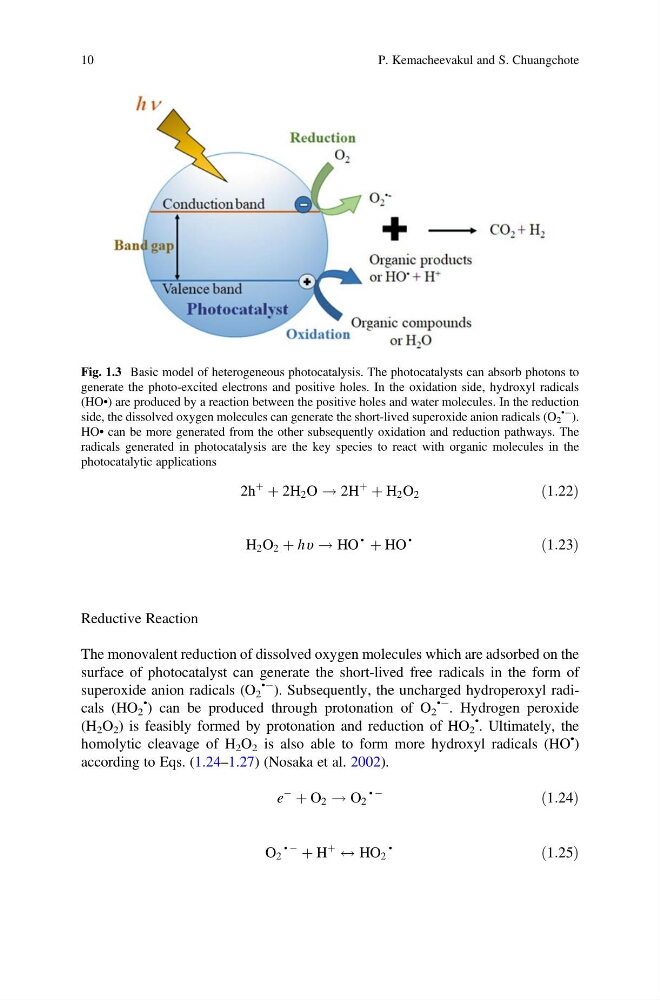
Fig. 1.3 Basic model of heterogeneous photocatalysis. The photocatalysts can absorb photons to
generate the photo-excited electrons and positive holes. In the oxidation side, hydroxyl radicals
(HO•) are produced by a reaction between the positive holes and water molecules. In the reduction
side, the dissolved oxygen molecules can generate the short-lived superoxide anion radicals (O 2
•À
).
HO• can be more generated from the other subsequently oxidation and reduction pathways. The
radicals generated in photocatalysis are the key species to react with organic molecules in the
photocatalytic applications
10
P. Kemacheevakul and S. Chuangchote
þ
þ 2H 2 O ! 2H
þ
þ H 2 O 2
ð1:22Þ
H 2 O 2 þ h υ ! HO
•
þ HO
•
ð1:23Þ
Reductive Reaction
The monovalent reduction of dissolved oxygen molecules which are adsorbed on the
surface of photocatalyst can generate the short-lived free radicals in the form of
superoxide anion radicals (O 2
•À ). Subsequently, the uncharged hydroperoxyl radicals (HO 2
•
) can be produced through protonation of O 2
•À . Hydrogen peroxide
(H 2 O 2 ) is feasibly formed by protonation and reduction of HO 2
•
. Ultimately, the
homolytic cleavage of H 2 O 2 is also able to form more hydroxyl radicals (HO
•
)
according to Eqs. (1.24–1.27) (Nosaka et al. 2002).
e
À
þ O 2 ! O 2
• À
ð1:24Þ
O 2
• À
þ H
þ
$ HO 2
•
ð1:25Þ
Fig. 1.3 Basic model of heterogeneous photocatalysis. The photocatalysts can absorb photons to
generate the photo-excited electrons and positive holes. In the oxidation side, hydroxyl radicals
(HO•) are produced by a reaction between the positive holes and water molecules. In the reduction
side, the dissolved oxygen molecules can generate the short-lived superoxide anion radicals (O 2
•À
).
HO• can be more generated from the other subsequently oxidation and reduction pathways. The
radicals generated in photocatalysis are the key species to react with organic molecules in the
photocatalytic applications
10
P. Kemacheevakul and S. Chuangchote