

pressure increases, even though it may become zero in some cases. When the static
pressure is high, the sonochemical effects get eradicated and drastically change in
the radical generation. However, the applied static pressure should be higher or
equivalent to the amplitude of acoustic pressure (Chakma and Moholkar 2013a, b,
2014). The formation of oxidizing agent such as
•
OH radical was the highest at
the ambient static pressure, while the generation of
•
OH radicals was zero when the
ambient pressure was 150 kPa, which is just above the acoustic pressure (P AW ). The
highest
• OH radical production was due to the occurrence of hot spot at which the
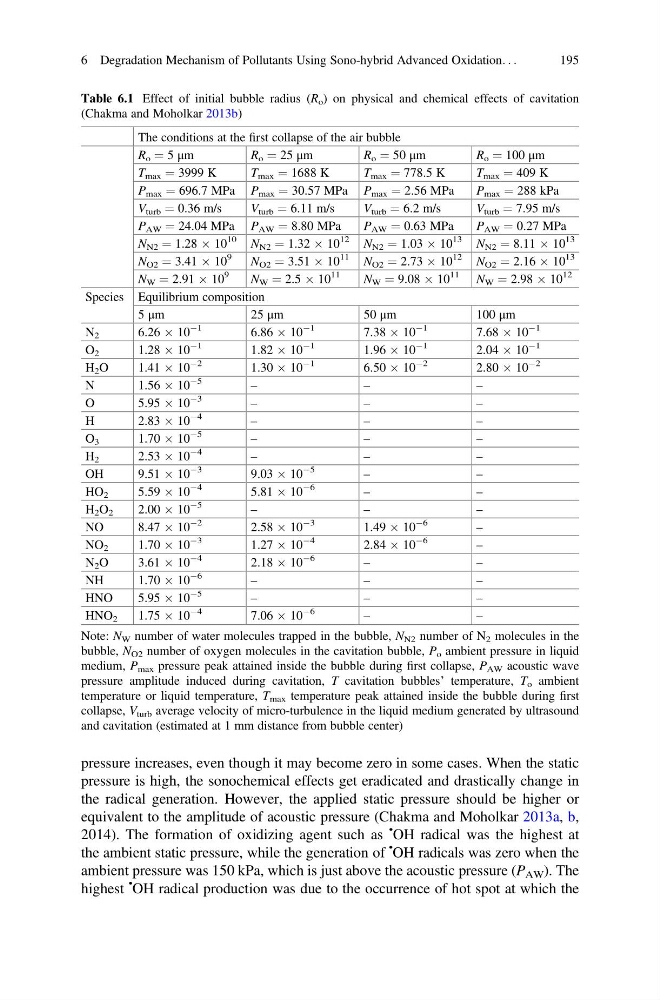
Table 6.1 Effect of initial bubble radius (R o ) on physical and chemical effects of cavitation
(Chakma and Moholkar 2013b)
The conditions at the first collapse of the air bubble
R o ¼ 5 μm
R o ¼ 25 μm
R o ¼ 50 μm
R o ¼ 100 μm
T max ¼ 3999 K
T max ¼ 1688 K
T max ¼ 778.5 K
T max ¼ 409 K
P max ¼ 696.7 MPa P max ¼ 30.57 MPa P max ¼ 2.56 MPa
P max ¼ 288 kPa
V turb ¼ 0.36 m/s
V turb ¼ 6.11 m/s
V turb ¼ 6.2 m/s
V turb ¼ 7.95 m/s
P AW ¼ 24.04 MPa P AW ¼ 8.80 MPa
P AW ¼ 0.63 MPa
P AW ¼ 0.27 MPa
N N2 ¼ 1.28 Â 10
10
N N2 ¼ 1.32 Â 10
12
N N2 ¼ 1.03 Â 10
13
N N2 ¼ 8.11 Â 10
13
N O2 ¼ 3.41 Â 10
9
N O2 ¼ 3.51 Â 10
11
N O2 ¼ 2.73 Â 10
12
N O2 ¼ 2.16 Â 10
13
N W ¼ 2.91 Â 10
9
N W ¼ 2.5 Â 10
11
N W ¼ 9.08 Â 10
11
N W ¼ 2.98 Â 10
12
Species Equilibrium composition
5 μm
2 5 μm
5 0 μm
100 μm
N 2
6.26 Â 10
À1
6.86 Â 10
À1
7.38 Â 10
À1
7.68 Â 10
À1
O 2
1.28 Â 10
À1
1.82 Â 10
À1
1.96 Â 10
À1
2.04 Â 10
À1
H 2 O
1.41 Â 10
À2
1.30 Â 10
À1
6.50 Â 10
À2
2.80 Â 10
À2
N
1.56 Â 10
À5
–
–
–
O
5.95 Â 10
À3
–
–
–
H
2.83 Â 10
À4
–
–
–
O 3
1.70 Â 10
À5
–
–
–
H 2
2.53 Â 10
À4
–
–
–
OH
9.51 Â 10
À3
9.03 Â 10
À5
–
–
HO 2
5.59 Â 10
À4
5.81 Â 10
À6
–
–
H 2 O 2
2.00 Â 10
À5
–
–
–
NO
8.47 Â 10
À2
2.58 Â 10
À3
1.49 Â 10
À6
–
NO 2
1.70 Â 10
À3
1.27 Â 10
À4
2.84 Â 10
À6
–
N 2 O
3.61 Â 10
À4
2.18 Â 10
À6
–
–
NH
1.70 Â 10
À6
–
–
–
HNO
5.95 Â 10
À5
–
–
–
HNO 2
1.75 Â 10
À4
7.06 Â 10
À6
–
–
Note: N W number of water molecules trapped in the bubble, N N2 number of N 2 molecules in the
bubble, N O2 number of oxygen molecules in the cavitation bubble, P o ambient pressure in liquid
medium, P max pressure peak attained inside the bubble during first collapse, P AW acoustic wave
pressure amplitude induced during cavitation, T cavitation bubbles’ temperature, T o ambient
temperature or liquid temperature, T max temperature peak attained inside the bubble during first
collapse, V turb average velocity of micro-turbulence in the liquid medium generated by ultrasound
and cavitation (estimated at 1 mm distance from bubble center)
6 Degradation Mechanism of Pollutants Using Sono-hybrid Advanced Oxidation. . .
195
pressure is high, the sonochemical effects get eradicated and drastically change in
the radical generation. However, the applied static pressure should be higher or
equivalent to the amplitude of acoustic pressure (Chakma and Moholkar 2013a, b,
2014). The formation of oxidizing agent such as
•
OH radical was the highest at
the ambient static pressure, while the generation of
•
OH radicals was zero when the
ambient pressure was 150 kPa, which is just above the acoustic pressure (P AW ). The
highest
• OH radical production was due to the occurrence of hot spot at which the
Table 6.1 Effect of initial bubble radius (R o ) on physical and chemical effects of cavitation
(Chakma and Moholkar 2013b)
The conditions at the first collapse of the air bubble
R o ¼ 5 μm
R o ¼ 25 μm
R o ¼ 50 μm
R o ¼ 100 μm
T max ¼ 3999 K
T max ¼ 1688 K
T max ¼ 778.5 K
T max ¼ 409 K
P max ¼ 696.7 MPa P max ¼ 30.57 MPa P max ¼ 2.56 MPa
P max ¼ 288 kPa
V turb ¼ 0.36 m/s
V turb ¼ 6.11 m/s
V turb ¼ 6.2 m/s
V turb ¼ 7.95 m/s
P AW ¼ 24.04 MPa P AW ¼ 8.80 MPa
P AW ¼ 0.63 MPa
P AW ¼ 0.27 MPa
N N2 ¼ 1.28 Â 10
10
N N2 ¼ 1.32 Â 10
12
N N2 ¼ 1.03 Â 10
13
N N2 ¼ 8.11 Â 10
13
N O2 ¼ 3.41 Â 10
9
N O2 ¼ 3.51 Â 10
11
N O2 ¼ 2.73 Â 10
12
N O2 ¼ 2.16 Â 10
13
N W ¼ 2.91 Â 10
9
N W ¼ 2.5 Â 10
11
N W ¼ 9.08 Â 10
11
N W ¼ 2.98 Â 10
12
Species Equilibrium composition
5 μm
2 5 μm
5 0 μm
100 μm
N 2
6.26 Â 10
À1
6.86 Â 10
À1
7.38 Â 10
À1
7.68 Â 10
À1
O 2
1.28 Â 10
À1
1.82 Â 10
À1
1.96 Â 10
À1
2.04 Â 10
À1
H 2 O
1.41 Â 10
À2
1.30 Â 10
À1
6.50 Â 10
À2
2.80 Â 10
À2
N
1.56 Â 10
À5
–
–
–
O
5.95 Â 10
À3
–
–
–
H
2.83 Â 10
À4
–
–
–
O 3
1.70 Â 10
À5
–
–
–
H 2
2.53 Â 10
À4
–
–
–
OH
9.51 Â 10
À3
9.03 Â 10
À5
–
–
HO 2
5.59 Â 10
À4
5.81 Â 10
À6
–
–
H 2 O 2
2.00 Â 10
À5
–
–
–
NO
8.47 Â 10
À2
2.58 Â 10
À3
1.49 Â 10
À6
–
NO 2
1.70 Â 10
À3
1.27 Â 10
À4
2.84 Â 10
À6
–
N 2 O
3.61 Â 10
À4
2.18 Â 10
À6
–
–
NH
1.70 Â 10
À6
–
–
–
HNO
5.95 Â 10
À5
–
–
–
HNO 2
1.75 Â 10
À4
7.06 Â 10
À6
–
–
Note: N W number of water molecules trapped in the bubble, N N2 number of N 2 molecules in the
bubble, N O2 number of oxygen molecules in the cavitation bubble, P o ambient pressure in liquid
medium, P max pressure peak attained inside the bubble during first collapse, P AW acoustic wave
pressure amplitude induced during cavitation, T cavitation bubbles’ temperature, T o ambient
temperature or liquid temperature, T max temperature peak attained inside the bubble during first
collapse, V turb average velocity of micro-turbulence in the liquid medium generated by ultrasound
and cavitation (estimated at 1 mm distance from bubble center)
6 Degradation Mechanism of Pollutants Using Sono-hybrid Advanced Oxidation. . .
195