

and Albanis 2004). Many factors like concentration of dye, amount of catalyst,
absorption wavelength, addition of oxidants, and occurrence of humic substances or
inorganic ions are responsible for altering kinetic study.
Photocatalytic degradation of azo dyes mostly depends upon observing chemical
oxygen demand and decolorization of dye solution. In monoazo dyes, acid orange
7 was discussed, which is the most explored compound among azo dyes with its
photodegradation ability under several parameters (Stylidi et al. 2003; Chen et al.
2001). Acid orange 7 is a targeted pollutant for oxidative removal of azo dyes, and it
was specified that benzenesulfonate and naphthoquinone are the chief degradation
products. For the degradation of di and triazo dyes, same conclusion was attained,
and occurrence of phenol and 4-nitro-2-hydroxyphenol was inspected as intermediates (Grzechulska and Morawski 2002; Tanaka et al. 2000; Sauer et al. 2002).
The photodecomposition of azo dyes via TiO 2 modified with transition element
also reported and found highly efficient (Rauf et al. 2011). On the basis of the
reaction, it was discovered that molecular oxygen and other reactive species (O 2
•À ,
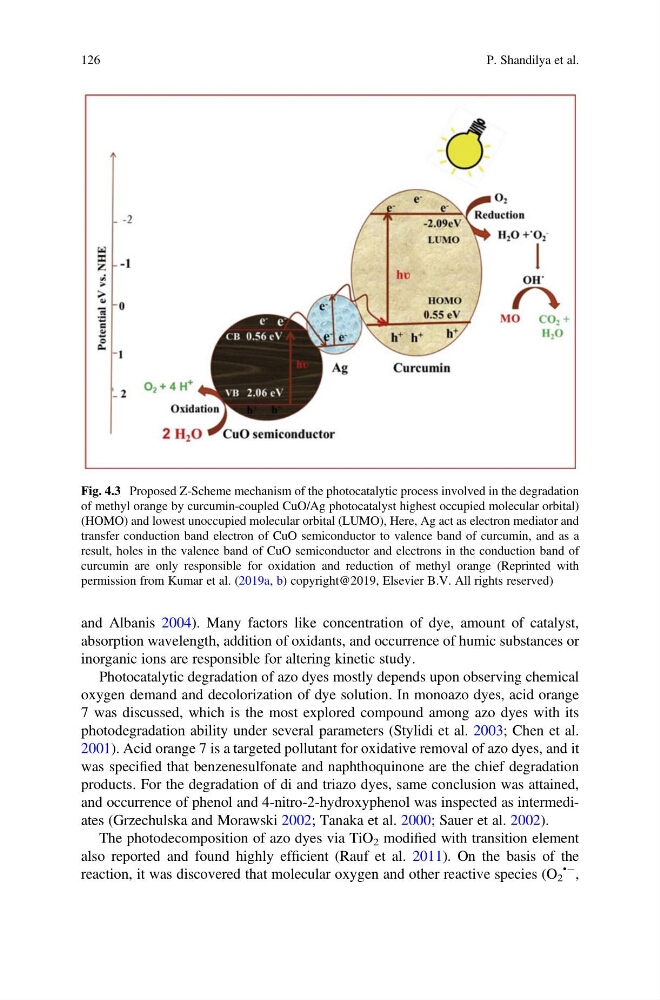
Fig. 4.3 Proposed Z-Scheme mechanism of the photocatalytic process involved in the degradation
of methyl orange by curcumin-coupled CuO/Ag photocatalyst highest occupied molecular orbital)
(HOMO) and lowest unoccupied molecular orbital (LUMO), Here, Ag act as electron mediator and
transfer conduction band electron of CuO semiconductor to valence band of curcumin, and as a
result, holes in the valence band of CuO semiconductor and electrons in the conduction band of
curcumin are only responsible for oxidation and reduction of methyl orange (Reprinted with
permission from Kumar et al. (2019a, b) copyright@2019, Elsevier B.V. All rights reserved)
126
P. Shandilya et al.
absorption wavelength, addition of oxidants, and occurrence of humic substances or
inorganic ions are responsible for altering kinetic study.
Photocatalytic degradation of azo dyes mostly depends upon observing chemical
oxygen demand and decolorization of dye solution. In monoazo dyes, acid orange
7 was discussed, which is the most explored compound among azo dyes with its
photodegradation ability under several parameters (Stylidi et al. 2003; Chen et al.
2001). Acid orange 7 is a targeted pollutant for oxidative removal of azo dyes, and it
was specified that benzenesulfonate and naphthoquinone are the chief degradation
products. For the degradation of di and triazo dyes, same conclusion was attained,
and occurrence of phenol and 4-nitro-2-hydroxyphenol was inspected as intermediates (Grzechulska and Morawski 2002; Tanaka et al. 2000; Sauer et al. 2002).
The photodecomposition of azo dyes via TiO 2 modified with transition element
also reported and found highly efficient (Rauf et al. 2011). On the basis of the
reaction, it was discovered that molecular oxygen and other reactive species (O 2
•À ,
Fig. 4.3 Proposed Z-Scheme mechanism of the photocatalytic process involved in the degradation
of methyl orange by curcumin-coupled CuO/Ag photocatalyst highest occupied molecular orbital)
(HOMO) and lowest unoccupied molecular orbital (LUMO), Here, Ag act as electron mediator and
transfer conduction band electron of CuO semiconductor to valence band of curcumin, and as a
result, holes in the valence band of CuO semiconductor and electrons in the conduction band of
curcumin are only responsible for oxidation and reduction of methyl orange (Reprinted with
permission from Kumar et al. (2019a, b) copyright@2019, Elsevier B.V. All rights reserved)
126
P. Shandilya et al.