

4 Climate Change and Water Resources in West Africa …
69
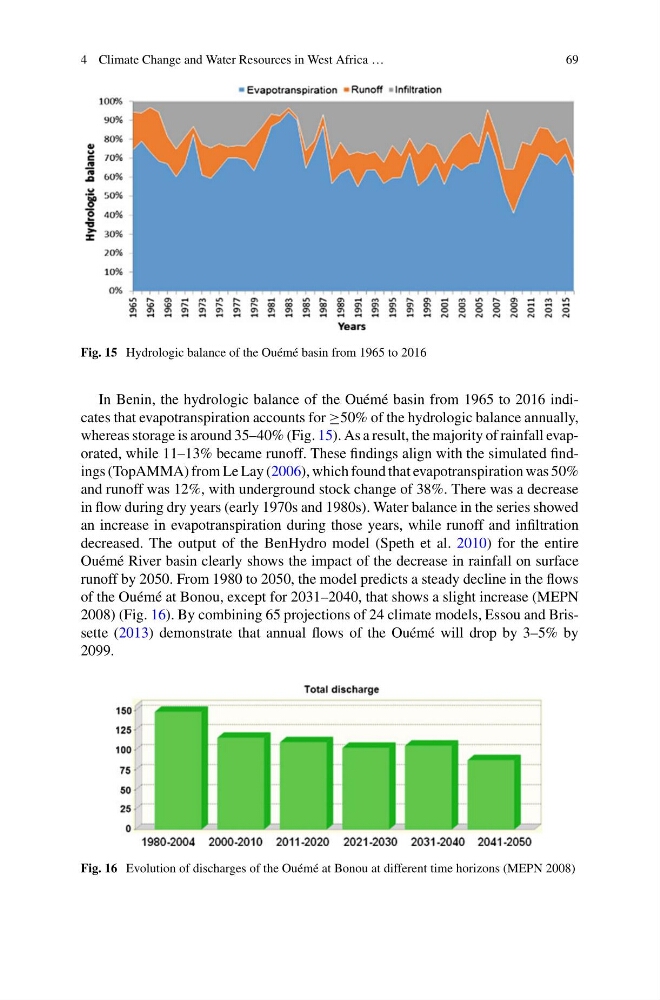
Fig. 15 Hydrologic balance of the Ouémé basin from 1965 to 2016
In Benin, the hydrologic balance of the Ouémé basin from 1965 to 2016 indicates that evapotranspiration accounts for ≥50% of the hydrologic balance annually,
whereas storage is around 35–40% (Fig. 15). As a result, the majority of rainfall evaporated, while 11–13% became runoff. These findings align with the simulated findings (TopAMMA) from Le Lay (2006), which found that evapotranspiration was 50%
and runoff was 12%, with underground stock change of 38%. There was a decrease
in flow during dry years (early 1970s and 1980s). Water balance in the series showed
an increase in evapotranspiration during those years, while runoff and infiltration
decreased. The output of the BenHydro model (Speth et al. 2010) for the entire
Ouémé River basin clearly shows the impact of the decrease in rainfall on surface
runoff by 2050. From 1980 to 2050, the model predicts a steady decline in the flows
of the Ouémé at Bonou, except for 2031–2040, that shows a slight increase (MEPN
2008) (Fig. 16). By combining 65 projections of 24 climate models, Essou and Brissette (2013) demonstrate that annual flows of the Ouémé will drop by 3–5% by
2099.
Fig. 16 Evolution of discharges of the Ouémé at Bonou at different time horizons (MEPN 2008)
69
Fig. 15 Hydrologic balance of the Ouémé basin from 1965 to 2016
In Benin, the hydrologic balance of the Ouémé basin from 1965 to 2016 indicates that evapotranspiration accounts for ≥50% of the hydrologic balance annually,
whereas storage is around 35–40% (Fig. 15). As a result, the majority of rainfall evaporated, while 11–13% became runoff. These findings align with the simulated findings (TopAMMA) from Le Lay (2006), which found that evapotranspiration was 50%
and runoff was 12%, with underground stock change of 38%. There was a decrease
in flow during dry years (early 1970s and 1980s). Water balance in the series showed
an increase in evapotranspiration during those years, while runoff and infiltration
decreased. The output of the BenHydro model (Speth et al. 2010) for the entire
Ouémé River basin clearly shows the impact of the decrease in rainfall on surface
runoff by 2050. From 1980 to 2050, the model predicts a steady decline in the flows
of the Ouémé at Bonou, except for 2031–2040, that shows a slight increase (MEPN
2008) (Fig. 16). By combining 65 projections of 24 climate models, Essou and Brissette (2013) demonstrate that annual flows of the Ouémé will drop by 3–5% by
2099.
Fig. 16 Evolution of discharges of the Ouémé at Bonou at different time horizons (MEPN 2008)