

464
L. Ferrini et al.
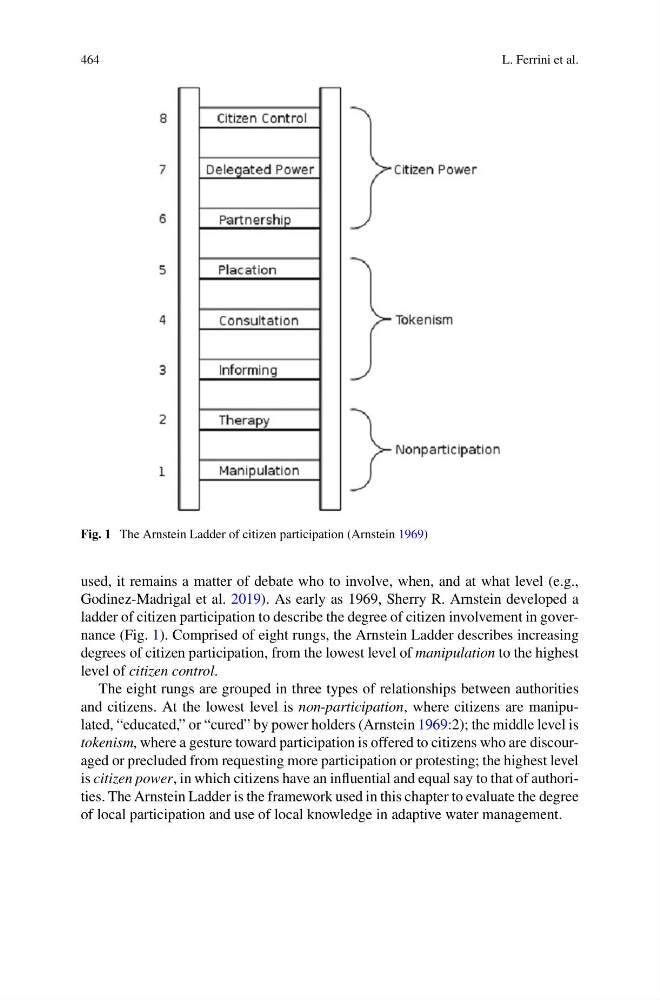
Fig. 1 The Arnstein Ladder of citizen participation (Arnstein 1969)
used, it remains a matter of debate who to involve, when, and at what level (e.g.,
Godinez-Madrigal et al. 2019). As early as 1969, Sherry R. Arnstein developed a
ladder of citizen participation to describe the degree of citizen involvement in governance (Fig. 1). Comprised of eight rungs, the Arnstein Ladder describes increasing
degrees of citizen participation, from the lowest level of manipulation to the highest
level of citizen control.
The eight rungs are grouped in three types of relationships between authorities
and citizens. At the lowest level is non-participation, where citizens are manipulated, “educated,” or “cured” by power holders (Arnstein 1969:2); the middle level is
tokenism, where a gesture toward participation is offered to citizens who are discouraged or precluded from requesting more participation or protesting; the highest level
is citizen power, in which citizens have an influential and equal say to that of authorities. The Arnstein Ladder is the framework used in this chapter to evaluate the degree
of local participation and use of local knowledge in adaptive water management.
L. Ferrini et al.
Fig. 1 The Arnstein Ladder of citizen participation (Arnstein 1969)
used, it remains a matter of debate who to involve, when, and at what level (e.g.,
Godinez-Madrigal et al. 2019). As early as 1969, Sherry R. Arnstein developed a
ladder of citizen participation to describe the degree of citizen involvement in governance (Fig. 1). Comprised of eight rungs, the Arnstein Ladder describes increasing
degrees of citizen participation, from the lowest level of manipulation to the highest
level of citizen control.
The eight rungs are grouped in three types of relationships between authorities
and citizens. At the lowest level is non-participation, where citizens are manipulated, “educated,” or “cured” by power holders (Arnstein 1969:2); the middle level is
tokenism, where a gesture toward participation is offered to citizens who are discouraged or precluded from requesting more participation or protesting; the highest level
is citizen power, in which citizens have an influential and equal say to that of authorities. The Arnstein Ladder is the framework used in this chapter to evaluate the degree
of local participation and use of local knowledge in adaptive water management.