

19 Mainstreaming Climate Change into Transboundary …
447
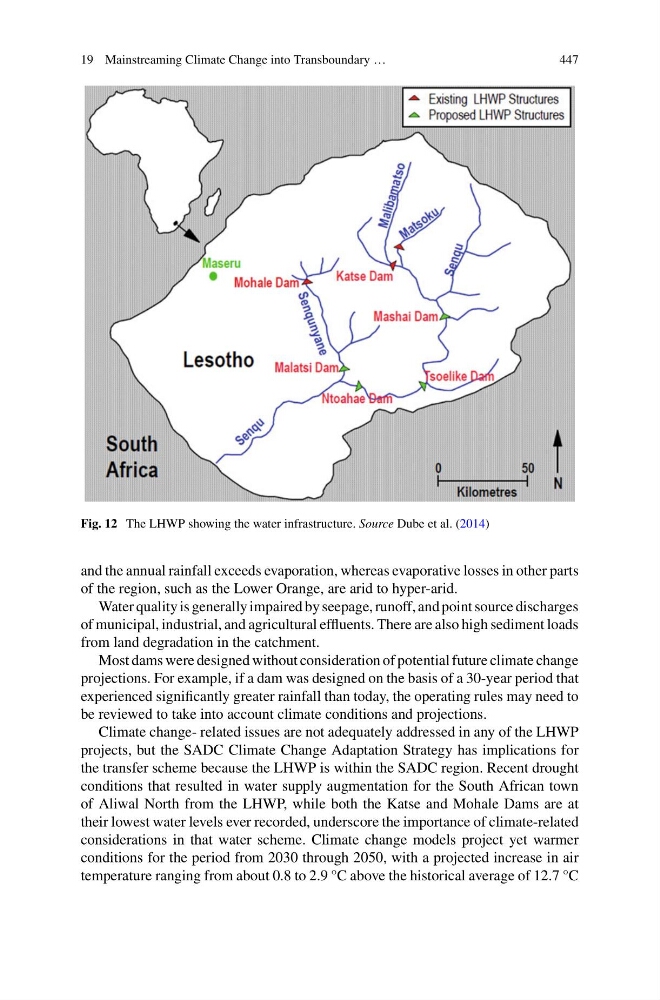
Fig. 12 The LHWP showing the water infrastructure. Source Dube et al. (2014)
and the annual rainfall exceeds evaporation, whereas evaporative losses in other parts
of the region, such as the Lower Orange, are arid to hyper-arid.
Water quality is generally impaired by seepage, runoff, and point source discharges
of municipal, industrial, and agricultural effluents. There are also high sediment loads
from land degradation in the catchment.
Most dams were designed without consideration of potential future climate change
projections. For example, if a dam was designed on the basis of a 30-year period that
experienced significantly greater rainfall than today, the operating rules may need to
be reviewed to take into account climate conditions and projections.
Climate change- related issues are not adequately addressed in any of the LHWP
projects, but the SADC Climate Change Adaptation Strategy has implications for
the transfer scheme because the LHWP is within the SADC region. Recent drought
conditions that resulted in water supply augmentation for the South African town
of Aliwal North from the LHWP, while both the Katse and Mohale Dams are at
their lowest water levels ever recorded, underscore the importance of climate-related
considerations in that water scheme. Climate change models project yet warmer
conditions for the period from 2030 through 2050, with a projected increase in air
temperature ranging from about 0.8 to 2.9 °C above the historical average of 12.7 °C
447
Fig. 12 The LHWP showing the water infrastructure. Source Dube et al. (2014)
and the annual rainfall exceeds evaporation, whereas evaporative losses in other parts
of the region, such as the Lower Orange, are arid to hyper-arid.
Water quality is generally impaired by seepage, runoff, and point source discharges
of municipal, industrial, and agricultural effluents. There are also high sediment loads
from land degradation in the catchment.
Most dams were designed without consideration of potential future climate change
projections. For example, if a dam was designed on the basis of a 30-year period that
experienced significantly greater rainfall than today, the operating rules may need to
be reviewed to take into account climate conditions and projections.
Climate change- related issues are not adequately addressed in any of the LHWP
projects, but the SADC Climate Change Adaptation Strategy has implications for
the transfer scheme because the LHWP is within the SADC region. Recent drought
conditions that resulted in water supply augmentation for the South African town
of Aliwal North from the LHWP, while both the Katse and Mohale Dams are at
their lowest water levels ever recorded, underscore the importance of climate-related
considerations in that water scheme. Climate change models project yet warmer
conditions for the period from 2030 through 2050, with a projected increase in air
temperature ranging from about 0.8 to 2.9 °C above the historical average of 12.7 °C