

436
M. C. Moseki
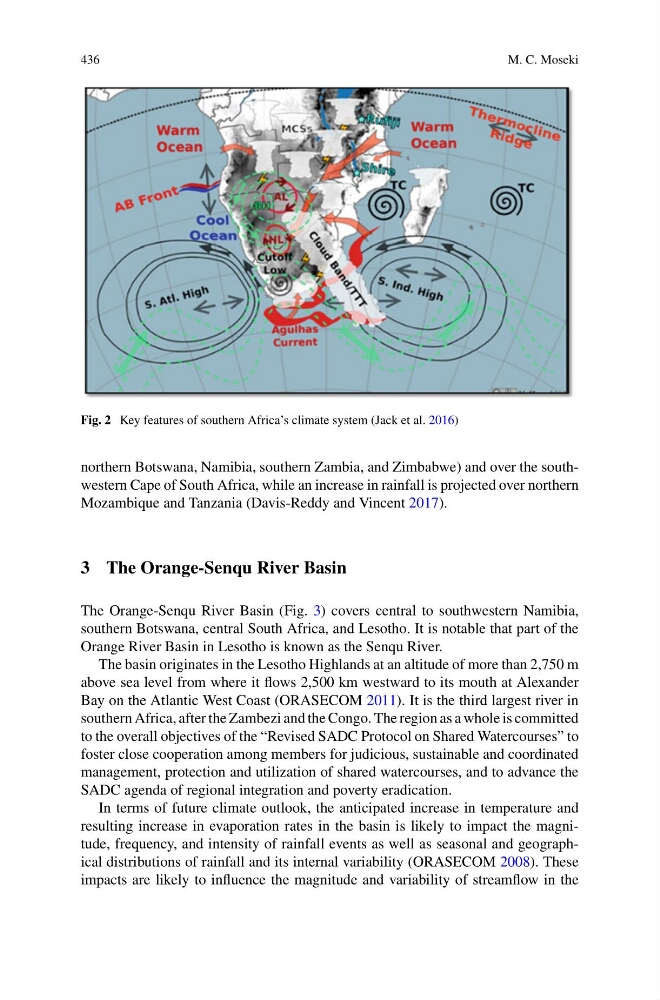
Fig. 2 Key features of southern Africa’s climate system (Jack et al. 2016)
northern Botswana, Namibia, southern Zambia, and Zimbabwe) and over the southwestern Cape of South Africa, while an increase in rainfall is projected over northern
Mozambique and Tanzania (Davis-Reddy and Vincent 2017).
3 The Orange-Senqu River Basin
The Orange-Senqu River Basin (Fig. 3) covers central to southwestern Namibia,
southern Botswana, central South Africa, and Lesotho. It is notable that part of the
Orange River Basin in Lesotho is known as the Senqu River.
The basin originates in the Lesotho Highlands at an altitude of more than 2,750 m
above sea level from where it flows 2,500 km westward to its mouth at Alexander
Bay on the Atlantic West Coast (ORASECOM 2011). It is the third largest river in
southern Africa, after the Zambezi and the Congo. The region as a whole is committed
to the overall objectives of the “Revised SADC Protocol on Shared Watercourses” to
foster close cooperation among members for judicious, sustainable and coordinated
management, protection and utilization of shared watercourses, and to advance the
SADC agenda of regional integration and poverty eradication.
In terms of future climate outlook, the anticipated increase in temperature and
resulting increase in evaporation rates in the basin is likely to impact the magnitude, frequency, and intensity of rainfall events as well as seasonal and geographical distributions of rainfall and its internal variability (ORASECOM 2008). These
impacts are likely to influence the magnitude and variability of streamflow in the
M. C. Moseki
Fig. 2 Key features of southern Africa’s climate system (Jack et al. 2016)
northern Botswana, Namibia, southern Zambia, and Zimbabwe) and over the southwestern Cape of South Africa, while an increase in rainfall is projected over northern
Mozambique and Tanzania (Davis-Reddy and Vincent 2017).
3 The Orange-Senqu River Basin
The Orange-Senqu River Basin (Fig. 3) covers central to southwestern Namibia,
southern Botswana, central South Africa, and Lesotho. It is notable that part of the
Orange River Basin in Lesotho is known as the Senqu River.
The basin originates in the Lesotho Highlands at an altitude of more than 2,750 m
above sea level from where it flows 2,500 km westward to its mouth at Alexander
Bay on the Atlantic West Coast (ORASECOM 2011). It is the third largest river in
southern Africa, after the Zambezi and the Congo. The region as a whole is committed
to the overall objectives of the “Revised SADC Protocol on Shared Watercourses” to
foster close cooperation among members for judicious, sustainable and coordinated
management, protection and utilization of shared watercourses, and to advance the
SADC agenda of regional integration and poverty eradication.
In terms of future climate outlook, the anticipated increase in temperature and
resulting increase in evaporation rates in the basin is likely to impact the magnitude, frequency, and intensity of rainfall events as well as seasonal and geographical distributions of rainfall and its internal variability (ORASECOM 2008). These
impacts are likely to influence the magnitude and variability of streamflow in the