

11 Saharan Agriculture in the Algerian Oasis …
249
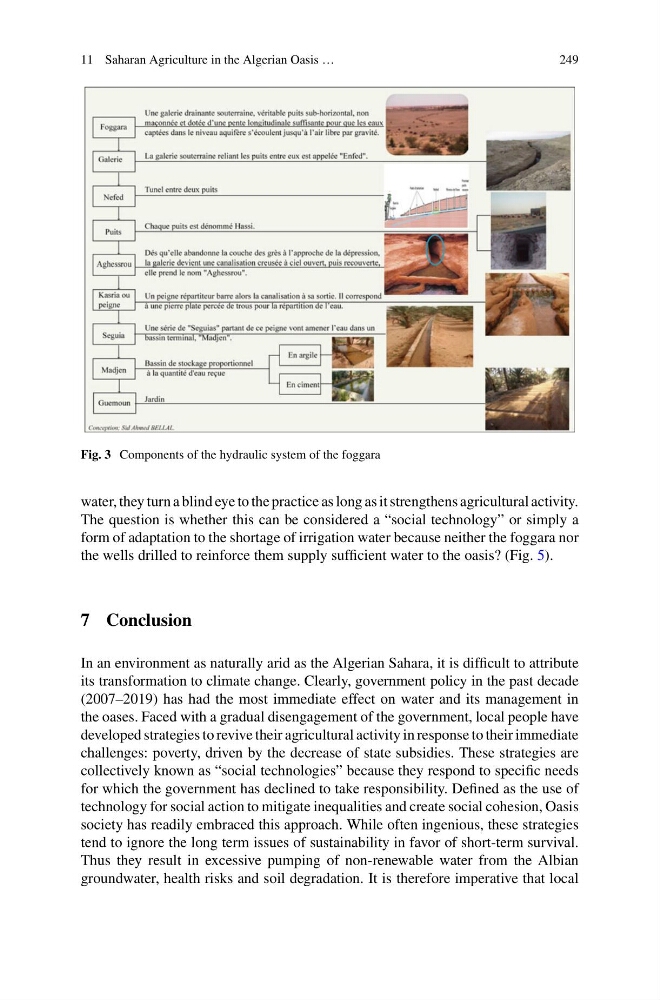
Fig. 3 Components of the hydraulic system of the foggara
water, they turn a blind eye to the practice as long as it strengthens agricultural activity.
The question is whether this can be considered a “social technology” or simply a
form of adaptation to the shortage of irrigation water because neither the foggara nor
the wells drilled to reinforce them supply sufficient water to the oasis? (Fig. 5).
7 Conclusion
In an environment as naturally arid as the Algerian Sahara, it is difficult to attribute
its transformation to climate change. Clearly, government policy in the past decade
(2007–2019) has had the most immediate effect on water and its management in
the oases. Faced with a gradual disengagement of the government, local people have
developed strategies to revive their agricultural activity in response to their immediate
challenges: poverty, driven by the decrease of state subsidies. These strategies are
collectively known as “social technologies” because they respond to specific needs
for which the government has declined to take responsibility. Defined as the use of
technology for social action to mitigate inequalities and create social cohesion, Oasis
society has readily embraced this approach. While often ingenious, these strategies
tend to ignore the long term issues of sustainability in favor of short-term survival.
Thus they result in excessive pumping of non-renewable water from the Albian
groundwater, health risks and soil degradation. It is therefore imperative that local
249
Fig. 3 Components of the hydraulic system of the foggara
water, they turn a blind eye to the practice as long as it strengthens agricultural activity.
The question is whether this can be considered a “social technology” or simply a
form of adaptation to the shortage of irrigation water because neither the foggara nor
the wells drilled to reinforce them supply sufficient water to the oasis? (Fig. 5).
7 Conclusion
In an environment as naturally arid as the Algerian Sahara, it is difficult to attribute
its transformation to climate change. Clearly, government policy in the past decade
(2007–2019) has had the most immediate effect on water and its management in
the oases. Faced with a gradual disengagement of the government, local people have
developed strategies to revive their agricultural activity in response to their immediate
challenges: poverty, driven by the decrease of state subsidies. These strategies are
collectively known as “social technologies” because they respond to specific needs
for which the government has declined to take responsibility. Defined as the use of
technology for social action to mitigate inequalities and create social cohesion, Oasis
society has readily embraced this approach. While often ingenious, these strategies
tend to ignore the long term issues of sustainability in favor of short-term survival.
Thus they result in excessive pumping of non-renewable water from the Albian
groundwater, health risks and soil degradation. It is therefore imperative that local