

248
M. Hadeid et al.
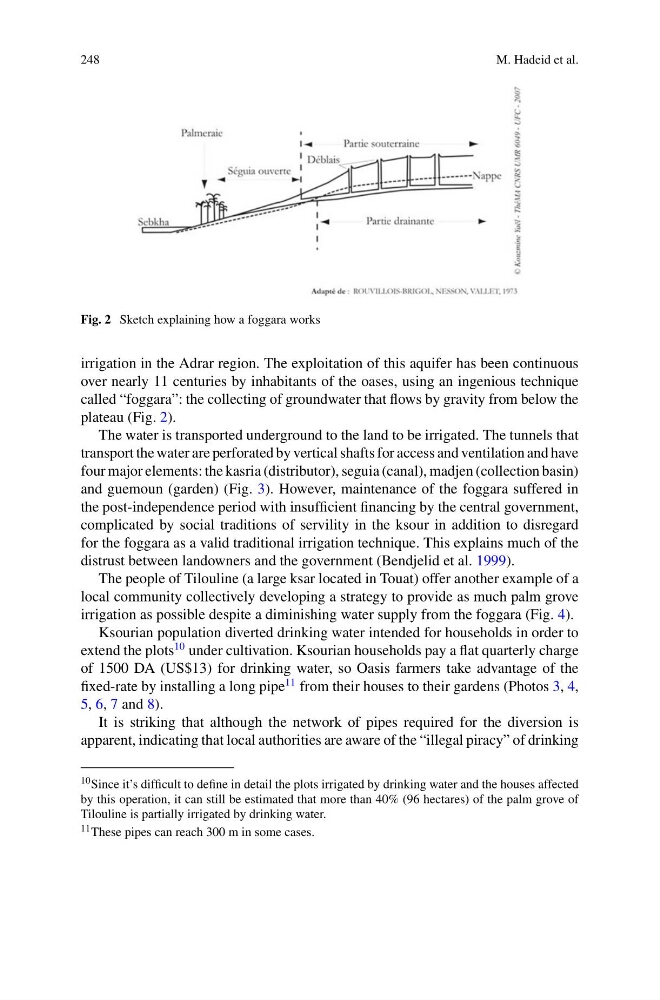
Fig. 2 Sketch explaining how a foggara works
irrigation in the Adrar region. The exploitation of this aquifer has been continuous
over nearly 11 centuries by inhabitants of the oases, using an ingenious technique
called “foggara”: the collecting of groundwater that flows by gravity from below the
plateau (Fig. 2).
The water is transported underground to the land to be irrigated. The tunnels that
transport the water are perforated by vertical shafts for access and ventilation and have
four major elements: the kasria (distributor), seguia (canal), madjen (collection basin)
and guemoun (garden) (Fig. 3). However, maintenance of the foggara suffered in
the post-independence period with insufficient financing by the central government,
complicated by social traditions of servility in the ksour in addition to disregard
for the foggara as a valid traditional irrigation technique. This explains much of the
distrust between landowners and the government (Bendjelid et al. 1999).
The people of Tilouline (a large ksar located in Touat) offer another example of a
local community collectively developing a strategy to provide as much palm grove
irrigation as possible despite a diminishing water supply from the foggara (Fig. 4).
Ksourian population diverted drinking water intended for households in order to
extend the plots
10 under cultivation. Ksourian households pay a flat quarterly charge
of 1500 DA (US$13) for drinking water, so Oasis farmers take advantage of the
fixed-rate by installing a long pipe
11 from their houses to their gardens (Photos 3, 4,
5, 6, 7 and 8).
It is striking that although the network of pipes required for the diversion is
apparent, indicating that local authorities are aware of the “illegal piracy” of drinking
10 Since it’s difficult to define in detail the plots irrigated by drinking water and the houses affected
by this operation, it can still be estimated that more than 40% (96 hectares) of the palm grove of
Tilouline is partially irrigated by drinking water.
11 These pipes can reach 300 m in some cases.
M. Hadeid et al.
Fig. 2 Sketch explaining how a foggara works
irrigation in the Adrar region. The exploitation of this aquifer has been continuous
over nearly 11 centuries by inhabitants of the oases, using an ingenious technique
called “foggara”: the collecting of groundwater that flows by gravity from below the
plateau (Fig. 2).
The water is transported underground to the land to be irrigated. The tunnels that
transport the water are perforated by vertical shafts for access and ventilation and have
four major elements: the kasria (distributor), seguia (canal), madjen (collection basin)
and guemoun (garden) (Fig. 3). However, maintenance of the foggara suffered in
the post-independence period with insufficient financing by the central government,
complicated by social traditions of servility in the ksour in addition to disregard
for the foggara as a valid traditional irrigation technique. This explains much of the
distrust between landowners and the government (Bendjelid et al. 1999).
The people of Tilouline (a large ksar located in Touat) offer another example of a
local community collectively developing a strategy to provide as much palm grove
irrigation as possible despite a diminishing water supply from the foggara (Fig. 4).
Ksourian population diverted drinking water intended for households in order to
extend the plots
10 under cultivation. Ksourian households pay a flat quarterly charge
of 1500 DA (US$13) for drinking water, so Oasis farmers take advantage of the
fixed-rate by installing a long pipe
11 from their houses to their gardens (Photos 3, 4,
5, 6, 7 and 8).
It is striking that although the network of pipes required for the diversion is
apparent, indicating that local authorities are aware of the “illegal piracy” of drinking
10 Since it’s difficult to define in detail the plots irrigated by drinking water and the houses affected
by this operation, it can still be estimated that more than 40% (96 hectares) of the palm grove of
Tilouline is partially irrigated by drinking water.
11 These pipes can reach 300 m in some cases.