

164
M. T. Sall et al.
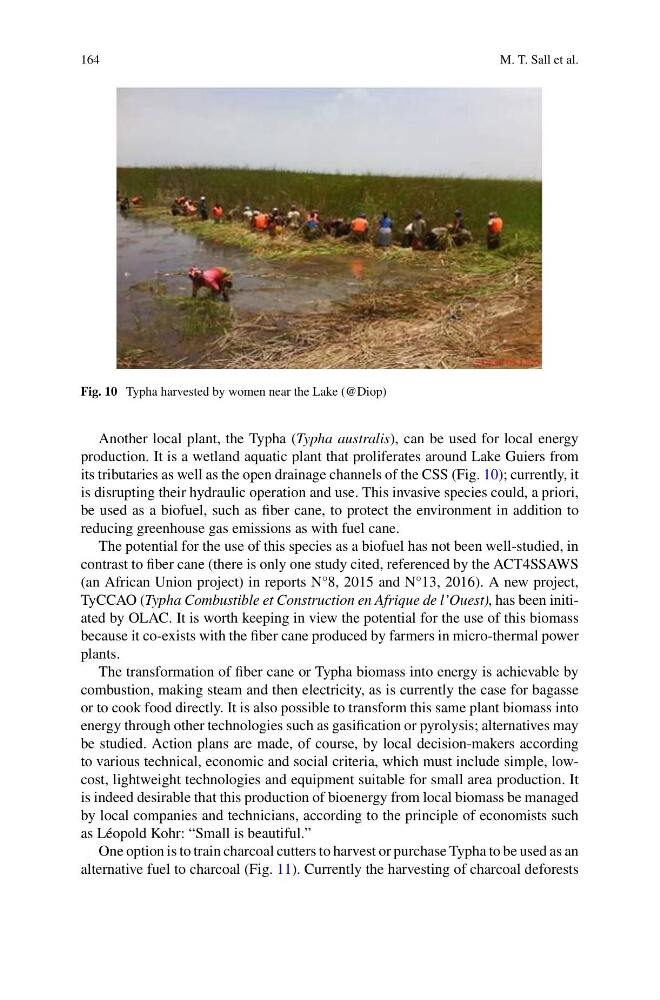
Fig. 10 Typha harvested by women near the Lake (@Diop)
Another local plant, the Typha (Typha australis), can be used for local energy
production. It is a wetland aquatic plant that proliferates around Lake Guiers from
its tributaries as well as the open drainage channels of the CSS (Fig. 10); currently, it
is disrupting their hydraulic operation and use. This invasive species could, a priori,
be used as a biofuel, such as fiber cane, to protect the environment in addition to
reducing greenhouse gas emissions as with fuel cane.
The potential for the use of this species as a biofuel has not been well-studied, in
contrast to fiber cane (there is only one study cited, referenced by the ACT4SSAWS
(an African Union project) in reports N°8, 2015 and N°13, 2016). A new project,
TyCCAO (Typha Combustible et Construction en Afrique de l’Ouest), has been initiated by OLAC. It is worth keeping in view the potential for the use of this biomass
because it co-exists with the fiber cane produced by farmers in micro-thermal power
plants.
The transformation of fiber cane or Typha biomass into energy is achievable by
combustion, making steam and then electricity, as is currently the case for bagasse
or to cook food directly. It is also possible to transform this same plant biomass into
energy through other technologies such as gasification or pyrolysis; alternatives may
be studied. Action plans are made, of course, by local decision-makers according
to various technical, economic and social criteria, which must include simple, lowcost, lightweight technologies and equipment suitable for small area production. It
is indeed desirable that this production of bioenergy from local biomass be managed
by local companies and technicians, according to the principle of economists such
as Léopold Kohr: “Small is beautiful.”
One option is to train charcoal cutters to harvest or purchase Typha to be used as an
alternative fuel to charcoal (Fig. 11). Currently the harvesting of charcoal deforests
M. T. Sall et al.
Fig. 10 Typha harvested by women near the Lake (@Diop)
Another local plant, the Typha (Typha australis), can be used for local energy
production. It is a wetland aquatic plant that proliferates around Lake Guiers from
its tributaries as well as the open drainage channels of the CSS (Fig. 10); currently, it
is disrupting their hydraulic operation and use. This invasive species could, a priori,
be used as a biofuel, such as fiber cane, to protect the environment in addition to
reducing greenhouse gas emissions as with fuel cane.
The potential for the use of this species as a biofuel has not been well-studied, in
contrast to fiber cane (there is only one study cited, referenced by the ACT4SSAWS
(an African Union project) in reports N°8, 2015 and N°13, 2016). A new project,
TyCCAO (Typha Combustible et Construction en Afrique de l’Ouest), has been initiated by OLAC. It is worth keeping in view the potential for the use of this biomass
because it co-exists with the fiber cane produced by farmers in micro-thermal power
plants.
The transformation of fiber cane or Typha biomass into energy is achievable by
combustion, making steam and then electricity, as is currently the case for bagasse
or to cook food directly. It is also possible to transform this same plant biomass into
energy through other technologies such as gasification or pyrolysis; alternatives may
be studied. Action plans are made, of course, by local decision-makers according
to various technical, economic and social criteria, which must include simple, lowcost, lightweight technologies and equipment suitable for small area production. It
is indeed desirable that this production of bioenergy from local biomass be managed
by local companies and technicians, according to the principle of economists such
as Léopold Kohr: “Small is beautiful.”
One option is to train charcoal cutters to harvest or purchase Typha to be used as an
alternative fuel to charcoal (Fig. 11). Currently the harvesting of charcoal deforests