

138
T. A. Abiye and K. C. Leketa
Table 1 (continued)
Sample
ID
δ 18 O
(‰)
±δ 18 O
(‰)
δ 2 H
(‰)
±δ 2 H
(‰)
14 C
(pMC)
14 C (years) T (°C)
calculated
SP1
−4.97 0.10
−27.6 0.4
82±2.5
1641±10 12.4
SP2
−5.11 0.10
−27.5 0.5
79.9±2.5 1855±10 12.2
SP3
−2.81 0.15
−11.7 1.5
81.7±2.5 1671±10 15.5
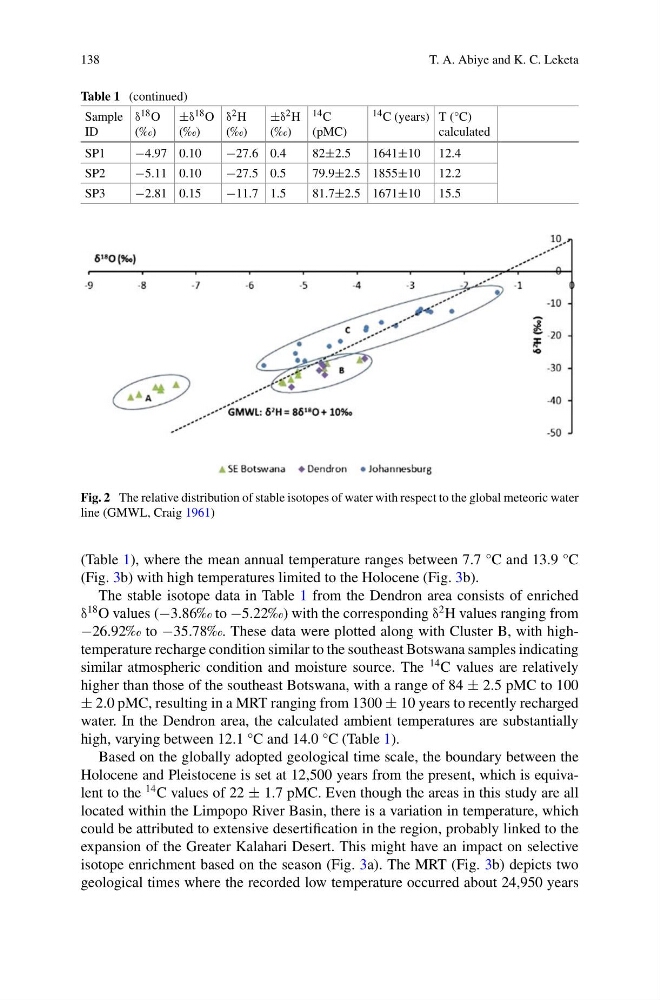
Fig. 2 The relative distribution of stable isotopes of water with respect to the global meteoric water
line (GMWL, Craig 1961)
(Table 1), where the mean annual temperature ranges between 7.7 °C and 13.9 °C
(Fig. 3b) with high temperatures limited to the Holocene (Fig. 3b).
The stable isotope data in Table 1 from the Dendron area consists of enriched
δ
18 O values (−3.86‰ to −5.22‰) with the corresponding δ
2 H values ranging from
−26.92‰ to −35.78‰. These data were plotted along with Cluster B, with hightemperature recharge condition similar to the southeast Botswana samples indicating
similar atmospheric condition and moisture source. The
14 C values are relatively
higher than those of the southeast Botswana, with a range of 84 ± 2.5 pMC to 100
± 2.0 pMC, resulting in a MRT ranging from 1300 ± 10 years to recently recharged
water. In the Dendron area, the calculated ambient temperatures are substantially
high, varying between 12.1 °C and 14.0 °C (Table 1).
Based on the globally adopted geological time scale, the boundary between the
Holocene and Pleistocene is set at 12,500 years from the present, which is equivalent to the
14 C values of 22 ± 1.7 pMC. Even though the areas in this study are all
located within the Limpopo River Basin, there is a variation in temperature, which
could be attributed to extensive desertification in the region, probably linked to the
expansion of the Greater Kalahari Desert. This might have an impact on selective
isotope enrichment based on the season (Fig. 3a). The MRT (Fig. 3b) depicts two
geological times where the recorded low temperature occurred about 24,950 years
T. A. Abiye and K. C. Leketa
Table 1 (continued)
Sample
ID
δ 18 O
(‰)
±δ 18 O
(‰)
δ 2 H
(‰)
±δ 2 H
(‰)
14 C
(pMC)
14 C (years) T (°C)
calculated
SP1
−4.97 0.10
−27.6 0.4
82±2.5
1641±10 12.4
SP2
−5.11 0.10
−27.5 0.5
79.9±2.5 1855±10 12.2
SP3
−2.81 0.15
−11.7 1.5
81.7±2.5 1671±10 15.5
Fig. 2 The relative distribution of stable isotopes of water with respect to the global meteoric water
line (GMWL, Craig 1961)
(Table 1), where the mean annual temperature ranges between 7.7 °C and 13.9 °C
(Fig. 3b) with high temperatures limited to the Holocene (Fig. 3b).
The stable isotope data in Table 1 from the Dendron area consists of enriched
δ
18 O values (−3.86‰ to −5.22‰) with the corresponding δ
2 H values ranging from
−26.92‰ to −35.78‰. These data were plotted along with Cluster B, with hightemperature recharge condition similar to the southeast Botswana samples indicating
similar atmospheric condition and moisture source. The
14 C values are relatively
higher than those of the southeast Botswana, with a range of 84 ± 2.5 pMC to 100
± 2.0 pMC, resulting in a MRT ranging from 1300 ± 10 years to recently recharged
water. In the Dendron area, the calculated ambient temperatures are substantially
high, varying between 12.1 °C and 14.0 °C (Table 1).
Based on the globally adopted geological time scale, the boundary between the
Holocene and Pleistocene is set at 12,500 years from the present, which is equivalent to the
14 C values of 22 ± 1.7 pMC. Even though the areas in this study are all
located within the Limpopo River Basin, there is a variation in temperature, which
could be attributed to extensive desertification in the region, probably linked to the
expansion of the Greater Kalahari Desert. This might have an impact on selective
isotope enrichment based on the season (Fig. 3a). The MRT (Fig. 3b) depicts two
geological times where the recorded low temperature occurred about 24,950 years