

116
S. Kusangaya et al.
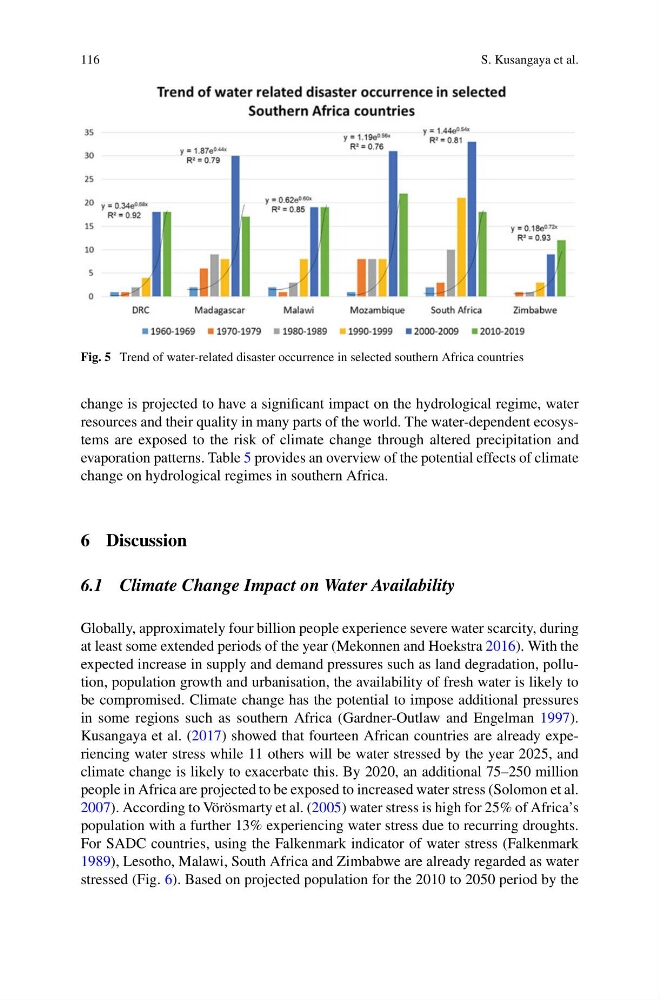
Fig. 5 Trend of water-related disaster occurrence in selected southern Africa countries
change is projected to have a significant impact on the hydrological regime, water
resources and their quality in many parts of the world. The water-dependent ecosystems are exposed to the risk of climate change through altered precipitation and
evaporation patterns. Table 5 provides an overview of the potential effects of climate
change on hydrological regimes in southern Africa.
6 Discussion
6.1 Climate Change Impact on Water Availability
Globally, approximately four billion people experience severe water scarcity, during
at least some extended periods of the year (Mekonnen and Hoekstra 2016). With the
expected increase in supply and demand pressures such as land degradation, pollution, population growth and urbanisation, the availability of fresh water is likely to
be compromised. Climate change has the potential to impose additional pressures
in some regions such as southern Africa (Gardner-Outlaw and Engelman 1997).
Kusangaya et al. (2017) showed that fourteen African countries are already experiencing water stress while 11 others will be water stressed by the year 2025, and
climate change is likely to exacerbate this. By 2020, an additional 75–250 million
people in Africa are projected to be exposed to increased water stress (Solomon et al.
2007). According to Vörösmarty et al. (2005) water stress is high for 25% of Africa’s
population with a further 13% experiencing water stress due to recurring droughts.
For SADC countries, using the Falkenmark indicator of water stress (Falkenmark
1989), Lesotho, Malawi, South Africa and Zimbabwe are already regarded as water
stressed (Fig. 6). Based on projected population for the 2010 to 2050 period by the
S. Kusangaya et al.
Fig. 5 Trend of water-related disaster occurrence in selected southern Africa countries
change is projected to have a significant impact on the hydrological regime, water
resources and their quality in many parts of the world. The water-dependent ecosystems are exposed to the risk of climate change through altered precipitation and
evaporation patterns. Table 5 provides an overview of the potential effects of climate
change on hydrological regimes in southern Africa.
6 Discussion
6.1 Climate Change Impact on Water Availability
Globally, approximately four billion people experience severe water scarcity, during
at least some extended periods of the year (Mekonnen and Hoekstra 2016). With the
expected increase in supply and demand pressures such as land degradation, pollution, population growth and urbanisation, the availability of fresh water is likely to
be compromised. Climate change has the potential to impose additional pressures
in some regions such as southern Africa (Gardner-Outlaw and Engelman 1997).
Kusangaya et al. (2017) showed that fourteen African countries are already experiencing water stress while 11 others will be water stressed by the year 2025, and
climate change is likely to exacerbate this. By 2020, an additional 75–250 million
people in Africa are projected to be exposed to increased water stress (Solomon et al.
2007). According to Vörösmarty et al. (2005) water stress is high for 25% of Africa’s
population with a further 13% experiencing water stress due to recurring droughts.
For SADC countries, using the Falkenmark indicator of water stress (Falkenmark
1989), Lesotho, Malawi, South Africa and Zimbabwe are already regarded as water
stressed (Fig. 6). Based on projected population for the 2010 to 2050 period by the