

493
However, the internal composition of families within Evanioidea does vary substantially and displays distinctive patterns (Fig. 11.30b). The species richness of
Anomopterellidae peaked during the Middle Jurassic, decreased in the Late Jurassic,
after which the Anomopterellidae record disappears, presumably attributable to
extinction. A similar pattern is present for Praeaulacidae, a lineage with high richness during the Middle and Late Jurassic that decreased considerably during the
Late Cretaceous, after which the Praeaulacidae record ceases, again attributable to
extinction. By contrast, the species richness of Baissidae peaks during the Early
Cretaceous, apparently becoming extinct by the Cenozoic. Andreneliidae and
Othniodellithidae are present, respectively, solely during the Early Cretaceous and
Late Cretaceous. The earliest known fossils of the extant family Evaniidae are from
the Early Cretaceous, and the majority of species are recorded during the Cretaceous,
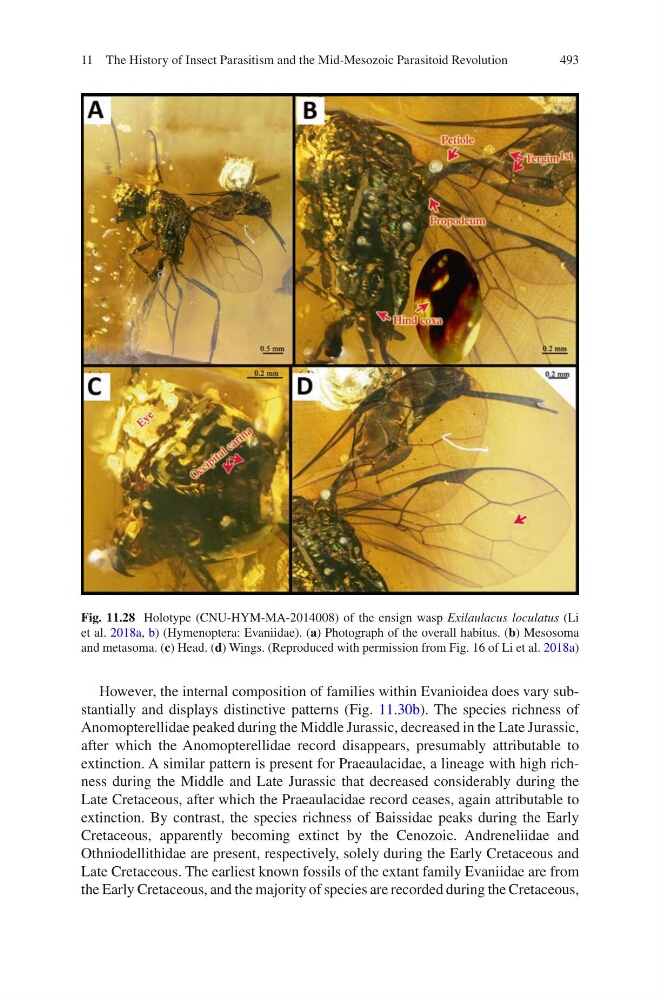
Fig. 11.28 Holotype (CNU-HYM-MA-2014008) of the ensign wasp Exilaulacus loculatus (Li
et al. 2018a, b) (Hymenoptera: Evaniidae). (a) Photograph of the overall habitus. (b) Mesosoma
and metasoma. (c) Head. (d) Wings. (Reproduced with permission from Fig. 16 of Li et al. 2018a)
11 The History of Insect Parasitism and the Mid-Mesozoic Parasitoid Revolution
However, the internal composition of families within Evanioidea does vary substantially and displays distinctive patterns (Fig. 11.30b). The species richness of
Anomopterellidae peaked during the Middle Jurassic, decreased in the Late Jurassic,
after which the Anomopterellidae record disappears, presumably attributable to
extinction. A similar pattern is present for Praeaulacidae, a lineage with high richness during the Middle and Late Jurassic that decreased considerably during the
Late Cretaceous, after which the Praeaulacidae record ceases, again attributable to
extinction. By contrast, the species richness of Baissidae peaks during the Early
Cretaceous, apparently becoming extinct by the Cenozoic. Andreneliidae and
Othniodellithidae are present, respectively, solely during the Early Cretaceous and
Late Cretaceous. The earliest known fossils of the extant family Evaniidae are from
the Early Cretaceous, and the majority of species are recorded during the Cretaceous,
Fig. 11.28 Holotype (CNU-HYM-MA-2014008) of the ensign wasp Exilaulacus loculatus (Li
et al. 2018a, b) (Hymenoptera: Evaniidae). (a) Photograph of the overall habitus. (b) Mesosoma
and metasoma. (c) Head. (d) Wings. (Reproduced with permission from Fig. 16 of Li et al. 2018a)
11 The History of Insect Parasitism and the Mid-Mesozoic Parasitoid Revolution