

490
Nearctic regions. In addition, Stephanus (Stephaninae) is mainly distributed in
Eurasia, inhabiting the Oriental and Palearctic regions. As northeastern Asia and
northwestern North America became increasingly interconnected during the middle
to Late Cretaceous from 80–100 million years ago (Sanmartin et al. 2001; Shih
et al. 2009, 2010), a biogeographical connection might have been present for stephanid taxa to migrate from the Palearctic to the Nearctic. Moreover, the seven genera
of Afromegischus, Foenatopus, Megischus, Pseudomegischus, Parastephanellus,
Stephanus and Schlettererius are distributed in Eurasia, which share three of the five
genera of Afromegischus, Foenatopus, Madegafoenus, Megischus and Profoenatopus
that are distributed in the Afrotropical Region. Four other modern biogeographic
regions are more depauperate, each harboring less than four extant genera. These
deep-time and modern biogeographic data clearly indicate that Stephanidae historically have been most diverse in Eurasia but have been widely distributed biogeographically during the past 100 million years and probably a two or three tens of
millions of years earlier.
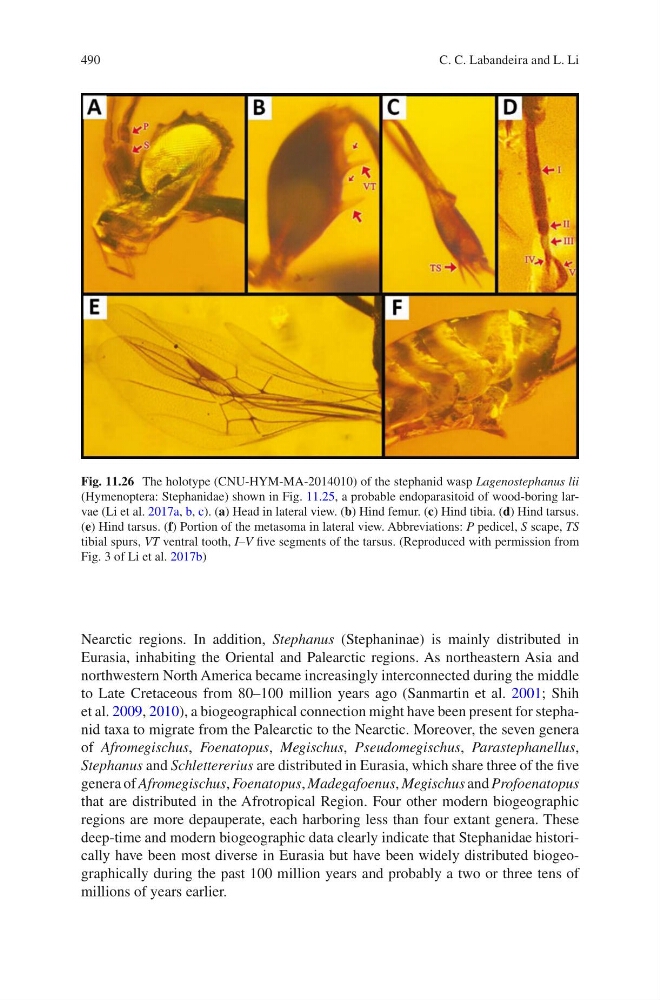
Fig. 11.26 The holotype (CNU-HYM-MA-2014010) of the stephanid wasp Lagenostephanus lii
(Hymenoptera: Stephanidae) shown in Fig. 11.25, a probable endoparasitoid of wood-boring larvae (Li et al. 2017a, b, c). (a) Head in lateral view. (b) Hind femur. (c) Hind tibia. (d) Hind tarsus.
(e) Hind tarsus. (f) Portion of the metasoma in lateral view. Abbreviations: P pedicel, S scape, TS
tibial spurs, VT ventral tooth, I–V five segments of the tarsus. (Reproduced with permission from
Fig. 3 of Li et al. 2017b)
C. C. Labandeira and L. Li
Nearctic regions. In addition, Stephanus (Stephaninae) is mainly distributed in
Eurasia, inhabiting the Oriental and Palearctic regions. As northeastern Asia and
northwestern North America became increasingly interconnected during the middle
to Late Cretaceous from 80–100 million years ago (Sanmartin et al. 2001; Shih
et al. 2009, 2010), a biogeographical connection might have been present for stephanid taxa to migrate from the Palearctic to the Nearctic. Moreover, the seven genera
of Afromegischus, Foenatopus, Megischus, Pseudomegischus, Parastephanellus,
Stephanus and Schlettererius are distributed in Eurasia, which share three of the five
genera of Afromegischus, Foenatopus, Madegafoenus, Megischus and Profoenatopus
that are distributed in the Afrotropical Region. Four other modern biogeographic
regions are more depauperate, each harboring less than four extant genera. These
deep-time and modern biogeographic data clearly indicate that Stephanidae historically have been most diverse in Eurasia but have been widely distributed biogeographically during the past 100 million years and probably a two or three tens of
millions of years earlier.
Fig. 11.26 The holotype (CNU-HYM-MA-2014010) of the stephanid wasp Lagenostephanus lii
(Hymenoptera: Stephanidae) shown in Fig. 11.25, a probable endoparasitoid of wood-boring larvae (Li et al. 2017a, b, c). (a) Head in lateral view. (b) Hind femur. (c) Hind tibia. (d) Hind tarsus.
(e) Hind tarsus. (f) Portion of the metasoma in lateral view. Abbreviations: P pedicel, S scape, TS
tibial spurs, VT ventral tooth, I–V five segments of the tarsus. (Reproduced with permission from
Fig. 3 of Li et al. 2017b)
C. C. Labandeira and L. Li