

459
occasionally hyperparasitoids, of beetle and sawfly larval hosts. These hosts are
associated with dead wood, or alternatively the eggs, larvae and pupae of grasshoppers, beetles, externally feeding moth larvae, and other parasitoid groups such as
Tachinidae and Ichneumonidae (Yeates and Greathead 1997). Some of these associations likely extend to the Middle to Late Jurassic. Empidoidea are ecto- or endoparasitoids of caddisfly pupae, an association that probably originated during the
Late Jurassic (Eggleton and Belshaw 1992).
Cyclorrhaphan flies, consisting of the Aschiza and Schizophora sister groups,
underwent a Late Cretaceous and Paleogene wave of diversification, with several
lineages acquiring parasitoid life habits (Grimaldi and Engel 2005a). Aschiza are
endoparasitoids and cleptoparasitoids of the immatures and adults of pulmonate
gastropods, oligochaetes, opilionids, spiders and myriapods, as well as all
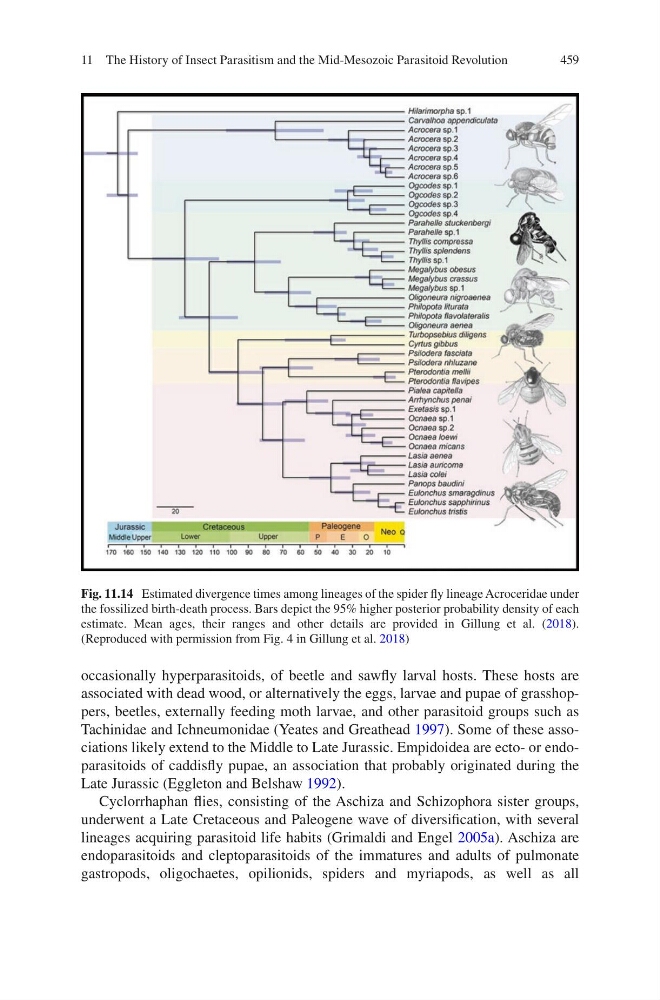
Fig. 11.14 Estimated divergence times among lineages of the spider fly lineage Acroceridae under
the fossilized birth-death process. Bars depict the 95% higher posterior probability density of each
estimate. Mean ages, their ranges and other details are provided in Gillung et al. (2018).
(Reproduced with permission from Fig. 4 in Gillung et al. 2018)
11 The History of Insect Parasitism and the Mid-Mesozoic Parasitoid Revolution
occasionally hyperparasitoids, of beetle and sawfly larval hosts. These hosts are
associated with dead wood, or alternatively the eggs, larvae and pupae of grasshoppers, beetles, externally feeding moth larvae, and other parasitoid groups such as
Tachinidae and Ichneumonidae (Yeates and Greathead 1997). Some of these associations likely extend to the Middle to Late Jurassic. Empidoidea are ecto- or endoparasitoids of caddisfly pupae, an association that probably originated during the
Late Jurassic (Eggleton and Belshaw 1992).
Cyclorrhaphan flies, consisting of the Aschiza and Schizophora sister groups,
underwent a Late Cretaceous and Paleogene wave of diversification, with several
lineages acquiring parasitoid life habits (Grimaldi and Engel 2005a). Aschiza are
endoparasitoids and cleptoparasitoids of the immatures and adults of pulmonate
gastropods, oligochaetes, opilionids, spiders and myriapods, as well as all
Fig. 11.14 Estimated divergence times among lineages of the spider fly lineage Acroceridae under
the fossilized birth-death process. Bars depict the 95% higher posterior probability density of each
estimate. Mean ages, their ranges and other details are provided in Gillung et al. (2018).
(Reproduced with permission from Fig. 4 in Gillung et al. 2018)
11 The History of Insect Parasitism and the Mid-Mesozoic Parasitoid Revolution