

446
within Mecoptera (Vršanský et al. 2010). Current evidence suggests, however, a
nonparasitic existence. Several features, especially genitalia, are structurally linked
to nematocerous Diptera (Huang et al. 2013b), particularly Nymphomyiidae (nymphomyiid crane flies), which presently are a specialized, relict group of neotenic
amphibious insects with adults lacking functional mouthparts.
11.5.1.9 Lepidoptera (Moths)
In Southeastern Asia a clade of erebid moths recently have developed a unique
modification of the lepidopteran siphon that is adapted to piercing the often-thick
integument of large mammals for the imbibition of blood (Bänziger 1968, 1971).
The clade consists of ten species of Calyptra, formerly assigned to Noctuidae (owlet
moths) that now is placed in the Erebidae (vampire moths), and affiliated with the
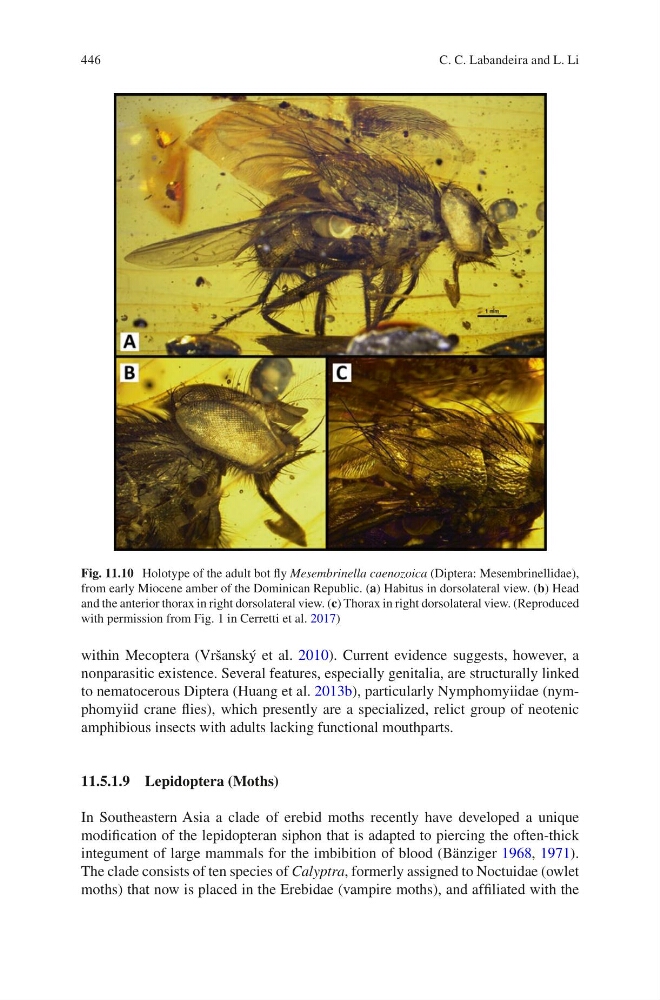
Fig. 11.10 Holotype of the adult bot fly Mesembrinella caenozoica (Diptera: Mesembrinellidae),
from early Miocene amber of the Dominican Republic. (a) Habitus in dorsolateral view. (b) Head
and the anterior thorax in right dorsolateral view. (c) Thorax in right dorsolateral view. (Reproduced
with permission from Fig. 1 in Cerretti et al. 2017)
C. C. Labandeira and L. Li
within Mecoptera (Vršanský et al. 2010). Current evidence suggests, however, a
nonparasitic existence. Several features, especially genitalia, are structurally linked
to nematocerous Diptera (Huang et al. 2013b), particularly Nymphomyiidae (nymphomyiid crane flies), which presently are a specialized, relict group of neotenic
amphibious insects with adults lacking functional mouthparts.
11.5.1.9 Lepidoptera (Moths)
In Southeastern Asia a clade of erebid moths recently have developed a unique
modification of the lepidopteran siphon that is adapted to piercing the often-thick
integument of large mammals for the imbibition of blood (Bänziger 1968, 1971).
The clade consists of ten species of Calyptra, formerly assigned to Noctuidae (owlet
moths) that now is placed in the Erebidae (vampire moths), and affiliated with the
Fig. 11.10 Holotype of the adult bot fly Mesembrinella caenozoica (Diptera: Mesembrinellidae),
from early Miocene amber of the Dominican Republic. (a) Habitus in dorsolateral view. (b) Head
and the anterior thorax in right dorsolateral view. (c) Thorax in right dorsolateral view. (Reproduced
with permission from Fig. 1 in Cerretti et al. 2017)
C. C. Labandeira and L. Li