

407
11.5.1.7 Siphonaptera (Fleas)
Flea-like insects, fleas and basal lineages of flies are closely related to one or more
lineages of mid-Mesozoic Mecoptera (scorpionflies) (Huang et al. 2012; Lin et al.
2019; but see Byers 1996). The long-proboscid pollinating scorpionfly lineage
Aneuretopsychidae (Ren et al. 2011) is a prime suspect as an ancestor of flea-like
insects, fleas and the earliest Diptera (Lin et al. 2019). For mid-Mesozoic flea-like
insects, mouthpart structure, body form, other specialized features, and known relationships between specific external adaptations for living on a host in modern fleas
(Huang et al. 2012; Gao et al. 2012, 2014) indicate that these taxa were ectoparasites feeding primarily on blood. These ectoparasites likely had intimate associations with endothermic vertebrates during the mid Mesozoic (Leung 2017;
Labandeira 2019), ranging from the Middle Jurassic to Early Cretaceous (Huang
et al. 2012; Gao et al. 2014). However, lineages of mid Mesozoic, early flea-like
lineages (Huang et al. 2012, Huang et al. 2013a), known only from East Asia and
Australia, are morphologically different from all modern flea taxa that occur worldwide (Leung 2017, 2021; Rasnitsyn and Strelnikova 2017). Unlike modern fleas
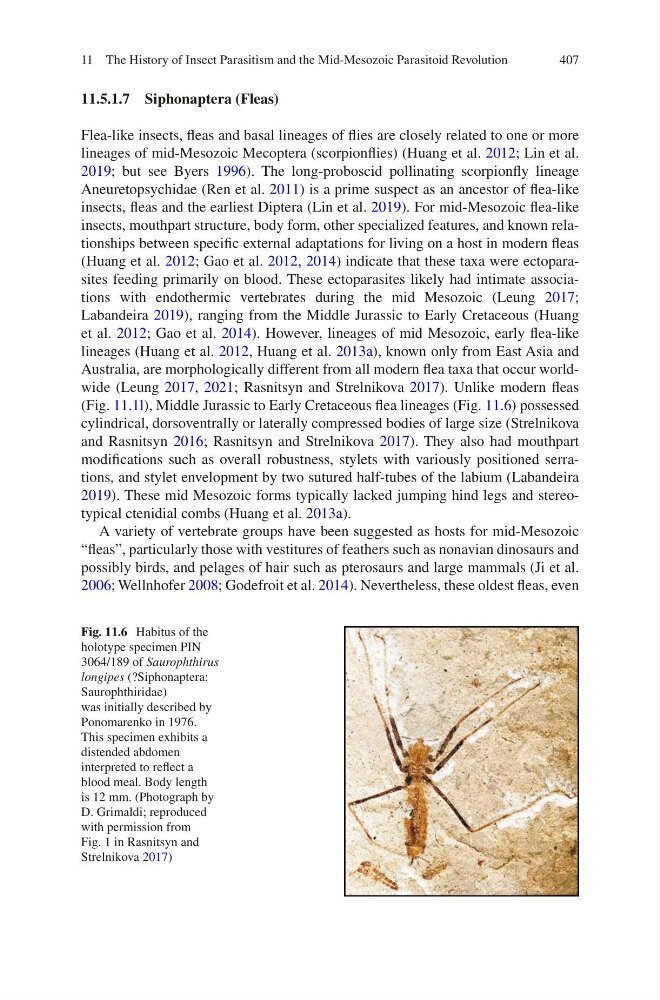
(Fig. 11.1l), Middle Jurassic to Early Cretaceous flea lineages (Fig. 11.6) possessed
cylindrical, dorsoventrally or laterally compressed bodies of large size (Strelnikova
and Rasnitsyn 2016; Rasnitsyn and Strelnikova 2017). They also had mouthpart
modifications such as overall robustness, stylets with variously positioned serrations, and stylet envelopment by two sutured half-tubes of the labium (Labandeira
2019). These mid Mesozoic forms typically lacked jumping hind legs and stereotypical ctenidial combs (Huang et al. 2013a).
A variety of vertebrate groups have been suggested as hosts for mid-Mesozoic
“fleas”, particularly those with vestitures of feathers such as nonavian dinosaurs and
possibly birds, and pelages of hair such as pterosaurs and large mammals (Ji et al.
2006; Wellnhofer 2008; Godefroit et al. 2014). Nevertheless, these oldest fleas, even
Fig. 11.6 Habitus of the
holotype specimen PIN
3064/189 of Saurophthirus
longipes (?Siphonaptera:
Saurophthiridae)
was initially described by
Ponomarenko in 1976.
This specimen exhibits a
distended abdomen
interpreted to reflect a
blood meal. Body length
is 12 mm. (Photograph by
D. Grimaldi; reproduced
with permission from
Fig. 1 in Rasnitsyn and
Strelnikova 2017)
11 The History of Insect Parasitism and the Mid-Mesozoic Parasitoid Revolution
11.5.1.7 Siphonaptera (Fleas)
Flea-like insects, fleas and basal lineages of flies are closely related to one or more
lineages of mid-Mesozoic Mecoptera (scorpionflies) (Huang et al. 2012; Lin et al.
2019; but see Byers 1996). The long-proboscid pollinating scorpionfly lineage
Aneuretopsychidae (Ren et al. 2011) is a prime suspect as an ancestor of flea-like
insects, fleas and the earliest Diptera (Lin et al. 2019). For mid-Mesozoic flea-like
insects, mouthpart structure, body form, other specialized features, and known relationships between specific external adaptations for living on a host in modern fleas
(Huang et al. 2012; Gao et al. 2012, 2014) indicate that these taxa were ectoparasites feeding primarily on blood. These ectoparasites likely had intimate associations with endothermic vertebrates during the mid Mesozoic (Leung 2017;
Labandeira 2019), ranging from the Middle Jurassic to Early Cretaceous (Huang
et al. 2012; Gao et al. 2014). However, lineages of mid Mesozoic, early flea-like
lineages (Huang et al. 2012, Huang et al. 2013a), known only from East Asia and
Australia, are morphologically different from all modern flea taxa that occur worldwide (Leung 2017, 2021; Rasnitsyn and Strelnikova 2017). Unlike modern fleas
(Fig. 11.1l), Middle Jurassic to Early Cretaceous flea lineages (Fig. 11.6) possessed
cylindrical, dorsoventrally or laterally compressed bodies of large size (Strelnikova
and Rasnitsyn 2016; Rasnitsyn and Strelnikova 2017). They also had mouthpart
modifications such as overall robustness, stylets with variously positioned serrations, and stylet envelopment by two sutured half-tubes of the labium (Labandeira
2019). These mid Mesozoic forms typically lacked jumping hind legs and stereotypical ctenidial combs (Huang et al. 2013a).
A variety of vertebrate groups have been suggested as hosts for mid-Mesozoic
“fleas”, particularly those with vestitures of feathers such as nonavian dinosaurs and
possibly birds, and pelages of hair such as pterosaurs and large mammals (Ji et al.
2006; Wellnhofer 2008; Godefroit et al. 2014). Nevertheless, these oldest fleas, even
Fig. 11.6 Habitus of the
holotype specimen PIN
3064/189 of Saurophthirus
longipes (?Siphonaptera:
Saurophthiridae)
was initially described by
Ponomarenko in 1976.
This specimen exhibits a
distended abdomen
interpreted to reflect a
blood meal. Body length
is 12 mm. (Photograph by
D. Grimaldi; reproduced
with permission from
Fig. 1 in Rasnitsyn and
Strelnikova 2017)
11 The History of Insect Parasitism and the Mid-Mesozoic Parasitoid Revolution