

319
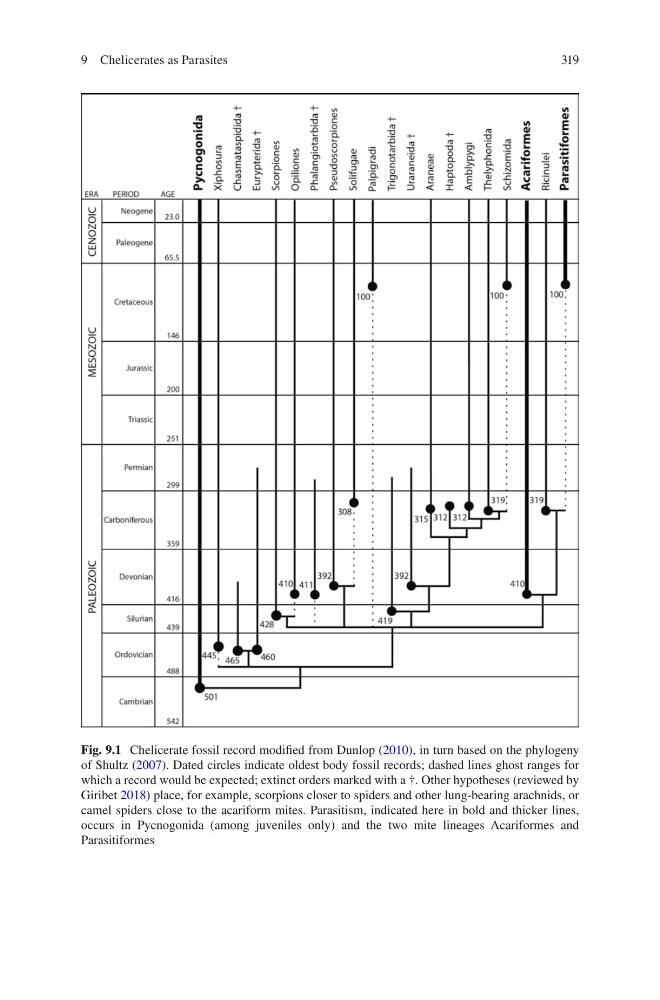
Fig. 9.1 Chelicerate fossil record modified from Dunlop (2010), in turn based on the phylogeny
of Shultz (2007). Dated circles indicate oldest body fossil records; dashed lines ghost ranges for
which a record would be expected; extinct orders marked with a †. Other hypotheses (reviewed by
Giribet 2018) place, for example, scorpions closer to spiders and other lung-bearing arachnids, or
camel spiders close to the acariform mites. Parasitism, indicated here in bold and thicker lines,
occurs in Pycnogonida (among juveniles only) and the two mite lineages Acariformes and
Parasitiformes
9 Chelicerates as Parasites
Fig. 9.1 Chelicerate fossil record modified from Dunlop (2010), in turn based on the phylogeny
of Shultz (2007). Dated circles indicate oldest body fossil records; dashed lines ghost ranges for
which a record would be expected; extinct orders marked with a †. Other hypotheses (reviewed by
Giribet 2018) place, for example, scorpions closer to spiders and other lung-bearing arachnids, or
camel spiders close to the acariform mites. Parasitism, indicated here in bold and thicker lines,
occurs in Pycnogonida (among juveniles only) and the two mite lineages Acariformes and
Parasitiformes
9 Chelicerates as Parasites