

112
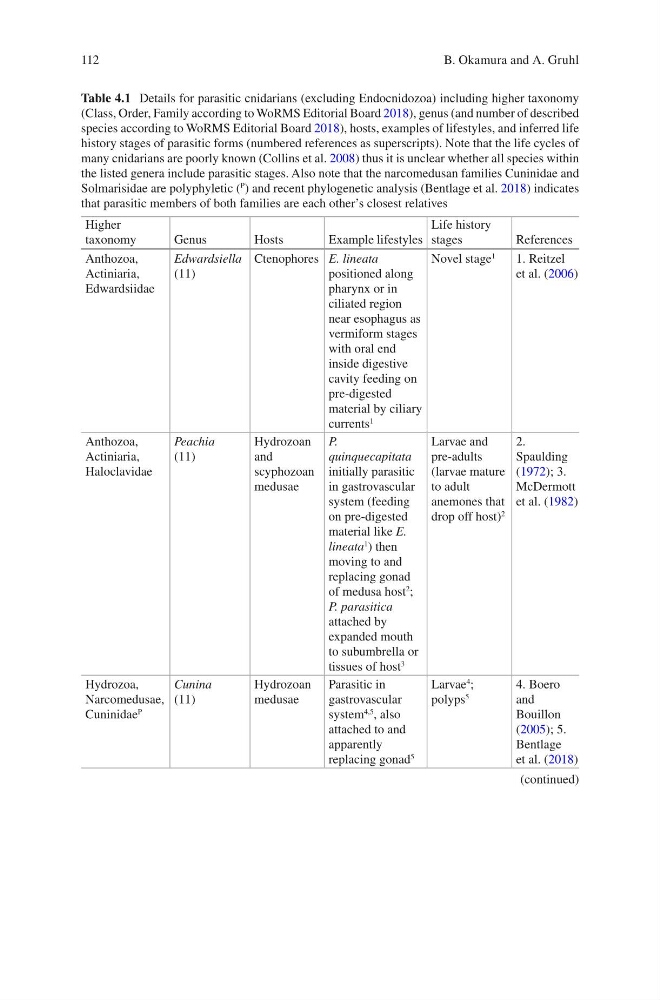
Table 4.1 Details for parasitic cnidarians (excluding Endocnidozoa) including higher taxonomy
(Class, Order, Family according to WoRMS Editorial Board 2018), genus (and number of described
species according to WoRMS Editorial Board 2018), hosts, examples of lifestyles, and inferred life
history stages of parasitic forms (numbered references as superscripts). Note that the life cycles of
many cnidarians are poorly known (Collins et al. 2008) thus it is unclear whether all species within
the listed genera include parasitic stages. Also note that the narcomedusan families Cuninidae and
Solmarisidae are polyphyletic (
P ) and recent phylogenetic analysis (Bentlage et al. 2018) indicates
that parasitic members of both families are each other’s closest relatives
Higher
taxonomy
Genus
Hosts
Example lifestyles
Life history
stages
References
Anthozoa,
Actiniaria,
Edwardsiidae
Edwardsiella
(11)
Ctenophores E. lineata
positioned along
pharynx or in
ciliated region
near esophagus as
vermiform stages
with oral end
inside digestive
cavity feeding on
pre-digested
material by ciliary
currents
1
Novel stage
1
1. Reitzel
et al. (2006)
Anthozoa,
Actiniaria,
Haloclavidae
Peachia
(11)
Hydrozoan
and
scyphozoan
medusae
P.
quinquecapitata
initially parasitic
in gastrovascular
system (feeding
on pre-digested
material like E.
lineata
1 ) then
moving to and
replacing gonad
of medusa host
2
;
P. parasitica
attached by
expanded mouth
to subumbrella or
tissues of host
3
Larvae and
pre-adults
(larvae mature
to adult
anemones that
drop off host)
2
2.
Spaulding
(1972); 3.
McDermott
et al. (1982)
Hydrozoa,
Narcomedusae,
Cuninidae
P
Cunina
(11)
Hydrozoan
medusae
Parasitic in
gastrovascular
system
4,5
, also
attached to and
apparently
replacing gonad
5
Larvae
4 ;
polyps
5
4. Boero
and
Bouillon
(2005); 5.
Bentlage
et al. (2018)
(continued)
B. Okamura and A. Gruhl
Table 4.1 Details for parasitic cnidarians (excluding Endocnidozoa) including higher taxonomy
(Class, Order, Family according to WoRMS Editorial Board 2018), genus (and number of described
species according to WoRMS Editorial Board 2018), hosts, examples of lifestyles, and inferred life
history stages of parasitic forms (numbered references as superscripts). Note that the life cycles of
many cnidarians are poorly known (Collins et al. 2008) thus it is unclear whether all species within
the listed genera include parasitic stages. Also note that the narcomedusan families Cuninidae and
Solmarisidae are polyphyletic (
P ) and recent phylogenetic analysis (Bentlage et al. 2018) indicates
that parasitic members of both families are each other’s closest relatives
Higher
taxonomy
Genus
Hosts
Example lifestyles
Life history
stages
References
Anthozoa,
Actiniaria,
Edwardsiidae
Edwardsiella
(11)
Ctenophores E. lineata
positioned along
pharynx or in
ciliated region
near esophagus as
vermiform stages
with oral end
inside digestive
cavity feeding on
pre-digested
material by ciliary
currents
1
Novel stage
1
1. Reitzel
et al. (2006)
Anthozoa,
Actiniaria,
Haloclavidae
Peachia
(11)
Hydrozoan
and
scyphozoan
medusae
P.
quinquecapitata
initially parasitic
in gastrovascular
system (feeding
on pre-digested
material like E.
lineata
1 ) then
moving to and
replacing gonad
of medusa host
2
;
P. parasitica
attached by
expanded mouth
to subumbrella or
tissues of host
3
Larvae and
pre-adults
(larvae mature
to adult
anemones that
drop off host)
2
2.
Spaulding
(1972); 3.
McDermott
et al. (1982)
Hydrozoa,
Narcomedusae,
Cuninidae
P
Cunina
(11)
Hydrozoan
medusae
Parasitic in
gastrovascular
system
4,5
, also
attached to and
apparently
replacing gonad
5
Larvae
4 ;
polyps
5
4. Boero
and
Bouillon
(2005); 5.
Bentlage
et al. (2018)
(continued)
B. Okamura and A. Gruhl