

111
in the ecological niche between the parasitic and free-living life history stages
(Reitzel et al. 2006).
The number of cnidarian species currently recognised to include parasitic stages
(Table 4.1) is probably underestimated (Appeltans et al. 2012). Parasitic narcomedusans are particularly likely to be poorly known as their hosts are relatively infrequently sampled open ocean animals (often from the deep sea), they may be
overlooked due to their inconspicuous nature, and they may occur at low prevalences of infection. It is possible that parasitic stages may be linked in future with
narcomedusan species previously thought to be entirely free-living. Nor would it be
surprising if further entirely new species with parasitic stages are detected, especially in poorly sampled habitats such as the deep sea and polar regions (Okamura
et al. 2018). However, it may also be the case that our current understanding is
compromised. For example, taxa described long ago as distinct genera may belong
to a common genus (e.g. the pteropod-infecting taxa Perigonella, Pandea and
Kinetocodium; Table 4.1). Alternatively, taxa currently recognised as different could
be part of the same life cycle (e.g. if a broad range of hosts is exploited or distinct
parasitic stages have evolved).
Despite caveats regarding sampling effort and taxonomic uncertainties, parasitic
cnidarians other than endocnidozoans have apparently undergone little radiation
and they are not associated with markedly long branches in phylogenetic trees (e.g.
Rodríguez et al. 2014; Bentlage et al. 2018). In all cases the number of described
species within lineages is ≤11. Thus even if we assume that all species of e.g.
Edwardsiella incorporate a parasitic phase they would only amount to some 0.08%
(11/14,355) of currently described cnidarian species diversity. The
Myxosporea
Malacosporea
Myxozoa
Endocnidozoa
Anthozoa
Polypodium
Medusozoa
1
2
3
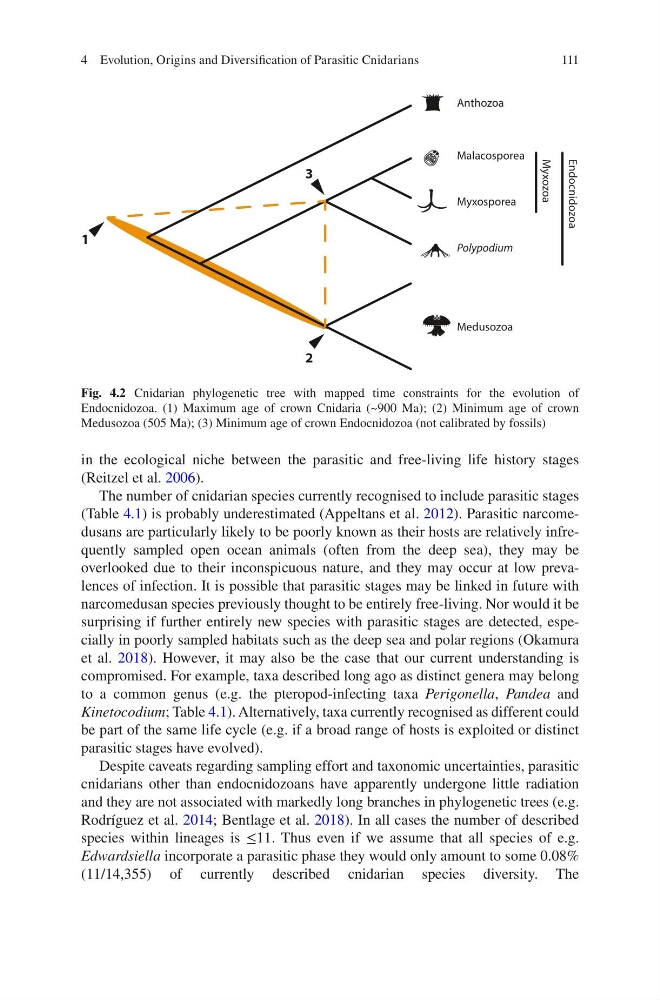
Fig. 4.2 Cnidarian phylogenetic tree with mapped time constraints for the evolution of
Endocnidozoa. (1) Maximum age of crown Cnidaria (~900 Ma); (2) Minimum age of crown
Medusozoa (505 Ma); (3) Minimum age of crown Endocnidozoa (not calibrated by fossils)
4 Evolution, Origins and Diversification of Parasitic Cnidarians
in the ecological niche between the parasitic and free-living life history stages
(Reitzel et al. 2006).
The number of cnidarian species currently recognised to include parasitic stages
(Table 4.1) is probably underestimated (Appeltans et al. 2012). Parasitic narcomedusans are particularly likely to be poorly known as their hosts are relatively infrequently sampled open ocean animals (often from the deep sea), they may be
overlooked due to their inconspicuous nature, and they may occur at low prevalences of infection. It is possible that parasitic stages may be linked in future with
narcomedusan species previously thought to be entirely free-living. Nor would it be
surprising if further entirely new species with parasitic stages are detected, especially in poorly sampled habitats such as the deep sea and polar regions (Okamura
et al. 2018). However, it may also be the case that our current understanding is
compromised. For example, taxa described long ago as distinct genera may belong
to a common genus (e.g. the pteropod-infecting taxa Perigonella, Pandea and
Kinetocodium; Table 4.1). Alternatively, taxa currently recognised as different could
be part of the same life cycle (e.g. if a broad range of hosts is exploited or distinct
parasitic stages have evolved).
Despite caveats regarding sampling effort and taxonomic uncertainties, parasitic
cnidarians other than endocnidozoans have apparently undergone little radiation
and they are not associated with markedly long branches in phylogenetic trees (e.g.
Rodríguez et al. 2014; Bentlage et al. 2018). In all cases the number of described
species within lineages is ≤11. Thus even if we assume that all species of e.g.
Edwardsiella incorporate a parasitic phase they would only amount to some 0.08%
(11/14,355) of currently described cnidarian species diversity. The
Myxosporea
Malacosporea
Myxozoa
Endocnidozoa
Anthozoa
Polypodium
Medusozoa
1
2
3
Fig. 4.2 Cnidarian phylogenetic tree with mapped time constraints for the evolution of
Endocnidozoa. (1) Maximum age of crown Cnidaria (~900 Ma); (2) Minimum age of crown
Medusozoa (505 Ma); (3) Minimum age of crown Endocnidozoa (not calibrated by fossils)
4 Evolution, Origins and Diversification of Parasitic Cnidarians