

288
J. B. Liyanage et al.
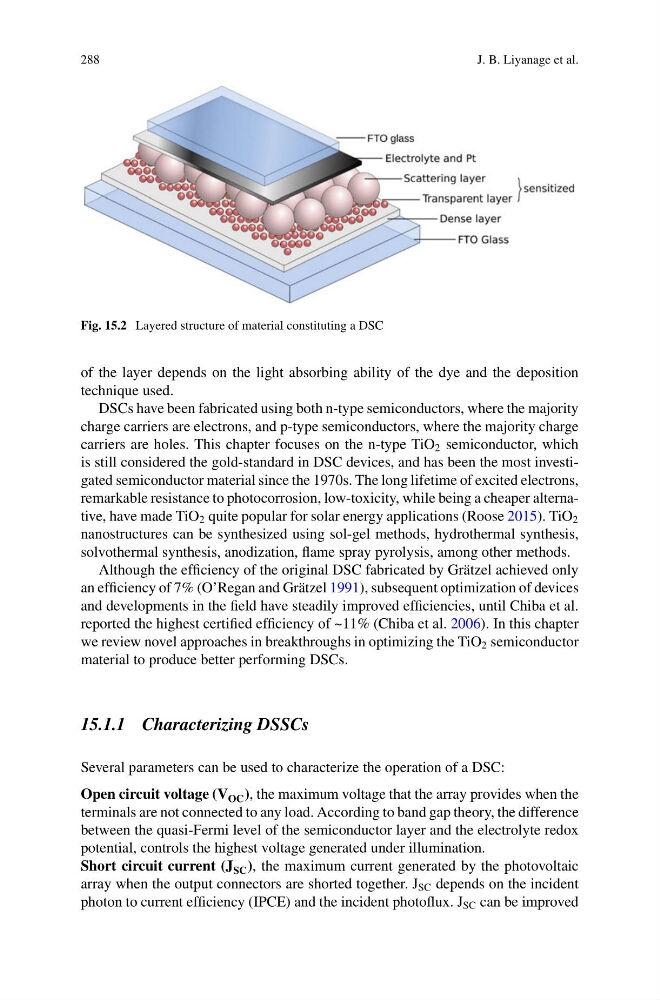
Fig. 15.2 Layered structure of material constituting a DSC
of the layer depends on the light absorbing ability of the dye and the deposition
technique used.
DSCs have been fabricated using both n-type semiconductors, where the majority
charge carriers are electrons, and p-type semiconductors, where the majority charge
carriers are holes. This chapter focuses on the n-type TiO 2 semiconductor, which
is still considered the gold-standard in DSC devices, and has been the most investigated semiconductor material since the 1970s. The long lifetime of excited electrons,
remarkable resistance to photocorrosion, low-toxicity, while being a cheaper alternative, have made TiO 2 quite popular for solar energy applications (Roose 2015). TiO 2
nanostructures can be synthesized using sol-gel methods, hydrothermal synthesis,
solvothermal synthesis, anodization, flame spray pyrolysis, among other methods.
Although the efficiency of the original DSC fabricated by Grätzel achieved only
an efficiency of 7% (O’Regan and Grätzel 1991), subsequent optimization of devices
and developments in the field have steadily improved efficiencies, until Chiba et al.
reported the highest certified efficiency of ~11% (Chiba et al. 2006). In this chapter
we review novel approaches in breakthroughs in optimizing the TiO 2 semiconductor
material to produce better performing DSCs.
15.1.1 Characterizing DSSCs
Several parameters can be used to characterize the operation of a DSC:
Open circuit voltage (V OC ), the maximum voltage that the array provides when the
terminals are not connected to any load. According to band gap theory, the difference
between the quasi-Fermi level of the semiconductor layer and the electrolyte redox
potential, controls the highest voltage generated under illumination.
Short circuit current (J SC ), the maximum current generated by the photovoltaic
array when the output connectors are shorted together. J SC depends on the incident
photon to current efficiency (IPCE) and the incident photoflux. J SC can be improved
J. B. Liyanage et al.
Fig. 15.2 Layered structure of material constituting a DSC
of the layer depends on the light absorbing ability of the dye and the deposition
technique used.
DSCs have been fabricated using both n-type semiconductors, where the majority
charge carriers are electrons, and p-type semiconductors, where the majority charge
carriers are holes. This chapter focuses on the n-type TiO 2 semiconductor, which
is still considered the gold-standard in DSC devices, and has been the most investigated semiconductor material since the 1970s. The long lifetime of excited electrons,
remarkable resistance to photocorrosion, low-toxicity, while being a cheaper alternative, have made TiO 2 quite popular for solar energy applications (Roose 2015). TiO 2
nanostructures can be synthesized using sol-gel methods, hydrothermal synthesis,
solvothermal synthesis, anodization, flame spray pyrolysis, among other methods.
Although the efficiency of the original DSC fabricated by Grätzel achieved only
an efficiency of 7% (O’Regan and Grätzel 1991), subsequent optimization of devices
and developments in the field have steadily improved efficiencies, until Chiba et al.
reported the highest certified efficiency of ~11% (Chiba et al. 2006). In this chapter
we review novel approaches in breakthroughs in optimizing the TiO 2 semiconductor
material to produce better performing DSCs.
15.1.1 Characterizing DSSCs
Several parameters can be used to characterize the operation of a DSC:
Open circuit voltage (V OC ), the maximum voltage that the array provides when the
terminals are not connected to any load. According to band gap theory, the difference
between the quasi-Fermi level of the semiconductor layer and the electrolyte redox
potential, controls the highest voltage generated under illumination.
Short circuit current (J SC ), the maximum current generated by the photovoltaic
array when the output connectors are shorted together. J SC depends on the incident
photon to current efficiency (IPCE) and the incident photoflux. J SC can be improved