

12 Direct Photo-Thermal Energy Storage Using Nanoparticles …
241
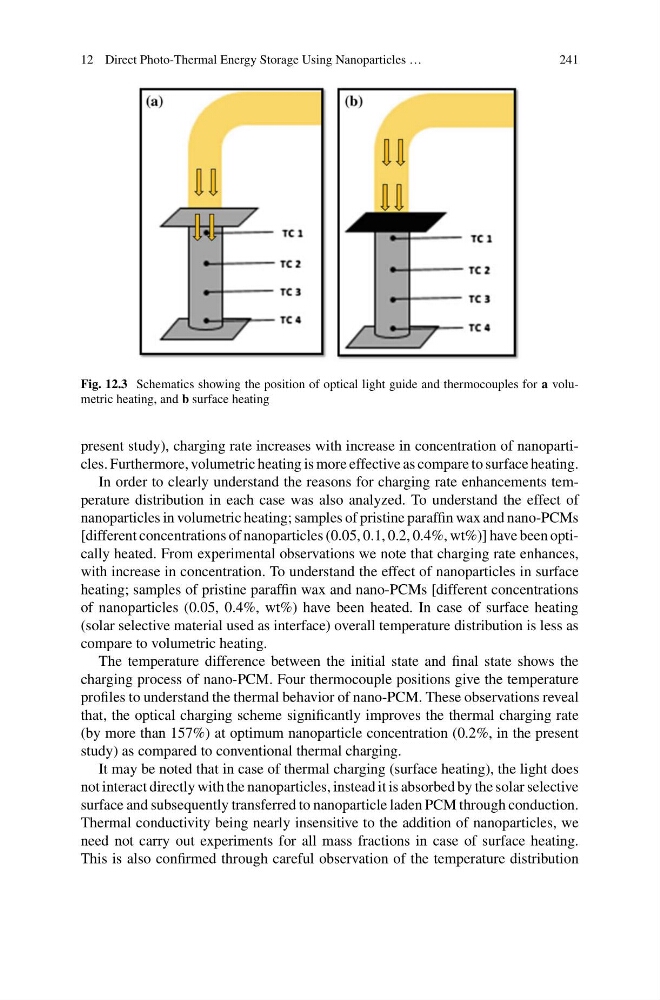
Fig. 12.3 Schematics showing the position of optical light guide and thermocouples for a volumetric heating, and b surface heating
present study), charging rate increases with increase in concentration of nanoparticles. Furthermore, volumetric heating is more effective as compare to surface heating.
In order to clearly understand the reasons for charging rate enhancements temperature distribution in each case was also analyzed. To understand the effect of
nanoparticles in volumetric heating; samples of pristine paraffin wax and nano-PCMs
[different concentrations of nanoparticles (0.05, 0.1, 0.2, 0.4%, wt%)] have been optically heated. From experimental observations we note that charging rate enhances,
with increase in concentration. To understand the effect of nanoparticles in surface
heating; samples of pristine paraffin wax and nano-PCMs [different concentrations
of nanoparticles (0.05, 0.4%, wt%) have been heated. In case of surface heating
(solar selective material used as interface) overall temperature distribution is less as
compare to volumetric heating.
The temperature difference between the initial state and final state shows the
charging process of nano-PCM. Four thermocouple positions give the temperature
profiles to understand the thermal behavior of nano-PCM. These observations reveal
that, the optical charging scheme significantly improves the thermal charging rate
(by more than 157%) at optimum nanoparticle concentration (0.2%, in the present
study) as compared to conventional thermal charging.
It may be noted that in case of thermal charging (surface heating), the light does
not interact directly with the nanoparticles, instead it is absorbed by the solar selective
surface and subsequently transferred to nanoparticle laden PCM through conduction.
Thermal conductivity being nearly insensitive to the addition of nanoparticles, we
need not carry out experiments for all mass fractions in case of surface heating.
This is also confirmed through careful observation of the temperature distribution
241
Fig. 12.3 Schematics showing the position of optical light guide and thermocouples for a volumetric heating, and b surface heating
present study), charging rate increases with increase in concentration of nanoparticles. Furthermore, volumetric heating is more effective as compare to surface heating.
In order to clearly understand the reasons for charging rate enhancements temperature distribution in each case was also analyzed. To understand the effect of
nanoparticles in volumetric heating; samples of pristine paraffin wax and nano-PCMs
[different concentrations of nanoparticles (0.05, 0.1, 0.2, 0.4%, wt%)] have been optically heated. From experimental observations we note that charging rate enhances,
with increase in concentration. To understand the effect of nanoparticles in surface
heating; samples of pristine paraffin wax and nano-PCMs [different concentrations
of nanoparticles (0.05, 0.4%, wt%) have been heated. In case of surface heating
(solar selective material used as interface) overall temperature distribution is less as
compare to volumetric heating.
The temperature difference between the initial state and final state shows the
charging process of nano-PCM. Four thermocouple positions give the temperature
profiles to understand the thermal behavior of nano-PCM. These observations reveal
that, the optical charging scheme significantly improves the thermal charging rate
(by more than 157%) at optimum nanoparticle concentration (0.2%, in the present
study) as compared to conventional thermal charging.
It may be noted that in case of thermal charging (surface heating), the light does
not interact directly with the nanoparticles, instead it is absorbed by the solar selective
surface and subsequently transferred to nanoparticle laden PCM through conduction.
Thermal conductivity being nearly insensitive to the addition of nanoparticles, we
need not carry out experiments for all mass fractions in case of surface heating.
This is also confirmed through careful observation of the temperature distribution