

11 PCM-Metal Foam Composite Systems for Solar Energy Storage
225
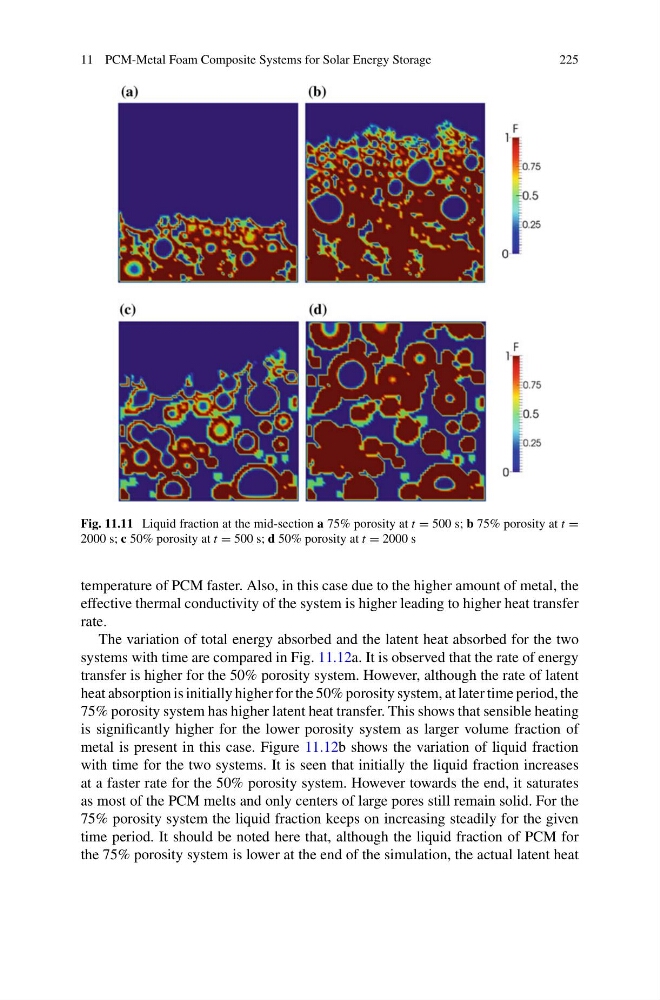
Fig. 11.11 Liquid fraction at the mid-section a 75% porosity at t = 500 s; b 75% porosity at t =
2000 s; c 50% porosity at t = 500 s; d 50% porosity at t = 2000 s
temperature of PCM faster. Also, in this case due to the higher amount of metal, the
effective thermal conductivity of the system is higher leading to higher heat transfer
rate.
The variation of total energy absorbed and the latent heat absorbed for the two
systems with time are compared in Fig. 11.12a. It is observed that the rate of energy
transfer is higher for the 50% porosity system. However, although the rate of latent
heat absorption is initially higher for the 50% porosity system, at later time period, the
75% porosity system has higher latent heat transfer. This shows that sensible heating
is significantly higher for the lower porosity system as larger volume fraction of
metal is present in this case. Figure 11.12b shows the variation of liquid fraction
with time for the two systems. It is seen that initially the liquid fraction increases
at a faster rate for the 50% porosity system. However towards the end, it saturates
as most of the PCM melts and only centers of large pores still remain solid. For the
75% porosity system the liquid fraction keeps on increasing steadily for the given
time period. It should be noted here that, although the liquid fraction of PCM for
the 75% porosity system is lower at the end of the simulation, the actual latent heat
225
Fig. 11.11 Liquid fraction at the mid-section a 75% porosity at t = 500 s; b 75% porosity at t =
2000 s; c 50% porosity at t = 500 s; d 50% porosity at t = 2000 s
temperature of PCM faster. Also, in this case due to the higher amount of metal, the
effective thermal conductivity of the system is higher leading to higher heat transfer
rate.
The variation of total energy absorbed and the latent heat absorbed for the two
systems with time are compared in Fig. 11.12a. It is observed that the rate of energy
transfer is higher for the 50% porosity system. However, although the rate of latent
heat absorption is initially higher for the 50% porosity system, at later time period, the
75% porosity system has higher latent heat transfer. This shows that sensible heating
is significantly higher for the lower porosity system as larger volume fraction of
metal is present in this case. Figure 11.12b shows the variation of liquid fraction
with time for the two systems. It is seen that initially the liquid fraction increases
at a faster rate for the 50% porosity system. However towards the end, it saturates
as most of the PCM melts and only centers of large pores still remain solid. For the
75% porosity system the liquid fraction keeps on increasing steadily for the given
time period. It should be noted here that, although the liquid fraction of PCM for
the 75% porosity system is lower at the end of the simulation, the actual latent heat