

11 PCM-Metal Foam Composite Systems for Solar Energy Storage
221
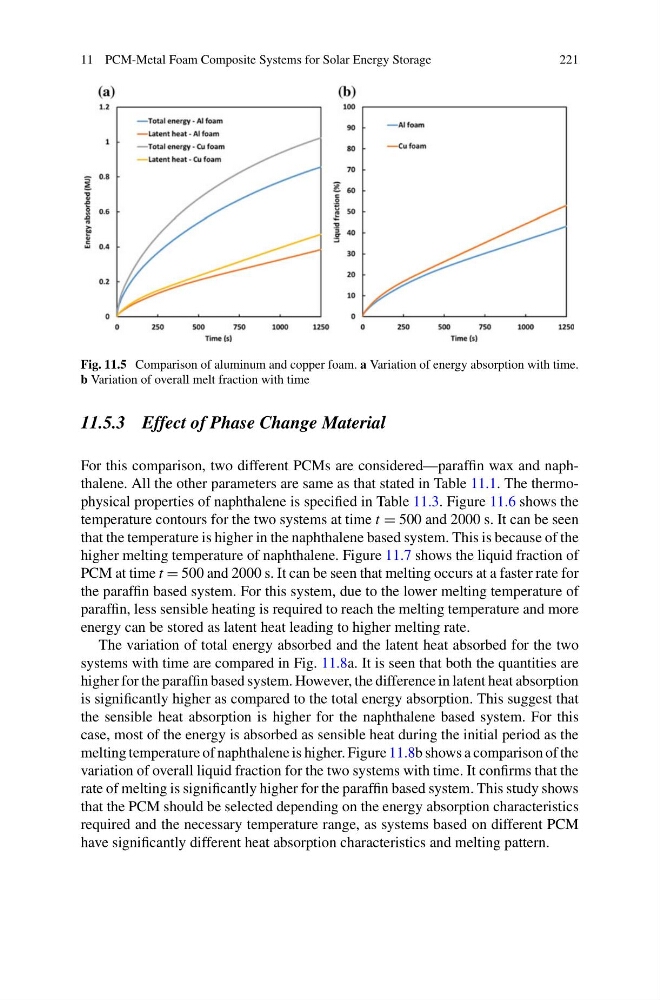
Fig. 11.5 Comparison of aluminum and copper foam. a Variation of energy absorption with time.
b Variation of overall melt fraction with time
11.5.3 Effect of Phase Change Material
For this comparison, two different PCMs are considered—paraffin wax and naphthalene. All the other parameters are same as that stated in Table 11.1. The thermophysical properties of naphthalene is specified in Table 11.3. Figure 11.6 shows the
temperature contours for the two systems at time t = 500 and 2000 s. It can be seen
that the temperature is higher in the naphthalene based system. This is because of the
higher melting temperature of naphthalene. Figure 11.7 shows the liquid fraction of
PCM at time t = 500 and 2000 s. It can be seen that melting occurs at a faster rate for
the paraffin based system. For this system, due to the lower melting temperature of
paraffin, less sensible heating is required to reach the melting temperature and more
energy can be stored as latent heat leading to higher melting rate.
The variation of total energy absorbed and the latent heat absorbed for the two
systems with time are compared in Fig. 11.8a. It is seen that both the quantities are
higher for the paraffin based system. However, the difference in latent heat absorption
is significantly higher as compared to the total energy absorption. This suggest that
the sensible heat absorption is higher for the naphthalene based system. For this
case, most of the energy is absorbed as sensible heat during the initial period as the
melting temperature of naphthalene is higher. Figure 11.8b shows a comparison of the
variation of overall liquid fraction for the two systems with time. It confirms that the
rate of melting is significantly higher for the paraffin based system. This study shows
that the PCM should be selected depending on the energy absorption characteristics
required and the necessary temperature range, as systems based on different PCM
have significantly different heat absorption characteristics and melting pattern.
221
Fig. 11.5 Comparison of aluminum and copper foam. a Variation of energy absorption with time.
b Variation of overall melt fraction with time
11.5.3 Effect of Phase Change Material
For this comparison, two different PCMs are considered—paraffin wax and naphthalene. All the other parameters are same as that stated in Table 11.1. The thermophysical properties of naphthalene is specified in Table 11.3. Figure 11.6 shows the
temperature contours for the two systems at time t = 500 and 2000 s. It can be seen
that the temperature is higher in the naphthalene based system. This is because of the
higher melting temperature of naphthalene. Figure 11.7 shows the liquid fraction of
PCM at time t = 500 and 2000 s. It can be seen that melting occurs at a faster rate for
the paraffin based system. For this system, due to the lower melting temperature of
paraffin, less sensible heating is required to reach the melting temperature and more
energy can be stored as latent heat leading to higher melting rate.
The variation of total energy absorbed and the latent heat absorbed for the two
systems with time are compared in Fig. 11.8a. It is seen that both the quantities are
higher for the paraffin based system. However, the difference in latent heat absorption
is significantly higher as compared to the total energy absorption. This suggest that
the sensible heat absorption is higher for the naphthalene based system. For this
case, most of the energy is absorbed as sensible heat during the initial period as the
melting temperature of naphthalene is higher. Figure 11.8b shows a comparison of the
variation of overall liquid fraction for the two systems with time. It confirms that the
rate of melting is significantly higher for the paraffin based system. This study shows
that the PCM should be selected depending on the energy absorption characteristics
required and the necessary temperature range, as systems based on different PCM
have significantly different heat absorption characteristics and melting pattern.