

7 Mathematical Modelling of Solar Updraft Tower
107
100
150
200
250
300
20
40
60
80
100
120
140
Temperature at turbine inlet (without losses)
Temperature at turbine inlet (with losses)
Velocity at turbine inlet (without losses)
Velocity at turbine inlet (with losses)
Collector radius (m)
Temperature at turbine inlet (
o
C)
15
20
25
30
35
40
45
50
55
60
Velocity at turbine inlet (ms
-1
)
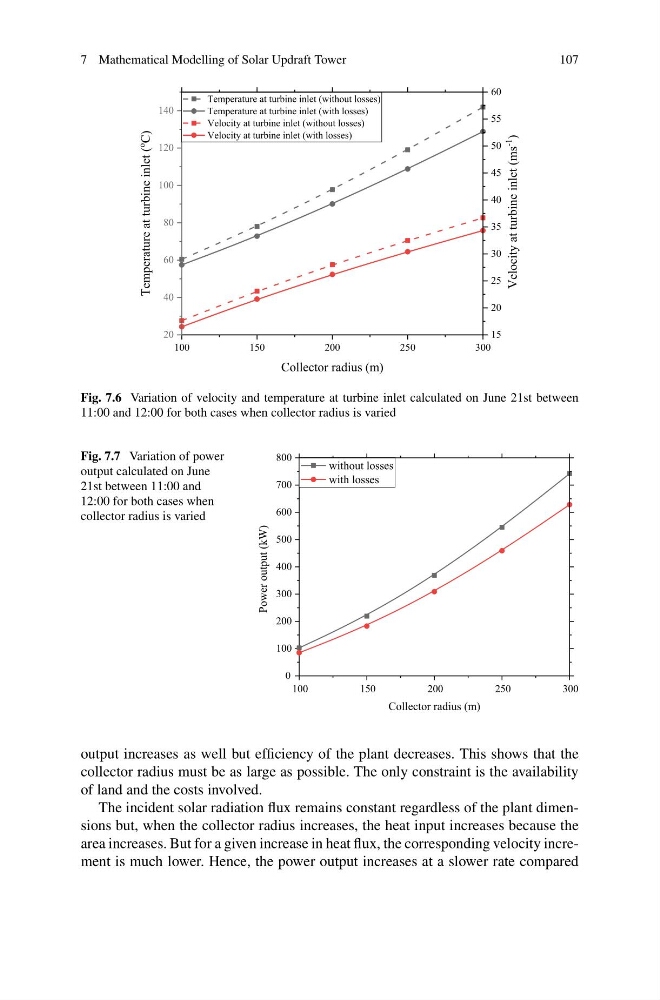
Fig. 7.6 Variation of velocity and temperature at turbine inlet calculated on June 21st between
11:00 and 12:00 for both cases when collector radius is varied
Fig. 7.7 Variation of power
output calculated on June
21st between 11:00 and
12:00 for both cases when
collector radius is varied
100
150
200
250
300
0
100
200
300
400
500
600
700
800
Power output (kW)
Collector radius (m)
without losses
with losses
output increases as well but efficiency of the plant decreases. This shows that the
collector radius must be as large as possible. The only constraint is the availability
of land and the costs involved.
The incident solar radiation flux remains constant regardless of the plant dimensions but, when the collector radius increases, the heat input increases because the
area increases. But for a given increase in heat flux, the corresponding velocity increment is much lower. Hence, the power output increases at a slower rate compared
107
100
150
200
250
300
20
40
60
80
100
120
140
Temperature at turbine inlet (without losses)
Temperature at turbine inlet (with losses)
Velocity at turbine inlet (without losses)
Velocity at turbine inlet (with losses)
Collector radius (m)
Temperature at turbine inlet (
o
C)
15
20
25
30
35
40
45
50
55
60
Velocity at turbine inlet (ms
-1
)
Fig. 7.6 Variation of velocity and temperature at turbine inlet calculated on June 21st between
11:00 and 12:00 for both cases when collector radius is varied
Fig. 7.7 Variation of power
output calculated on June
21st between 11:00 and
12:00 for both cases when
collector radius is varied
100
150
200
250
300
0
100
200
300
400
500
600
700
800
Power output (kW)
Collector radius (m)
without losses
with losses
output increases as well but efficiency of the plant decreases. This shows that the
collector radius must be as large as possible. The only constraint is the availability
of land and the costs involved.
The incident solar radiation flux remains constant regardless of the plant dimensions but, when the collector radius increases, the heat input increases because the
area increases. But for a given increase in heat flux, the corresponding velocity increment is much lower. Hence, the power output increases at a slower rate compared