

Human errors are classified into three categories:
(1) random,
(2) systematic, and
(3) sporadic.
Random errors can be corrected through improved training and supervision.
Systematic variability occurs when there is a one directional shift in performance,
which can be diminished by giving a performance feedback regularly.
Sporadic errors occur erratically: while a person’s work is almost always satisfactory, an abrupt loss of concentration or distraction entails a sporadic error which is
therefore the most difficult to predict or control.
Human beings perform satisfactorily at an optimum level of stress level. A
minimum stress level, the facilitative stress, is required to keep people alert, active,
and expectant. If the stress level is too high, arising from physical or psychological
pressures, it can lead to weariness, drowsiness and/or lack of concentration. If the
stress level is too low, arising from boring, repetitive or otherwise, intellectually light
work, people again lose concentration.
Examples of psychological stress include:
1. Conflicts of motives about job performance
2. Distractions such as noise, glare, flicker, colour, or movement
3. Duration of stress
Time
Performance Measure
Range of
intersection
points
Deterministic point of
failure (meeting point of
mean curve)
Range of variability
Spread of
capability
Spread of
demand
C
A
B
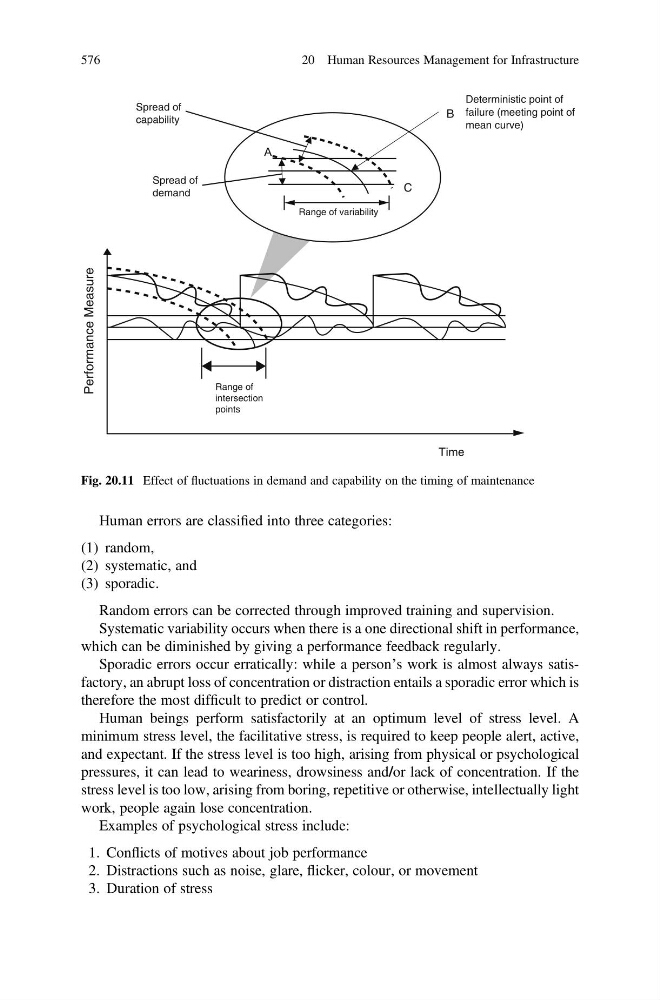
Fig. 20.11 Effect of fluctuations in demand and capability on the timing of maintenance
576
20 Human Resources Management for Infrastructure