

17.6 Societal Demand for Infrastructure
17.6.1 Introduction
Infrastructural resources obey the following criteria:
(1) The resource is often used nonrivalrously over an appreciable demand range.
(2) Downstream productive activities requiring the resource (e.g. electricity, roads)
as an input drives the social demand for the resource.
(3) A wide range of goods and services, such as private, public, and social goods
often use the resource as an input.
Although an oil reserve might be thought of as infrastructure, it does not fall
within this set of criteria as it is rivalrously consumed. In a similar way, lakes, ideas,
and laws will be infrastructural, as per the criteria above. However, these criteria
constitute a tool for assessing resources and analyzing management strategies.
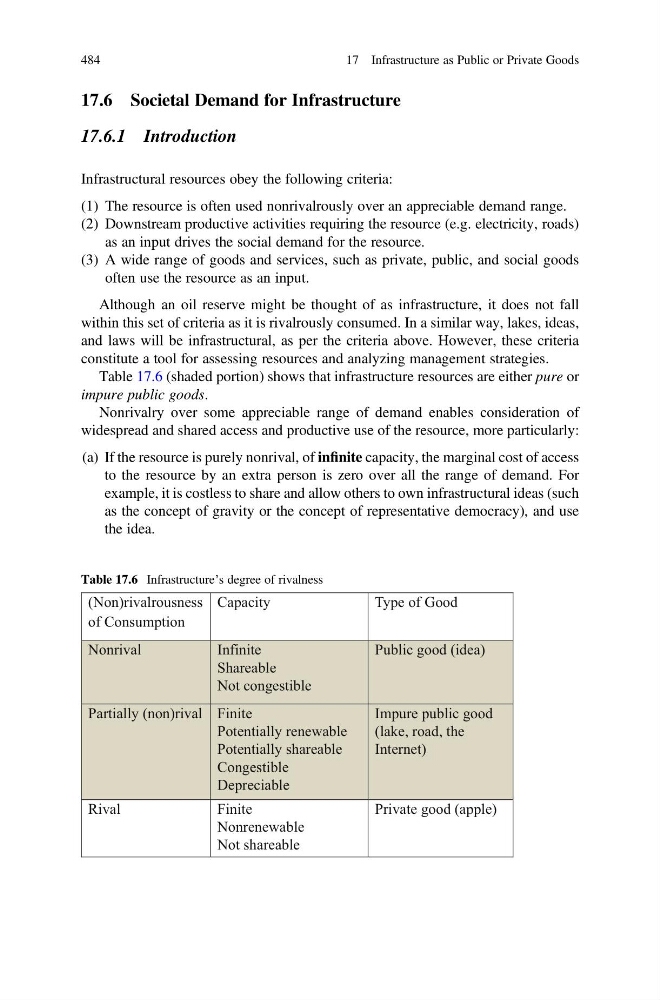
Table 17.6 (shaded portion) shows that infrastructure resources are either pure or
impure public goods.
Nonrivalry over some appreciable range of demand enables consideration of
widespread and shared access and productive use of the resource, more particularly:
(a) If the resource is purely nonrival, of infinite capacity, the marginal cost of access
to the resource by an extra person is zero over all the range of demand. For
example, it is costless to share and allow others to own infrastructural ideas (such
as the concept of gravity or the concept of representative democracy), and use
the idea.
Table 17.6 Infrastructure’s degree of rivalness
(Non)rivalrousness
of Consumption
Capacity
Type of Good
Nonrival
Infinite
Shareable
Not congestible
Public good (idea)
Partially (non)rival Finite
Potentially renewable
Potentially shareable
Congestible
Depreciable
Impure public good
(lake, road, the
Internet)
Rival
Finite
Nonrenewable
Not shareable
Private good (apple)
484
17 Infrastructure as Public or Private Goods
17.6.1 Introduction
Infrastructural resources obey the following criteria:
(1) The resource is often used nonrivalrously over an appreciable demand range.
(2) Downstream productive activities requiring the resource (e.g. electricity, roads)
as an input drives the social demand for the resource.
(3) A wide range of goods and services, such as private, public, and social goods
often use the resource as an input.
Although an oil reserve might be thought of as infrastructure, it does not fall
within this set of criteria as it is rivalrously consumed. In a similar way, lakes, ideas,
and laws will be infrastructural, as per the criteria above. However, these criteria
constitute a tool for assessing resources and analyzing management strategies.
Table 17.6 (shaded portion) shows that infrastructure resources are either pure or
impure public goods.
Nonrivalry over some appreciable range of demand enables consideration of
widespread and shared access and productive use of the resource, more particularly:
(a) If the resource is purely nonrival, of infinite capacity, the marginal cost of access
to the resource by an extra person is zero over all the range of demand. For
example, it is costless to share and allow others to own infrastructural ideas (such
as the concept of gravity or the concept of representative democracy), and use
the idea.
Table 17.6 Infrastructure’s degree of rivalness
(Non)rivalrousness
of Consumption
Capacity
Type of Good
Nonrival
Infinite
Shareable
Not congestible
Public good (idea)
Partially (non)rival Finite
Potentially renewable
Potentially shareable
Congestible
Depreciable
Impure public good
(lake, road, the
Internet)
Rival
Finite
Nonrenewable
Not shareable
Private good (apple)
484
17 Infrastructure as Public or Private Goods