

estimation, the Richter scale, used for measuring the magnitude of earthquakes, is
based on a logarithmic scale,
Very often, the extent of damages occurring during disasters varies widely. In
such cases, it is useful to propose logarithmic scales which can accommodate such
wide variations conveniently. Different disasters may be compared using convenient
comparable parameters that need to (or can) be measured or estimated. These
parameters may include estimated damages (i.e. cost for repairs), number of victims,
loss of biomass (trees destroyed), etc.
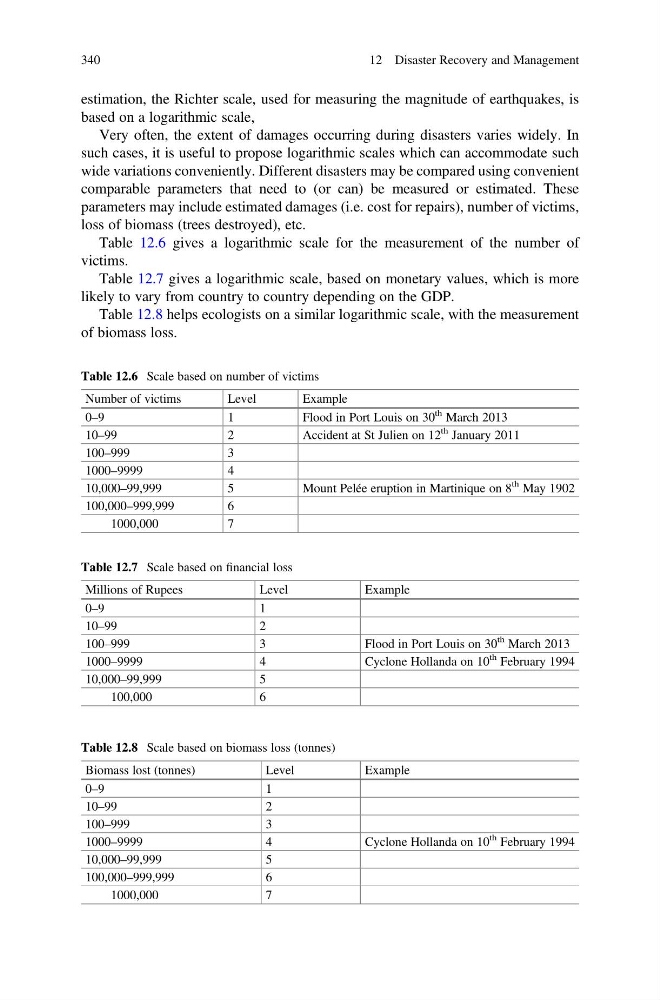
Table 12.6 gives a logarithmic scale for the measurement of the number of
victims.
Table 12.7 gives a logarithmic scale, based on monetary values, which is more
likely to vary from country to country depending on the GDP.
Table 12.8 helps ecologists on a similar logarithmic scale, with the measurement
of biomass loss.
Table 12.6 Scale based on number of victims
Number of victims
Level
Example
0–9
1
Flood in Port Louis on 30
th March 2013
10–99
2
Accident at St Julien on 12
th January 2011
100–999
3
1000–9999
4
10,000–99,999
5
Mount Pelée eruption in Martinique on 8
th May 1902
100,000–999,999
6
1000,000
7
Table 12.7 Scale based on financial loss
Millions of Rupees
Level
Example
0–9
1
10–99
2
100–999
3
Flood in Port Louis on 30
th March 2013
1000–9999
4
Cyclone Hollanda on 10
th February 1994
10,000–99,999
5
100,000
6
Table 12.8 Scale based on biomass loss (tonnes)
Biomass lost (tonnes)
Level
Example
0–9
1
10–99
2
100–999
3
1000–9999
4
Cyclone Hollanda on 10
th February 1994
10,000–99,999
5
100,000–999,999
6
1000,000
7
340
12 Disaster Recovery and Management
based on a logarithmic scale,
Very often, the extent of damages occurring during disasters varies widely. In
such cases, it is useful to propose logarithmic scales which can accommodate such
wide variations conveniently. Different disasters may be compared using convenient
comparable parameters that need to (or can) be measured or estimated. These
parameters may include estimated damages (i.e. cost for repairs), number of victims,
loss of biomass (trees destroyed), etc.
Table 12.6 gives a logarithmic scale for the measurement of the number of
victims.
Table 12.7 gives a logarithmic scale, based on monetary values, which is more
likely to vary from country to country depending on the GDP.
Table 12.8 helps ecologists on a similar logarithmic scale, with the measurement
of biomass loss.
Table 12.6 Scale based on number of victims
Number of victims
Level
Example
0–9
1
Flood in Port Louis on 30
th March 2013
10–99
2
Accident at St Julien on 12
th January 2011
100–999
3
1000–9999
4
10,000–99,999
5
Mount Pelée eruption in Martinique on 8
th May 1902
100,000–999,999
6
1000,000
7
Table 12.7 Scale based on financial loss
Millions of Rupees
Level
Example
0–9
1
10–99
2
100–999
3
Flood in Port Louis on 30
th March 2013
1000–9999
4
Cyclone Hollanda on 10
th February 1994
10,000–99,999
5
100,000
6
Table 12.8 Scale based on biomass loss (tonnes)
Biomass lost (tonnes)
Level
Example
0–9
1
10–99
2
100–999
3
1000–9999
4
Cyclone Hollanda on 10
th February 1994
10,000–99,999
5
100,000–999,999
6
1000,000
7
340
12 Disaster Recovery and Management