

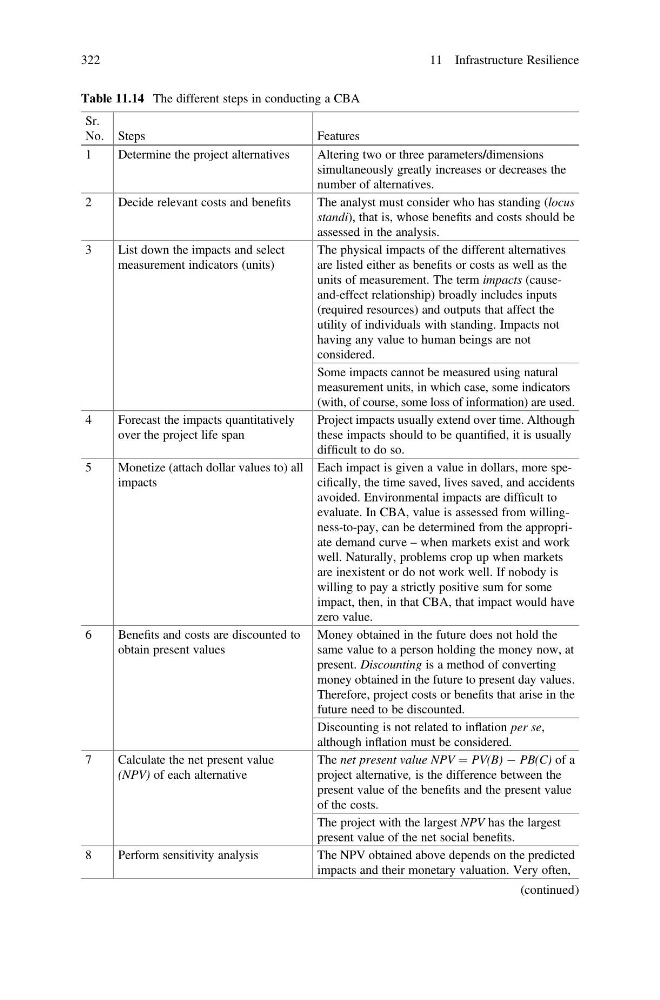
Table 11.14 The different steps in conducting a CBA
Sr.
No. Steps
Features
1
Determine the project alternatives
Altering two or three parameters/dimensions
simultaneously greatly increases or decreases the
number of alternatives.
2
Decide relevant costs and benefits
The analyst must consider who has standing (locus
standi), that is, whose benefits and costs should be
assessed in the analysis.
3
List down the impacts and select
measurement indicators (units)
The physical impacts of the different alternatives
are listed either as benefits or costs as well as the
units of measurement. The term impacts (causeand-effect relationship) broadly includes inputs
(required resources) and outputs that affect the
utility of individuals with standing. Impacts not
having any value to human beings are not
considered.
Some impacts cannot be measured using natural
measurement units, in which case, some indicators
(with, of course, some loss of information) are used.
4
Forecast the impacts quantitatively
over the project life span
Project impacts usually extend over time. Although
these impacts should to be quantified, it is usually
difficult to do so.
5
Monetize (attach dollar values to) all
impacts
Each impact is given a value in dollars, more specifically, the time saved, lives saved, and accidents
avoided. Environmental impacts are difficult to
evaluate. In CBA, value is assessed from willingness-to-pay, can be determined from the appropriate demand curve – when markets exist and work
well. Naturally, problems crop up when markets
are inexistent or do not work well. If nobody is
willing to pay a strictly positive sum for some
impact, then, in that CBA, that impact would have
zero value.
6
Benefits and costs are discounted to
obtain present values
Money obtained in the future does not hold the
same value to a person holding the money now, at
present. Discounting is a method of converting
money obtained in the future to present day values.
Therefore, project costs or benefits that arise in the
future need to be discounted.
Discounting is not related to inflation per se,
although inflation must be considered.
7
Calculate the net present value
(NPV) of each alternative
The net present value NPV ¼ PV(B) À PB(C) of a
project alternative, is the difference between the
present value of the benefits and the present value
of the costs.
The project with the largest NPV has the largest
present value of the net social benefits.
8
Perform sensitivity analysis
The NPV obtained above depends on the predicted
impacts and their monetary valuation. Very often,
(continued)
322
11 Infrastructure Resilience
Sr.
No. Steps
Features
1
Determine the project alternatives
Altering two or three parameters/dimensions
simultaneously greatly increases or decreases the
number of alternatives.
2
Decide relevant costs and benefits
The analyst must consider who has standing (locus
standi), that is, whose benefits and costs should be
assessed in the analysis.
3
List down the impacts and select
measurement indicators (units)
The physical impacts of the different alternatives
are listed either as benefits or costs as well as the
units of measurement. The term impacts (causeand-effect relationship) broadly includes inputs
(required resources) and outputs that affect the
utility of individuals with standing. Impacts not
having any value to human beings are not
considered.
Some impacts cannot be measured using natural
measurement units, in which case, some indicators
(with, of course, some loss of information) are used.
4
Forecast the impacts quantitatively
over the project life span
Project impacts usually extend over time. Although
these impacts should to be quantified, it is usually
difficult to do so.
5
Monetize (attach dollar values to) all
impacts
Each impact is given a value in dollars, more specifically, the time saved, lives saved, and accidents
avoided. Environmental impacts are difficult to
evaluate. In CBA, value is assessed from willingness-to-pay, can be determined from the appropriate demand curve – when markets exist and work
well. Naturally, problems crop up when markets
are inexistent or do not work well. If nobody is
willing to pay a strictly positive sum for some
impact, then, in that CBA, that impact would have
zero value.
6
Benefits and costs are discounted to
obtain present values
Money obtained in the future does not hold the
same value to a person holding the money now, at
present. Discounting is a method of converting
money obtained in the future to present day values.
Therefore, project costs or benefits that arise in the
future need to be discounted.
Discounting is not related to inflation per se,
although inflation must be considered.
7
Calculate the net present value
(NPV) of each alternative
The net present value NPV ¼ PV(B) À PB(C) of a
project alternative, is the difference between the
present value of the benefits and the present value
of the costs.
The project with the largest NPV has the largest
present value of the net social benefits.
8
Perform sensitivity analysis
The NPV obtained above depends on the predicted
impacts and their monetary valuation. Very often,
(continued)
322
11 Infrastructure Resilience