

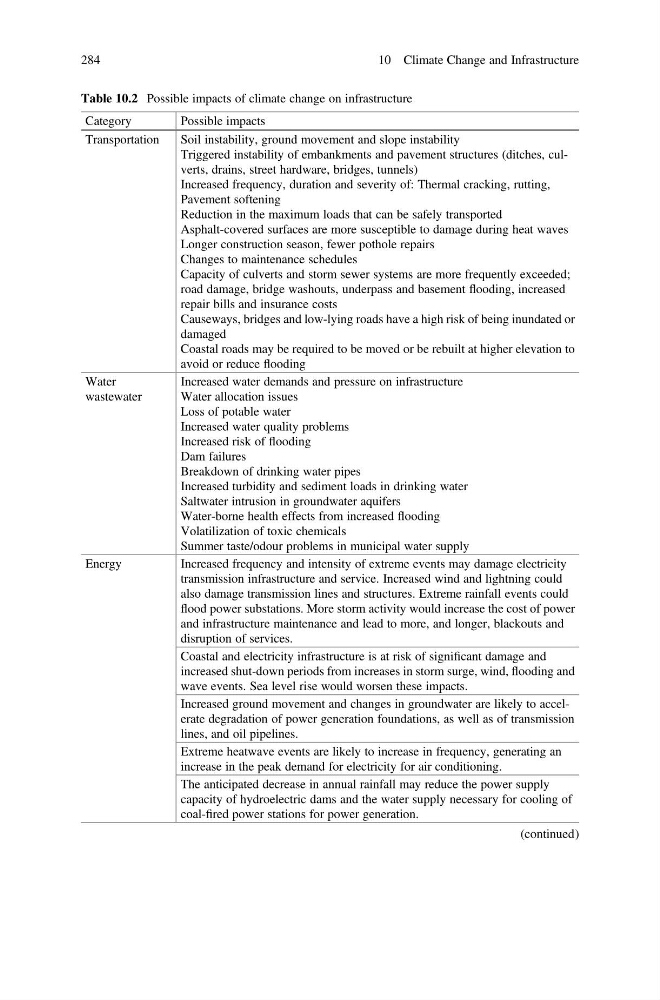
Table 10.2 Possible impacts of climate change on infrastructure
Category
Possible impacts
Transportation
Soil instability, ground movement and slope instability
Triggered instability of embankments and pavement structures (ditches, culverts, drains, street hardware, bridges, tunnels)
Increased frequency, duration and severity of: Thermal cracking, rutting,
Pavement softening
Reduction in the maximum loads that can be safely transported
Asphalt-covered surfaces are more susceptible to damage during heat waves
Longer construction season, fewer pothole repairs
Changes to maintenance schedules
Capacity of culverts and storm sewer systems are more frequently exceeded;
road damage, bridge washouts, underpass and basement flooding, increased
repair bills and insurance costs
Causeways, bridges and low-lying roads have a high risk of being inundated or
damaged
Coastal roads may be required to be moved or be rebuilt at higher elevation to
avoid or reduce flooding
Water
wastewater
Increased water demands and pressure on infrastructure
Water allocation issues
Loss of potable water
Increased water quality problems
Increased risk of flooding
Dam failures
Breakdown of drinking water pipes
Increased turbidity and sediment loads in drinking water
Saltwater intrusion in groundwater aquifers
Water-borne health effects from increased flooding
Volatilization of toxic chemicals
Summer taste/odour problems in municipal water supply
Energy
Increased frequency and intensity of extreme events may damage electricity
transmission infrastructure and service. Increased wind and lightning could
also damage transmission lines and structures. Extreme rainfall events could
flood power substations. More storm activity would increase the cost of power
and infrastructure maintenance and lead to more, and longer, blackouts and
disruption of services.
Coastal and electricity infrastructure is at risk of significant damage and
increased shut-down periods from increases in storm surge, wind, flooding and
wave events. Sea level rise would worsen these impacts.
Increased ground movement and changes in groundwater are likely to accelerate degradation of power generation foundations, as well as of transmission
lines, and oil pipelines.
Extreme heatwave events are likely to increase in frequency, generating an
increase in the peak demand for electricity for air conditioning.
The anticipated decrease in annual rainfall may reduce the power supply
capacity of hydroelectric dams and the water supply necessary for cooling of
coal-fired power stations for power generation.
(continued)
284
10 Climate Change and Infrastructure
Category
Possible impacts
Transportation
Soil instability, ground movement and slope instability
Triggered instability of embankments and pavement structures (ditches, culverts, drains, street hardware, bridges, tunnels)
Increased frequency, duration and severity of: Thermal cracking, rutting,
Pavement softening
Reduction in the maximum loads that can be safely transported
Asphalt-covered surfaces are more susceptible to damage during heat waves
Longer construction season, fewer pothole repairs
Changes to maintenance schedules
Capacity of culverts and storm sewer systems are more frequently exceeded;
road damage, bridge washouts, underpass and basement flooding, increased
repair bills and insurance costs
Causeways, bridges and low-lying roads have a high risk of being inundated or
damaged
Coastal roads may be required to be moved or be rebuilt at higher elevation to
avoid or reduce flooding
Water
wastewater
Increased water demands and pressure on infrastructure
Water allocation issues
Loss of potable water
Increased water quality problems
Increased risk of flooding
Dam failures
Breakdown of drinking water pipes
Increased turbidity and sediment loads in drinking water
Saltwater intrusion in groundwater aquifers
Water-borne health effects from increased flooding
Volatilization of toxic chemicals
Summer taste/odour problems in municipal water supply
Energy
Increased frequency and intensity of extreme events may damage electricity
transmission infrastructure and service. Increased wind and lightning could
also damage transmission lines and structures. Extreme rainfall events could
flood power substations. More storm activity would increase the cost of power
and infrastructure maintenance and lead to more, and longer, blackouts and
disruption of services.
Coastal and electricity infrastructure is at risk of significant damage and
increased shut-down periods from increases in storm surge, wind, flooding and
wave events. Sea level rise would worsen these impacts.
Increased ground movement and changes in groundwater are likely to accelerate degradation of power generation foundations, as well as of transmission
lines, and oil pipelines.
Extreme heatwave events are likely to increase in frequency, generating an
increase in the peak demand for electricity for air conditioning.
The anticipated decrease in annual rainfall may reduce the power supply
capacity of hydroelectric dams and the water supply necessary for cooling of
coal-fired power stations for power generation.
(continued)
284
10 Climate Change and Infrastructure