

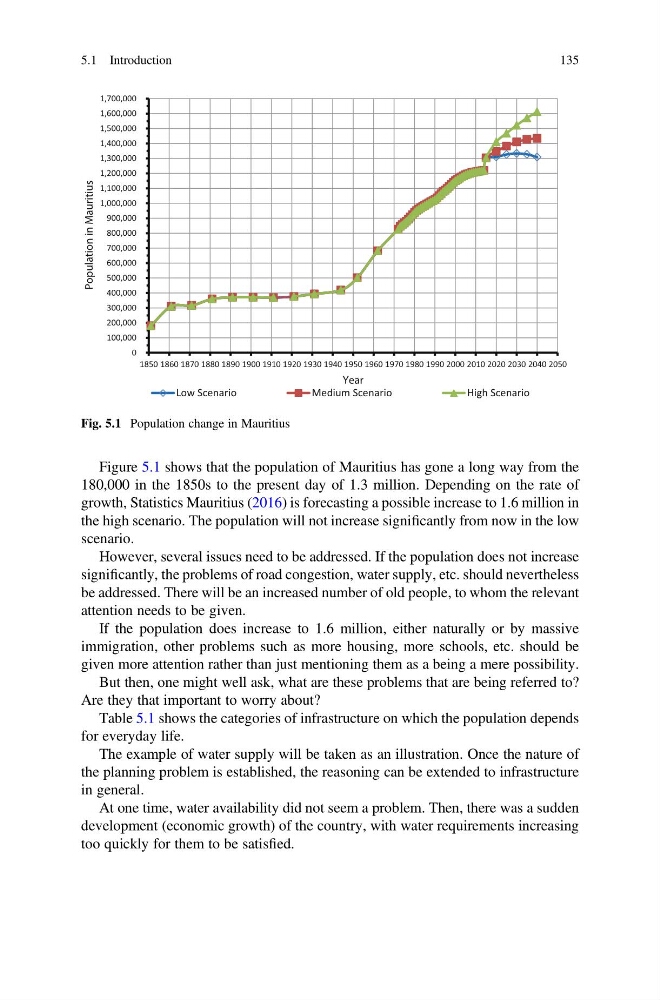
Figure 5.1 shows that the population of Mauritius has gone a long way from the
180,000 in the 1850s to the present day of 1.3 million. Depending on the rate of
growth, Statistics Mauritius (2016) is forecasting a possible increase to 1.6 million in
the high scenario. The population will not increase significantly from now in the low
scenario.
However, several issues need to be addressed. If the population does not increase
significantly, the problems of road congestion, water supply, etc. should nevertheless
be addressed. There will be an increased number of old people, to whom the relevant
attention needs to be given.
If the population does increase to 1.6 million, either naturally or by massive
immigration, other problems such as more housing, more schools, etc. should be
given more attention rather than just mentioning them as a being a mere possibility.
But then, one might well ask, what are these problems that are being referred to?
Are they that important to worry about?
Table 5.1 shows the categories of infrastructure on which the population depends
for everyday life.
The example of water supply will be taken as an illustration. Once the nature of
the planning problem is established, the reasoning can be extended to infrastructure
in general.
At one time, water availability did not seem a problem. Then, there was a sudden
development (economic growth) of the country, with water requirements increasing
too quickly for them to be satisfied.
0
100,000
200,000
300,000
400,000
500,000
600,000
700,000
800,000
900,000
1,000,000
1,100,000
1,200,000
1,300,000
1,400,000
1,500,000
1,600,000
1,700,000
1850 1860 1870 1880 1890 1900 1910 1920 1930 1940 1950 1960 1970 1980 1990 2000 2010 2020 2030 2040 2050
Population in Mauritius
Year
Low Scenario
Medium Scenario
High Scenario
Fig. 5.1 Population change in Mauritius
5.1 Introduction
135
180,000 in the 1850s to the present day of 1.3 million. Depending on the rate of
growth, Statistics Mauritius (2016) is forecasting a possible increase to 1.6 million in
the high scenario. The population will not increase significantly from now in the low
scenario.
However, several issues need to be addressed. If the population does not increase
significantly, the problems of road congestion, water supply, etc. should nevertheless
be addressed. There will be an increased number of old people, to whom the relevant
attention needs to be given.
If the population does increase to 1.6 million, either naturally or by massive
immigration, other problems such as more housing, more schools, etc. should be
given more attention rather than just mentioning them as a being a mere possibility.
But then, one might well ask, what are these problems that are being referred to?
Are they that important to worry about?
Table 5.1 shows the categories of infrastructure on which the population depends
for everyday life.
The example of water supply will be taken as an illustration. Once the nature of
the planning problem is established, the reasoning can be extended to infrastructure
in general.
At one time, water availability did not seem a problem. Then, there was a sudden
development (economic growth) of the country, with water requirements increasing
too quickly for them to be satisfied.
0
100,000
200,000
300,000
400,000
500,000
600,000
700,000
800,000
900,000
1,000,000
1,100,000
1,200,000
1,300,000
1,400,000
1,500,000
1,600,000
1,700,000
1850 1860 1870 1880 1890 1900 1910 1920 1930 1940 1950 1960 1970 1980 1990 2000 2010 2020 2030 2040 2050
Population in Mauritius
Year
Low Scenario
Medium Scenario
High Scenario
Fig. 5.1 Population change in Mauritius
5.1 Introduction
135