

(1) Voting for the candidate with the right and proper environmental agenda.
(2) Inform elected representatives, in writing, of one’s views about current environmental issues.
(3) Businesses look at their sales to decide what to sell or stop producing. The
customer can influence this decision with their buying choices.
(4) The world being global, such buying choices will also influence overseas
suppliers and policy makers.
(5) Drawing attention to the suppliers’ company policies and products will also
influence their environmental outlook.
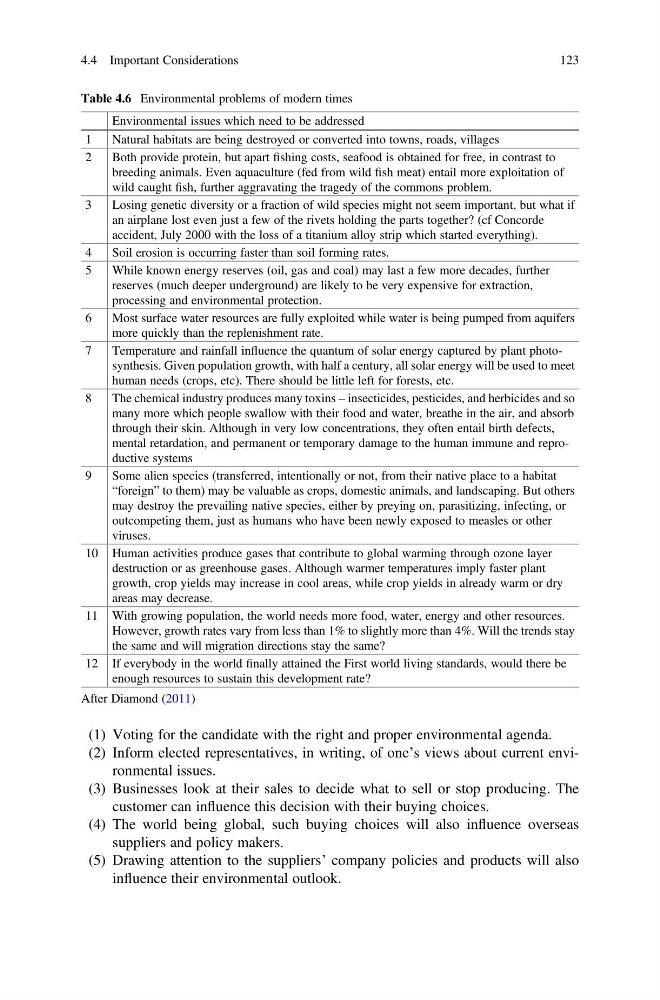
Table 4.6 Environmental problems of modern times
Environmental issues which need to be addressed
1
Natural habitats are being destroyed or converted into towns, roads, villages
2
Both provide protein, but apart fishing costs, seafood is obtained for free, in contrast to
breeding animals. Even aquaculture (fed from wild fish meat) entail more exploitation of
wild caught fish, further aggravating the tragedy of the commons problem.
3
Losing genetic diversity or a fraction of wild species might not seem important, but what if
an airplane lost even just a few of the rivets holding the parts together? (cf Concorde
accident, July 2000 with the loss of a titanium alloy strip which started everything).
4
Soil erosion is occurring faster than soil forming rates.
5
While known energy reserves (oil, gas and coal) may last a few more decades, further
reserves (much deeper underground) are likely to be very expensive for extraction,
processing and environmental protection.
6
Most surface water resources are fully exploited while water is being pumped from aquifers
more quickly than the replenishment rate.
7
Temperature and rainfall influence the quantum of solar energy captured by plant photosynthesis. Given population growth, with half a century, all solar energy will be used to meet
human needs (crops, etc). There should be little left for forests, etc.
8
The chemical industry produces many toxins – insecticides, pesticides, and herbicides and so
many more which people swallow with their food and water, breathe in the air, and absorb
through their skin. Although in very low concentrations, they often entail birth defects,
mental retardation, and permanent or temporary damage to the human immune and reproductive systems
9
Some alien species (transferred, intentionally or not, from their native place to a habitat
“foreign” to them) may be valuable as crops, domestic animals, and landscaping. But others
may destroy the prevailing native species, either by preying on, parasitizing, infecting, or
outcompeting them, just as humans who have been newly exposed to measles or other
viruses.
10 Human activities produce gases that contribute to global warming through ozone layer
destruction or as greenhouse gases. Although warmer temperatures imply faster plant
growth, crop yields may increase in cool areas, while crop yields in already warm or dry
areas may decrease.
11 With growing population, the world needs more food, water, energy and other resources.
However, growth rates vary from less than 1% to slightly more than 4%. Will the trends stay
the same and will migration directions stay the same?
12 If everybody in the world finally attained the First world living standards, would there be
enough resources to sustain this development rate?
After Diamond (2011)
4.4 Important Considerations
123
(2) Inform elected representatives, in writing, of one’s views about current environmental issues.
(3) Businesses look at their sales to decide what to sell or stop producing. The
customer can influence this decision with their buying choices.
(4) The world being global, such buying choices will also influence overseas
suppliers and policy makers.
(5) Drawing attention to the suppliers’ company policies and products will also
influence their environmental outlook.
Table 4.6 Environmental problems of modern times
Environmental issues which need to be addressed
1
Natural habitats are being destroyed or converted into towns, roads, villages
2
Both provide protein, but apart fishing costs, seafood is obtained for free, in contrast to
breeding animals. Even aquaculture (fed from wild fish meat) entail more exploitation of
wild caught fish, further aggravating the tragedy of the commons problem.
3
Losing genetic diversity or a fraction of wild species might not seem important, but what if
an airplane lost even just a few of the rivets holding the parts together? (cf Concorde
accident, July 2000 with the loss of a titanium alloy strip which started everything).
4
Soil erosion is occurring faster than soil forming rates.
5
While known energy reserves (oil, gas and coal) may last a few more decades, further
reserves (much deeper underground) are likely to be very expensive for extraction,
processing and environmental protection.
6
Most surface water resources are fully exploited while water is being pumped from aquifers
more quickly than the replenishment rate.
7
Temperature and rainfall influence the quantum of solar energy captured by plant photosynthesis. Given population growth, with half a century, all solar energy will be used to meet
human needs (crops, etc). There should be little left for forests, etc.
8
The chemical industry produces many toxins – insecticides, pesticides, and herbicides and so
many more which people swallow with their food and water, breathe in the air, and absorb
through their skin. Although in very low concentrations, they often entail birth defects,
mental retardation, and permanent or temporary damage to the human immune and reproductive systems
9
Some alien species (transferred, intentionally or not, from their native place to a habitat
“foreign” to them) may be valuable as crops, domestic animals, and landscaping. But others
may destroy the prevailing native species, either by preying on, parasitizing, infecting, or
outcompeting them, just as humans who have been newly exposed to measles or other
viruses.
10 Human activities produce gases that contribute to global warming through ozone layer
destruction or as greenhouse gases. Although warmer temperatures imply faster plant
growth, crop yields may increase in cool areas, while crop yields in already warm or dry
areas may decrease.
11 With growing population, the world needs more food, water, energy and other resources.
However, growth rates vary from less than 1% to slightly more than 4%. Will the trends stay
the same and will migration directions stay the same?
12 If everybody in the world finally attained the First world living standards, would there be
enough resources to sustain this development rate?
After Diamond (2011)
4.4 Important Considerations
123