

11 Solar Photovoltaics on Land, Water, and Buildings
291
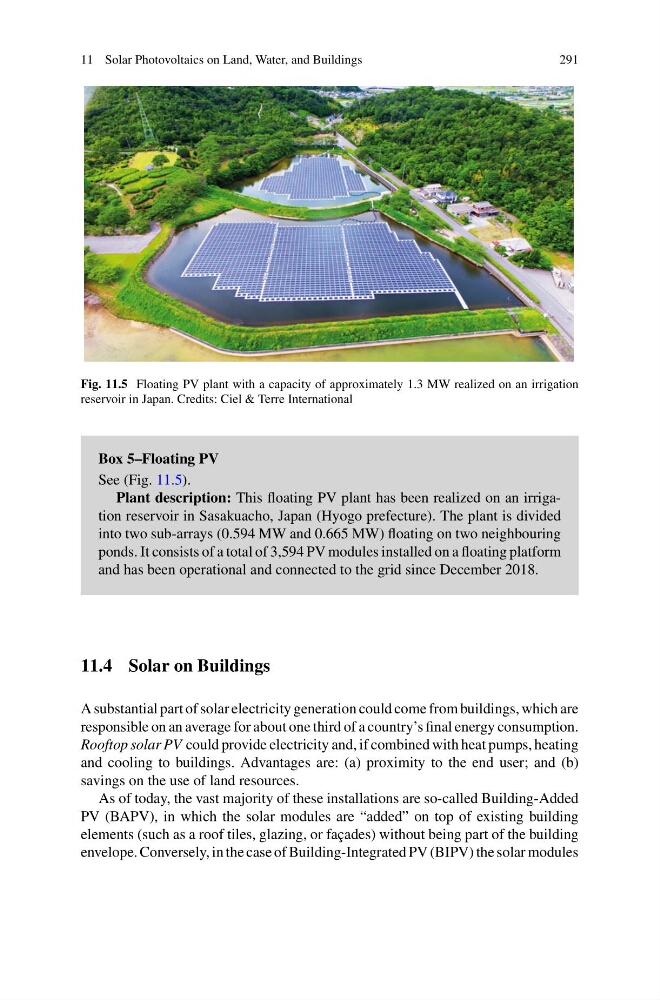
Fig. 11.5 Floating PV plant with a capacity of approximately 1.3 MW realized on an irrigation
reservoir in Japan. Credits: Ciel & Terre International
Box 5–Floating PV
See (Fig. 11.5).
Plant description: This floating PV plant has been realized on an irrigation reservoir in Sasakuacho, Japan (Hyogo prefecture). The plant is divided
into two sub-arrays (0.594 MW and 0.665 MW) floating on two neighbouring
ponds. It consists of a total of 3,594 PV modules installed on a floating platform
and has been operational and connected to the grid since December 2018.
11.4 Solar on Buildings
A substantial part of solar electricity generation could come from buildings, which are
responsible on an average for about one third of a country’s final energy consumption.
Rooftop solar PV could provide electricity and, if combined with heat pumps, heating
and cooling to buildings. Advantages are: (a) proximity to the end user; and (b)
savings on the use of land resources.
As of today, the vast majority of these installations are so-called Building-Added
PV (BAPV), in which the solar modules are “added” on top of existing building
elements (such as a roof tiles, glazing, or façades) without being part of the building
envelope. Conversely, in the case of Building-Integrated PV (BIPV) the solar modules
291
Fig. 11.5 Floating PV plant with a capacity of approximately 1.3 MW realized on an irrigation
reservoir in Japan. Credits: Ciel & Terre International
Box 5–Floating PV
See (Fig. 11.5).
Plant description: This floating PV plant has been realized on an irrigation reservoir in Sasakuacho, Japan (Hyogo prefecture). The plant is divided
into two sub-arrays (0.594 MW and 0.665 MW) floating on two neighbouring
ponds. It consists of a total of 3,594 PV modules installed on a floating platform
and has been operational and connected to the grid since December 2018.
11.4 Solar on Buildings
A substantial part of solar electricity generation could come from buildings, which are
responsible on an average for about one third of a country’s final energy consumption.
Rooftop solar PV could provide electricity and, if combined with heat pumps, heating
and cooling to buildings. Advantages are: (a) proximity to the end user; and (b)
savings on the use of land resources.
As of today, the vast majority of these installations are so-called Building-Added
PV (BAPV), in which the solar modules are “added” on top of existing building
elements (such as a roof tiles, glazing, or façades) without being part of the building
envelope. Conversely, in the case of Building-Integrated PV (BIPV) the solar modules