

290
A. Virtuani
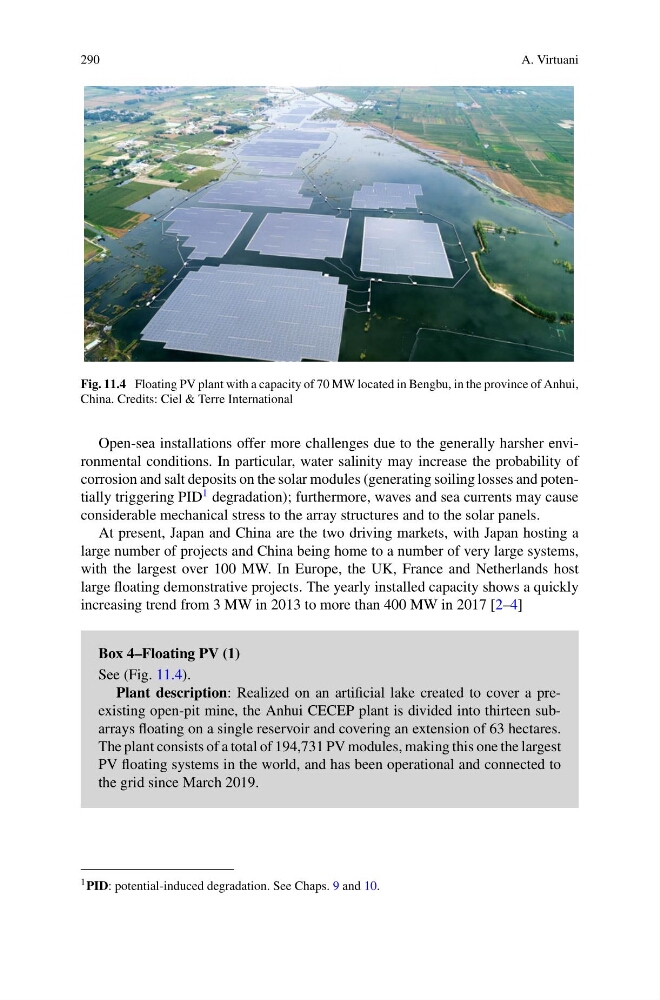
Fig. 11.4 Floating PV plant with a capacity of 70 MW located in Bengbu, in the province of Anhui,
China. Credits: Ciel & Terre International
Open-sea installations offer more challenges due to the generally harsher environmental conditions. In particular, water salinity may increase the probability of
corrosion and salt deposits on the solar modules (generating soiling losses and potentially triggering PID
1 degradation); furthermore, waves and sea currents may cause
considerable mechanical stress to the array structures and to the solar panels.
At present, Japan and China are the two driving markets, with Japan hosting a
large number of projects and China being home to a number of very large systems,
with the largest over 100 MW. In Europe, the UK, France and Netherlands host
large floating demonstrative projects. The yearly installed capacity shows a quickly
increasing trend from 3 MW in 2013 to more than 400 MW in 2017 [2–4]
Box 4–Floating PV (1)
See (Fig. 11.4).
Plant description: Realized on an artificial lake created to cover a preexisting open-pit mine, the Anhui CECEP plant is divided into thirteen subarrays floating on a single reservoir and covering an extension of 63 hectares.
The plant consists of a total of 194,731 PV modules, making this one the largest
PV floating systems in the world, and has been operational and connected to
the grid since March 2019.
1 PID: potential-induced degradation. See Chaps. 9 and 10.
A. Virtuani
Fig. 11.4 Floating PV plant with a capacity of 70 MW located in Bengbu, in the province of Anhui,
China. Credits: Ciel & Terre International
Open-sea installations offer more challenges due to the generally harsher environmental conditions. In particular, water salinity may increase the probability of
corrosion and salt deposits on the solar modules (generating soiling losses and potentially triggering PID
1 degradation); furthermore, waves and sea currents may cause
considerable mechanical stress to the array structures and to the solar panels.
At present, Japan and China are the two driving markets, with Japan hosting a
large number of projects and China being home to a number of very large systems,
with the largest over 100 MW. In Europe, the UK, France and Netherlands host
large floating demonstrative projects. The yearly installed capacity shows a quickly
increasing trend from 3 MW in 2013 to more than 400 MW in 2017 [2–4]
Box 4–Floating PV (1)
See (Fig. 11.4).
Plant description: Realized on an artificial lake created to cover a preexisting open-pit mine, the Anhui CECEP plant is divided into thirteen subarrays floating on a single reservoir and covering an extension of 63 hectares.
The plant consists of a total of 194,731 PV modules, making this one the largest
PV floating systems in the world, and has been operational and connected to
the grid since March 2019.
1 PID: potential-induced degradation. See Chaps. 9 and 10.