

280
M. Pravettoni
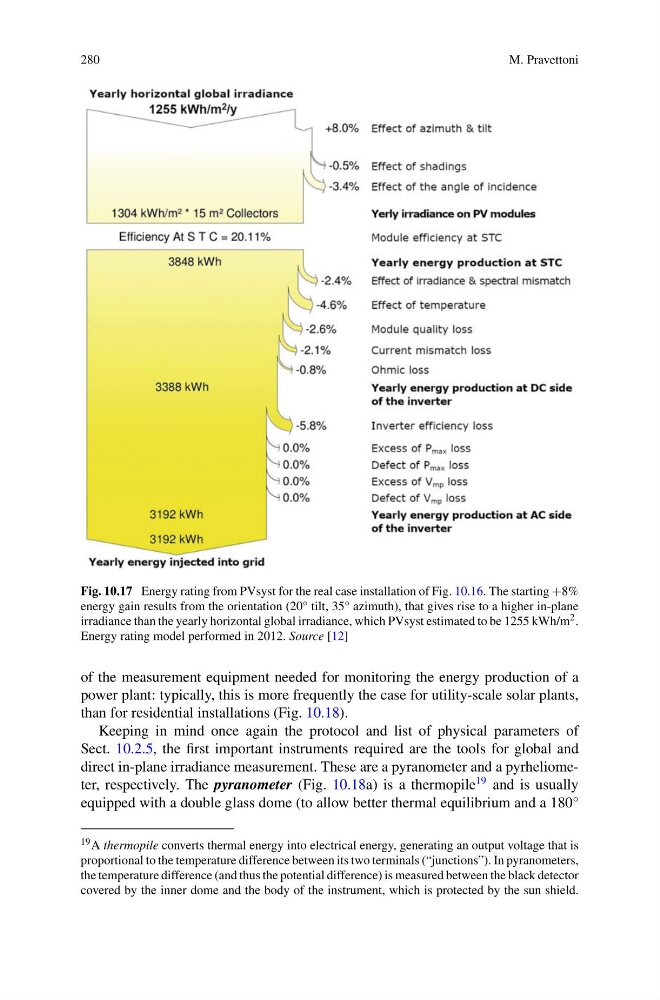
Fig. 10.17 Energy rating from PVsyst for the real case installation of Fig. 10.16. The starting +8%
energy gain results from the orientation (20° tilt, 35° azimuth), that gives rise to a higher in-plane
irradiance than the yearly horizontal global irradiance, which PVsyst estimated to be 1255 kWh/m 2 .
Energy rating model performed in 2012. Source [12]
of the measurement equipment needed for monitoring the energy production of a
power plant: typically, this is more frequently the case for utility-scale solar plants,
than for residential installations (Fig. 10.18).
Keeping in mind once again the protocol and list of physical parameters of
Sect. 10.2.5, the first important instruments required are the tools for global and
direct in-plane irradiance measurement. These are a pyranometer and a pyrheliometer, respectively. The pyranometer (Fig. 10.18a) is a thermopile
19 and is usually
equipped with a double glass dome (to allow better thermal equilibrium and a 180°
19 A thermopile converts thermal energy into electrical energy, generating an output voltage that is
proportional to the temperature difference between its two terminals (“junctions”). In pyranometers,
the temperature difference (and thus the potential difference) is measured between the black detector
covered by the inner dome and the body of the instrument, which is protected by the sun shield.
M. Pravettoni
Fig. 10.17 Energy rating from PVsyst for the real case installation of Fig. 10.16. The starting +8%
energy gain results from the orientation (20° tilt, 35° azimuth), that gives rise to a higher in-plane
irradiance than the yearly horizontal global irradiance, which PVsyst estimated to be 1255 kWh/m 2 .
Energy rating model performed in 2012. Source [12]
of the measurement equipment needed for monitoring the energy production of a
power plant: typically, this is more frequently the case for utility-scale solar plants,
than for residential installations (Fig. 10.18).
Keeping in mind once again the protocol and list of physical parameters of
Sect. 10.2.5, the first important instruments required are the tools for global and
direct in-plane irradiance measurement. These are a pyranometer and a pyrheliometer, respectively. The pyranometer (Fig. 10.18a) is a thermopile
19 and is usually
equipped with a double glass dome (to allow better thermal equilibrium and a 180°
19 A thermopile converts thermal energy into electrical energy, generating an output voltage that is
proportional to the temperature difference between its two terminals (“junctions”). In pyranometers,
the temperature difference (and thus the potential difference) is measured between the black detector
covered by the inner dome and the body of the instrument, which is protected by the sun shield.