

156
A. Shah
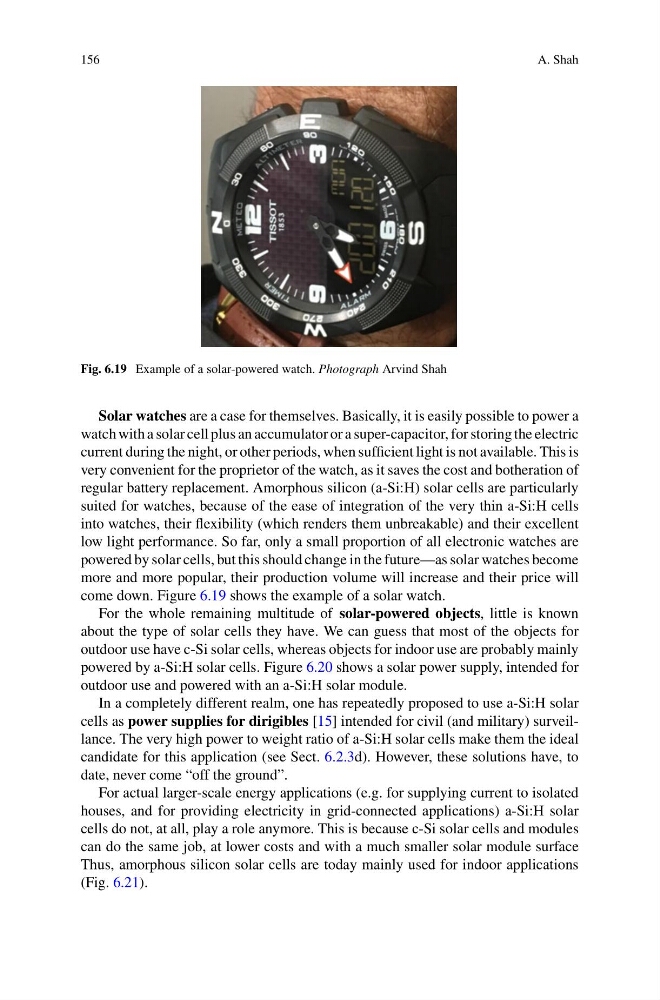
Fig. 6.19 Example of a solar-powered watch. Photograph Arvind Shah
Solar watches are a case for themselves. Basically, it is easily possible to power a
watch with a solar cell plus an accumulator or a super-capacitor, for storing the electric
current during the night, or other periods, when sufficient light is not available. This is
very convenient for the proprietor of the watch, as it saves the cost and botheration of
regular battery replacement. Amorphous silicon (a-Si:H) solar cells are particularly
suited for watches, because of the ease of integration of the very thin a-Si:H cells
into watches, their flexibility (which renders them unbreakable) and their excellent
low light performance. So far, only a small proportion of all electronic watches are
powered by solar cells, but this should change in the future—as solar watches become
more and more popular, their production volume will increase and their price will
come down. Figure 6.19 shows the example of a solar watch.
For the whole remaining multitude of solar-powered objects, little is known
about the type of solar cells they have. We can guess that most of the objects for
outdoor use have c-Si solar cells, whereas objects for indoor use are probably mainly
powered by a-Si:H solar cells. Figure 6.20 shows a solar power supply, intended for
outdoor use and powered with an a-Si:H solar module.
In a completely different realm, one has repeatedly proposed to use a-Si:H solar
cells as power supplies for dirigibles [15] intended for civil (and military) surveillance. The very high power to weight ratio of a-Si:H solar cells make them the ideal
candidate for this application (see Sect. 6.2.3d). However, these solutions have, to
date, never come “off the ground”.
For actual larger-scale energy applications (e.g. for supplying current to isolated
houses, and for providing electricity in grid-connected applications) a-Si:H solar
cells do not, at all, play a role anymore. This is because c-Si solar cells and modules
can do the same job, at lower costs and with a much smaller solar module surface
Thus, amorphous silicon solar cells are today mainly used for indoor applications
(Fig. 6.21).
A. Shah
Fig. 6.19 Example of a solar-powered watch. Photograph Arvind Shah
Solar watches are a case for themselves. Basically, it is easily possible to power a
watch with a solar cell plus an accumulator or a super-capacitor, for storing the electric
current during the night, or other periods, when sufficient light is not available. This is
very convenient for the proprietor of the watch, as it saves the cost and botheration of
regular battery replacement. Amorphous silicon (a-Si:H) solar cells are particularly
suited for watches, because of the ease of integration of the very thin a-Si:H cells
into watches, their flexibility (which renders them unbreakable) and their excellent
low light performance. So far, only a small proportion of all electronic watches are
powered by solar cells, but this should change in the future—as solar watches become
more and more popular, their production volume will increase and their price will
come down. Figure 6.19 shows the example of a solar watch.
For the whole remaining multitude of solar-powered objects, little is known
about the type of solar cells they have. We can guess that most of the objects for
outdoor use have c-Si solar cells, whereas objects for indoor use are probably mainly
powered by a-Si:H solar cells. Figure 6.20 shows a solar power supply, intended for
outdoor use and powered with an a-Si:H solar module.
In a completely different realm, one has repeatedly proposed to use a-Si:H solar
cells as power supplies for dirigibles [15] intended for civil (and military) surveillance. The very high power to weight ratio of a-Si:H solar cells make them the ideal
candidate for this application (see Sect. 6.2.3d). However, these solutions have, to
date, never come “off the ground”.
For actual larger-scale energy applications (e.g. for supplying current to isolated
houses, and for providing electricity in grid-connected applications) a-Si:H solar
cells do not, at all, play a role anymore. This is because c-Si solar cells and modules
can do the same job, at lower costs and with a much smaller solar module surface
Thus, amorphous silicon solar cells are today mainly used for indoor applications
(Fig. 6.21).