

136
S. Leu and D. Sontag
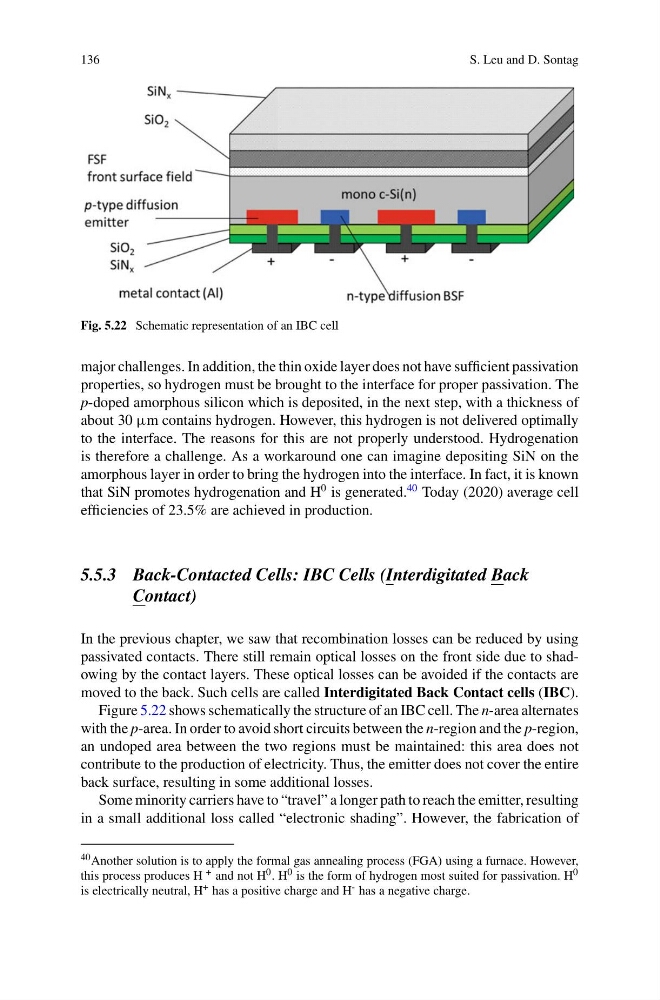
Fig. 5.22 Schematic representation of an IBC cell
major challenges. In addition, the thin oxide layer does not have sufficient passivation
properties, so hydrogen must be brought to the interface for proper passivation. The
p-doped amorphous silicon which is deposited, in the next step, with a thickness of
about 30 μm contains hydrogen. However, this hydrogen is not delivered optimally
to the interface. The reasons for this are not properly understood. Hydrogenation
is therefore a challenge. As a workaround one can imagine depositing SiN on the
amorphous layer in order to bring the hydrogen into the interface. In fact, it is known
that SiN promotes hydrogenation and H
0 is generated.
40 Today (2020) average cell
efficiencies of 23.5% are achieved in production.
5.5.3 Back-Contacted Cells: IBC Cells (Interdigitated Back
Contact)
In the previous chapter, we saw that recombination losses can be reduced by using
passivated contacts. There still remain optical losses on the front side due to shadowing by the contact layers. These optical losses can be avoided if the contacts are
moved to the back. Such cells are called Interdigitated Back Contact cells (IBC).
Figure 5.22 shows schematically the structure of an IBC cell. The n-area alternates
with the p-area. In order to avoid short circuits between the n-region and the p-region,
an undoped area between the two regions must be maintained: this area does not
contribute to the production of electricity. Thus, the emitter does not cover the entire
back surface, resulting in some additional losses.
Some minority carriers have to “travel” a longer path to reach the emitter, resulting
in a small additional loss called “electronic shading”. However, the fabrication of
40 Another solution is to apply the formal gas annealing process (FGA) using a furnace. However,
this process produces H + and not H 0 . H 0 is the form of hydrogen most suited for passivation. H 0
is electrically neutral, H + has a positive charge and H - has a negative charge.
S. Leu and D. Sontag
Fig. 5.22 Schematic representation of an IBC cell
major challenges. In addition, the thin oxide layer does not have sufficient passivation
properties, so hydrogen must be brought to the interface for proper passivation. The
p-doped amorphous silicon which is deposited, in the next step, with a thickness of
about 30 μm contains hydrogen. However, this hydrogen is not delivered optimally
to the interface. The reasons for this are not properly understood. Hydrogenation
is therefore a challenge. As a workaround one can imagine depositing SiN on the
amorphous layer in order to bring the hydrogen into the interface. In fact, it is known
that SiN promotes hydrogenation and H
0 is generated.
40 Today (2020) average cell
efficiencies of 23.5% are achieved in production.
5.5.3 Back-Contacted Cells: IBC Cells (Interdigitated Back
Contact)
In the previous chapter, we saw that recombination losses can be reduced by using
passivated contacts. There still remain optical losses on the front side due to shadowing by the contact layers. These optical losses can be avoided if the contacts are
moved to the back. Such cells are called Interdigitated Back Contact cells (IBC).
Figure 5.22 shows schematically the structure of an IBC cell. The n-area alternates
with the p-area. In order to avoid short circuits between the n-region and the p-region,
an undoped area between the two regions must be maintained: this area does not
contribute to the production of electricity. Thus, the emitter does not cover the entire
back surface, resulting in some additional losses.
Some minority carriers have to “travel” a longer path to reach the emitter, resulting
in a small additional loss called “electronic shading”. However, the fabrication of
40 Another solution is to apply the formal gas annealing process (FGA) using a furnace. However,
this process produces H + and not H 0 . H 0 is the form of hydrogen most suited for passivation. H 0
is electrically neutral, H + has a positive charge and H - has a negative charge.