

In the case of the nonsymmetrical waveguide for dependence of the nonsymmetry
parameter on x (Fig. 7.14), as a 0 ¼ 0.2 Á x, two main maxima turn to the angle of 45
.
In Fig. 7.14b, in plots of 3D patterns for Φ YL0 ( y) ¼ Arg[E YL0 ( y)], we see the regions
of decrease and increase of the phase, as well as the regions of the phase function
breaks in the region of the local maxima. The complicate character of lines with
formation of resonance regions is determined by adding conditions of the optical
oscillations in the far zone from the source with the finite dimensions of the emission
area.
The above-described theory of passive and active waveguides with account of the
nonsymmetry of optical channels allows development of the mathematical instrument for modeling of waveguides in modulators and in differential delay lines,
which are used in OEO OEO MZ and OEO DM.
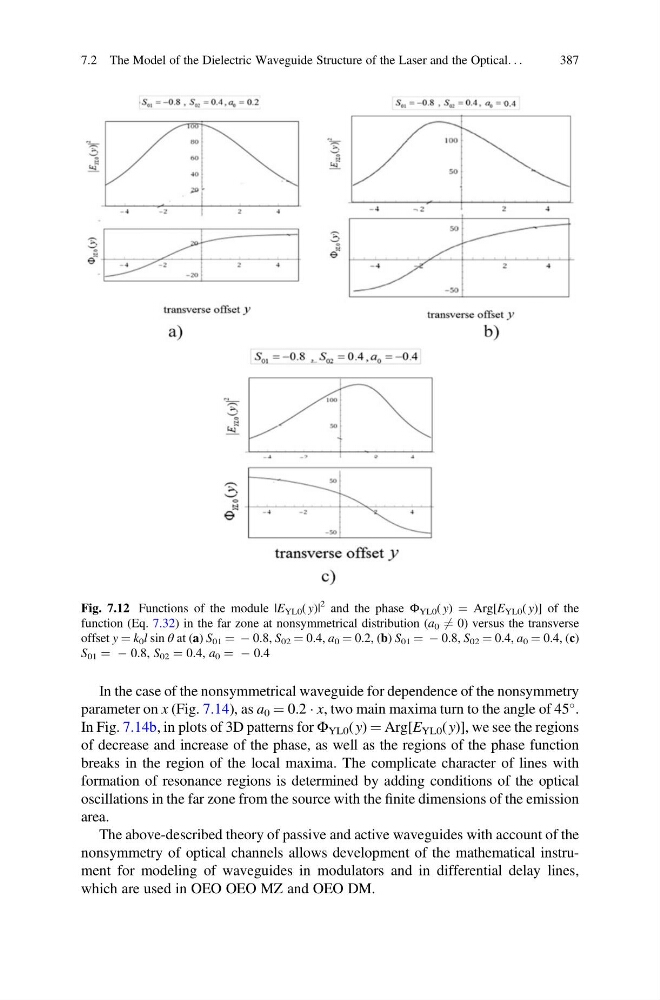
Fig. 7.12 Functions of the module |E YL0 ( y)|
2 and the phase Φ YL0 ( y) ¼ Arg[E YL0 ( y)] of the
function (Eq. 7.32) in the far zone at nonsymmetrical distribution (a 0 6 ¼ 0) versus the transverse
offset y ¼ k 0 l sin θ at (a) S 01 ¼ À 0.8, S 02 ¼ 0.4, a 0 ¼ 0.2, (b) S 01 ¼ À 0.8, S 02 ¼ 0.4, a 0 ¼ 0.4, (с)
S 01 ¼ À 0.8, S 02 ¼ 0.4, a 0 ¼ À 0.4
7.2 The Model of the Dielectric Waveguide Structure of the Laser and the Optical. . .
387
parameter on x (Fig. 7.14), as a 0 ¼ 0.2 Á x, two main maxima turn to the angle of 45
.
In Fig. 7.14b, in plots of 3D patterns for Φ YL0 ( y) ¼ Arg[E YL0 ( y)], we see the regions
of decrease and increase of the phase, as well as the regions of the phase function
breaks in the region of the local maxima. The complicate character of lines with
formation of resonance regions is determined by adding conditions of the optical
oscillations in the far zone from the source with the finite dimensions of the emission
area.
The above-described theory of passive and active waveguides with account of the
nonsymmetry of optical channels allows development of the mathematical instrument for modeling of waveguides in modulators and in differential delay lines,
which are used in OEO OEO MZ and OEO DM.
Fig. 7.12 Functions of the module |E YL0 ( y)|
2 and the phase Φ YL0 ( y) ¼ Arg[E YL0 ( y)] of the
function (Eq. 7.32) in the far zone at nonsymmetrical distribution (a 0 6 ¼ 0) versus the transverse
offset y ¼ k 0 l sin θ at (a) S 01 ¼ À 0.8, S 02 ¼ 0.4, a 0 ¼ 0.2, (b) S 01 ¼ À 0.8, S 02 ¼ 0.4, a 0 ¼ 0.4, (с)
S 01 ¼ À 0.8, S 02 ¼ 0.4, a 0 ¼ À 0.4
7.2 The Model of the Dielectric Waveguide Structure of the Laser and the Optical. . .
387